






A government meeting chaired by Prime Minister Nawaf Salam. (Photo: Mohammad Yassine/L'Orient Today)






Prime Minister Nawaf Salam responded on Tuesday to statements made by U.S. Ambassador Thomas Barrack, accusing him of calling into question the "seriousness of the government and the role of the army."
In a statement posted on his X account, Salam reaffirmed his cabinet's commitment "to implement its full ministerial program, especially in terms of reforms and strengthening state authority throughout the territory, and to maintain the state's monopoly on arms, in accordance with Cabinet decisions."
Salam said the Lebanese Army "fully assumes its responsibilities in protecting Lebanon's sovereignty and ensuring its stability" and is carrying out the disarmament plan presented to the Cabinet on Sept. 5. He also called on the international community to "strengthen its support for the army and to put pressure on Israel to withdraw from occupied territories and cease its repeated attacks, in accordance with the Nov. 27, 2024, cease-fire agreement."
Salam also reiterated Lebanon's position in favor of "lasting peace in the region, based on the 2002 Arab Peace Initiative." He recalled that this initiative "is based on the principles of justice, international law and United Nations resolutions" and allows the Palestinian people "to determine their fate, including through the establishment of their independent state."
In an interview with Sky News Arabia on Monday, the U.S. regional envoy and its ambassador to Ankara said that "the situation in Lebanon is very difficult." Known for his conciliatory tone, he even said that everything Beirut does "amounts to words without tangible action," warning that Israeli Prime Minister Benjamin Netanyahu "cares neither for borders nor red lines."
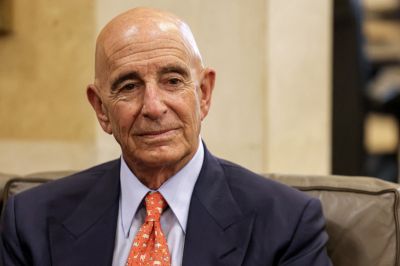
These harsh statements came on the heels of a lightning visit by U.S. envoy Morgan Ortagus who attended a meeting of the cease-fire monitoring committee in Naqoura and called for the army to do more and move faster to disarm Hezbollah. Meanwhile, Israel continues to ramp up military pressure, raising the specter of a new open war on Lebanon.
After the fighting between Hezbollah and Israel in 2024, Lebanon is still awaiting the reconstruction of large areas destroyed in the south, in the Bekaa, and in Beirut's southern suburbs, against the background of a severe economic and financial crisis since 2019.
The question of Hezbollah's disarmament, demanded by parts of the international community and especially by the U.S., continues to fuel controversy, with the party so far refusing to surrender its weapons voluntarily.
