


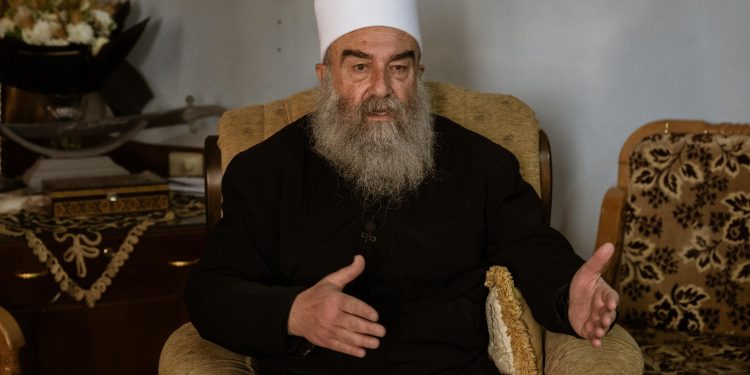
Syria's Druze spiritual leader, Sheikh Hikmat al-Hijri, in the Syrian province of Sweida, Nov. 26, 2024. (Credit: AFP)






BEIRUT — The main Druze spiritual leader in Syria, Sheikh Hikmat al-Hijri, reportedly backed down from a prisoner exchange agreement in the Southern Syrian province of Sweida, threatening a Syrian-American-Jordanian deal, a source following the talks told L'Orient Today on Thursday.
The information was initially reported the same day by Lebanese television channel LBCI.
According to the source contacted by our publication, the prisoner exchange agreement stipulated the release of 110 Druze in return for 3o prisoners held by Hijri.
However, he offered instead to release only seven prisoners in exchange for all the Druze detainees. It is not clear if the hostages held by Hijri's men are governmental troops, Sunni tribal fighters, or both.
Sweida saw deadly clashes last July between Druze fighters and Sunni Bedouins — who have had a long-running feud — which expanded with the involvement of government forces who sided with the tribes, killing more than 1,500.
Hijri last month called for the creation of a "separate" region for the minority in southern Syria.
On Tuesday, Syrian Foreign Minister Assaad Shaibani announced a plan supported by the United States and neighboring Jordan to pacify the province, two months after the deadly sectarian clashes.
In his press conference on Tuesday, Shaibani said that the U.S.-backed plan involves "holding accountable" those who attacked civilians, "compensating those affected," and "launching a process of internal reconciliation."
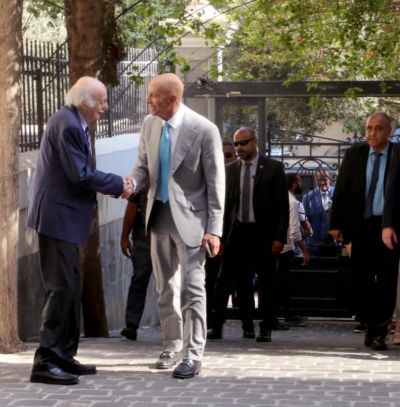
Jordanian Foreign Minister Ayman Safadi, present at the event alongside U.S. envoy Tom Barrack, said a "joint Syrian-Jordanian-American mechanism" would ensure the implementation of the plan.
Meanwhile, on Wednesday, Barrack praised Lebanese Druze leader Walid Joumblatt as a unifying figure, praising his role in steering dialogue within the community amid rising regional tensions. The former Progressive Socialist Party leader, Joumblatt, has long urged calm and dialogue between Druze in southern Syria.
He was the first Lebanese political leader to visit Damascus after the fall of the Assad regime, expressing his support for the new Syrian authorities.
Syrian authorities also announced Tuesday the creation of an "interior security chief" position for Sweida, entrusted to local Druze leader Souleiman Abdel-Baqi, while governmental forces loyal to Damascus control the surrounding area. Abdel-Baqi is the head of a local armed group considered supportive of the authorities and was opposed to the ousted regime of Bashar al-Assad.
In this context, Damascus and Washington are also working on a "security agreement" with Israel, as part of a plan to pacify the Sweida province, according to Syrian diplomatic sources. A Syrian government official told AFP on Tuesday that Syrian forces had withdrawn their heavy weapons from the south of the country. Israel is calling for the establishment of a demilitarized zone in southern neighboring Syria, and had bombed Damascus in July, saying it wanted to protect the Druze minority in that region.
 Israeli army carries out demolition at Jabal Amel School in Houla as strikes continue