


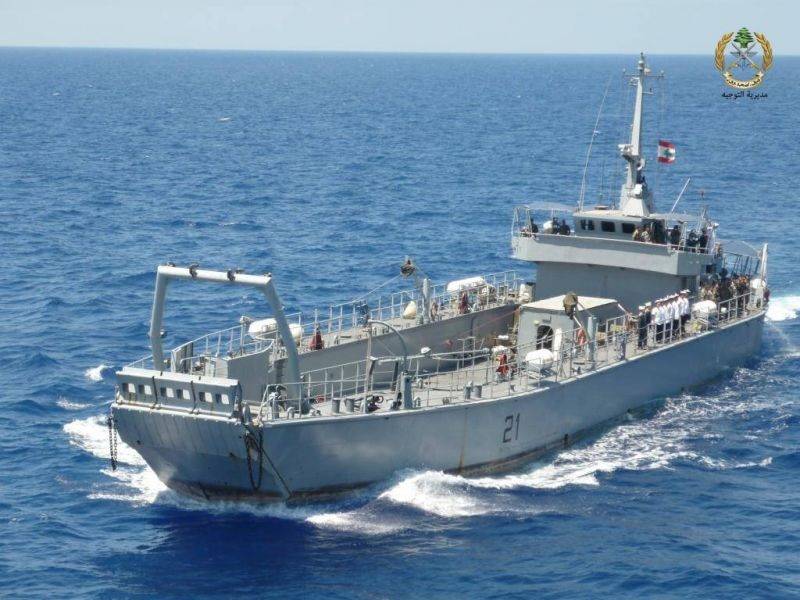
A naval vessel searching for victims of a boat sinking off Tripoli, April 28, 2022. (Credit: Illustration photo X/ @Lebarmy)






BEIRUT — A navy patrol prevented the Hawk III vessel from illegally leaving Lebanese territorial waters on Friday night and arrested 22 people on board, the army said in a statement released on Saturday. The ship is carrying fuel destined for Electricité du Liban (EDL) and allegedly imported from Russia. Three soldiers were injured in the operation.
“After the joint maritime operations room of the army received information ... a naval patrol launched an operation to pursue the Hawk III vessel as it attempted to leave Lebanese territorial waters illegally,” the statement said. The ship's crew refused “to comply with the patrol’s orders,” prompting troops to fire “warning shots in the air.”
A maritime commando unit, backed by the air force, then carried out “a boarding operation” and arrested 22 people on board, about 30 nautical miles (55 kilometers) from the Lebanese coast, before bringing the vessel back to Dbayeh Port (Metn).
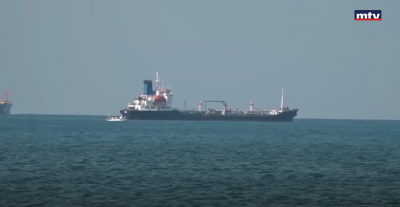
The three soldiers were injured “when the captain attempted to maneuver to prevent the troops from boarding,” the army said, adding that an investigation is underway and “the necessary measures will be taken regarding the vessel, under the supervision of the competent judicial authority.”
Last week, Energy Minister Joe Saddi authorized unloading the Hawk III, which was carrying B-grade fuel oil for EDL, after three independent analyses conducted in Dubai, Greece and Italy confirmed the product met required specifications, according to the state-run National News Agency (NNA). The decision came in response to the urgent need to unload the shipment to avoid a blackout in Lebanon before Sept. 8.
Press reports circulating Saturday alleged that Russia supplied the fuel and is therefore subject to international sanctions, which might explain why authorities moved to apprehend the vessel — information that has not been formally confirmed.
Following the start of Russia’s invasion of Ukraine in 2022, the European Union banned most oil imports from Russia, while the United States also imposed sanctions against Russian oil producers. This weekend, U.S. President Donald Trump said he was prepared to impose new sanctions on Russia, but only if NATO allies stopped buying Russian oil.
Saddi’s explanations
Commenting on the navy’s operation Saturday, Saddi praised the army, noting that the vessel “had been seized by Lebanese customs on instructions from the public prosecutor at the Court of Cassation.”
“The Ministry of Energy and Water is still awaiting a judicial decision in order to act accordingly regarding the contractual relationship with the supplying company, Sahara Energy DMCC, and its compliance with the stipulated conditions,” he said.

According to another ministry statement from Sept. 6, the supplier had received crude oil shipments from Iraq’s state oil marketing company (SOMO), under a barter agreement signed between SOMO and the Lebanese Energy Ministry.
In an appearance on local channel MTV, Saddi said he sent a notice to the prosecutor’s office on Aug. 25 requesting an investigation into the quality and origin of the fuel.
“We are preserving the rights of the state through financial guarantees. We're waiting for the results of the investigation into the origin of the fuel,” he said. He again praised the army’s operation and expressed “astonishment at how the ship’s crew obtained their passports, even though the vessel is under investigation.”
In a statement issued later Saturday, the Energy Ministry said that between Aug. 25 and Sept. 5, it referred the Hawk III vessel to the Court of Cassation over suspicions of substandard fuel and forged documents. It then requested a third test in Europe, outside Greece, to ensure the quality of the cargo.
On Sept. 3, lab analyses carried out by Amspec in Italy confirmed the fuel met specifications, in line with previous results from Dubai and Greece.
On Sept. 5, the customs directorate, after consulting the Court of Cassation, confirmed there was no ban on unloading.
The ministry also said that in July, Saddi received a government response to a request for clarification on which countries are banned for oil imports, including Russia.
“The government confirmed that there is no ban on imports from Russia, as long as the price cap mechanism imposed on Russian oil is respected,” the statement said, adding that the Directorate General of Petroleum has never held a subscription to a vessel-tracking application.
The ministry noted that “maritime tankers holding Russian certificates of origin have never stopped coming to Lebanon over the past two years.” It also said it had submitted information regarding another vessel and is still awaiting a response.

 7 p.m. recap: Netanyahu seeks mastermind behind Flydubai incident; Washington sanctions 2 French nationals; Ben Gvir's 'I want to kill you' threat