






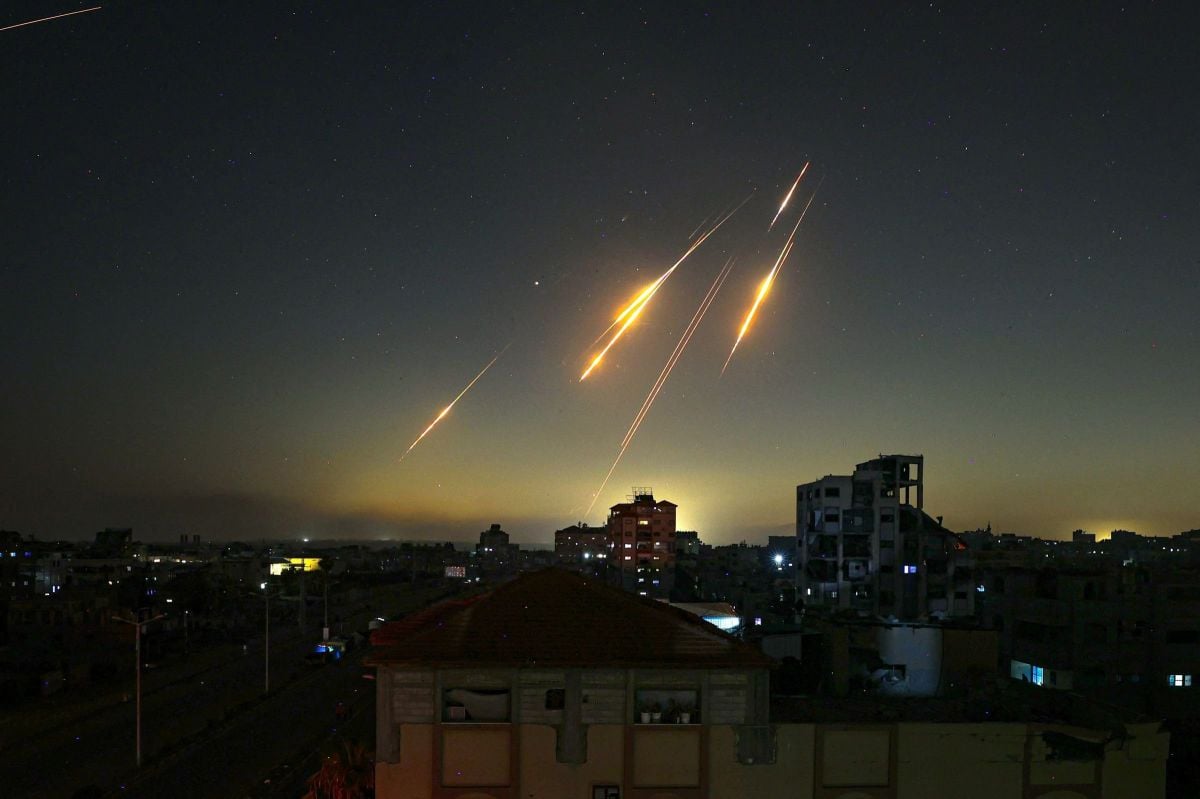
This photo taken from Nuseirat in the center of the Gaza Strip shows rocket trails in the sky late in the evening of June 13, 2025, after Iran struck Israel with salvos of missiles following a massive attack targeting the nuclear and military installations of the Islamic Republic. (Credit: Eyad Baba/AFP)






Israel was able to locate a meeting of Iran's Supreme National Security Council and target it on June 16, four days after the start of the 12-day Iran-Israel war, through hacking the phones of leaders' bodyguards, the New York Times reported on Saturday.
The leaders, who include President Masoud Pezeshkian, the heads of the judiciary and the intelligence ministry and senior military commanders, were not killed in the attack, but a number of guards were. The emergency meeting was taking place in a bunker 100 feet below a mountain slope in the western part of Tehran.
The account of Israel’s strike on the meeting, and the details of how it tracked and targeted Iranian officials and commanders, is based on interviews with five senior Iranian officials, two members of the Islamic Revolutionary Guards Corps and nine Israeli military and intelligence officials.
According to the NYT, the "meeting was so secret that only the attendees, a handful of top Iranian government officials and military commanders, knew the time and location."
By June 16, Israeli attacks had already destroyed military, government and nuclear facilities across Iran, while also eliminating much of the country's senior military leadership. The Israeli army had already killed a number of high-profile figures associated with the nuclear program, including Tehranchi and Fereydoun Abbasi. Hacking bodyguards' cellphones was the way they were all located.
According to the NYT, the officials, who arrived in separate cars to the Supreme National Security Council meeting on June 16, did not carry mobile phones, knowing that Israeli intelligence could track them.
Despite all the precautions, Israeli jets dropped six bombs on top of the bunker soon after the meeting began, targeting the two entrance and exit doors.
The attack rattled Iran’s intelligence services, and officials later found out how Israeli forces had located the meeting.
According to Iranian and Israeli officials, Iranian security guards’ careless use of mobile phones over several years, including posting on social media, played a central role in allowing Israeli military intelligence to target Iranian nuclear scientists and military commanders.
“We know senior officials and commanders did not carry phones, but their interlocutors, security guards and drivers had phones; they did not take precautions seriously, and this is how most of them were traced,” said Sasan Karimi, who previously served as the deputy vice president for strategy in Iran’s current government and is now a political analyst and lecturer at Tehran University.
“Using so many bodyguards is a weakness that we imposed on them, and we were able to take advantage of that,” one Israeli defense official said.
After Israel last year detonated bombs hidden inside thousands of pagers carried by Hezbollah members in Lebanon, Tehran banned many of its officials in particularly sensitive jobs from using smartphones, social media and messaging apps. Smartphones are now completely off limits for senior military commanders, nuclear scientists and government officials..
The cellphone ban initially did not apply to the security guards. That changed after Israel’s wave of assassinations on the first day of the war. Guards are now supposed to carry only walkie-talkies, while only team leaders who do not accompany the officials can carry cellphones.
In a video interview with an Iranian journalist, the newly appointed head of the Revolutionary Guards Corps, Brig. Gen. Ahmad Vahidi said that although Israel had human operatives and spies in the country, it had tracked senior officials and scientists and discovered the location of sensitive meetings mostly through advanced technology.
“The enemy gets the majority of its intelligence through technology, satellites and electronic data,” General Vahidi said. “They can find people, get information, their voices, images and zoom in with precise satellites and find the locations.”
