







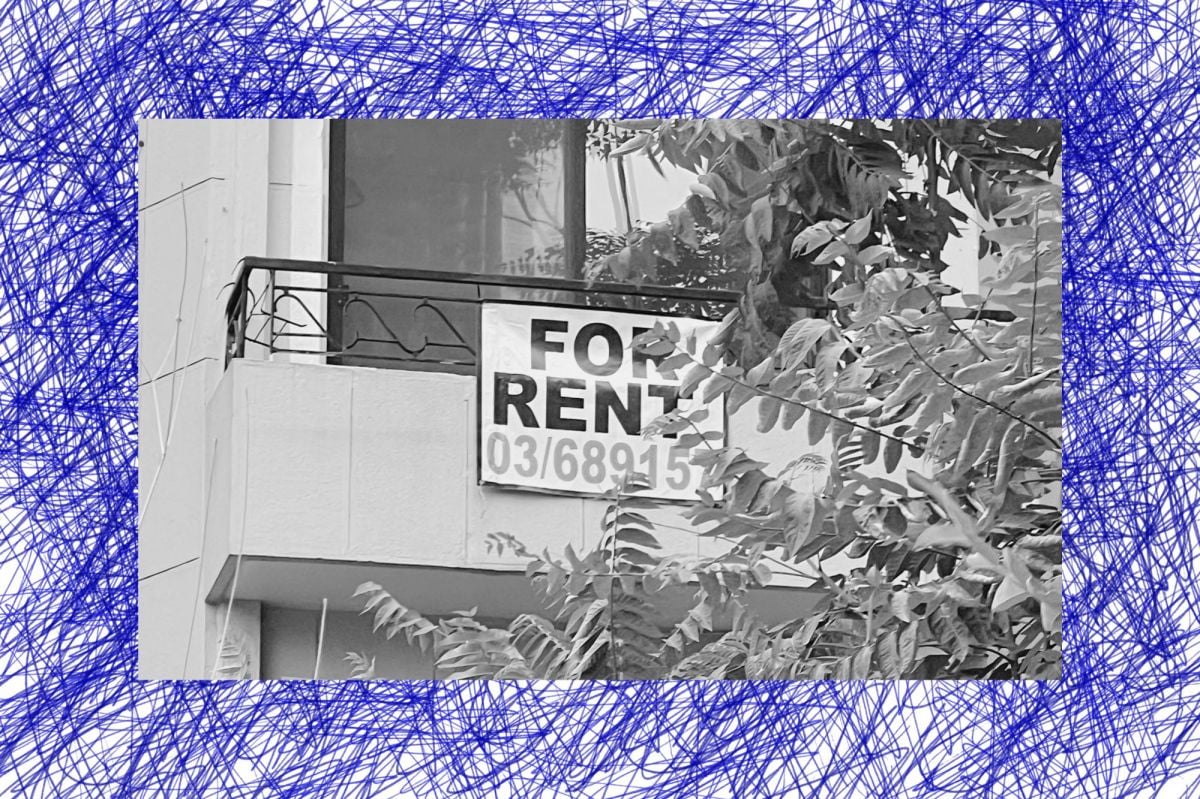
Illustration by Jaimee Lee Haddad.






In a country battered by crises, from the economic collapse ongoing since 2019 to the absence of a functioning state, even life’s most basic needs are hard to secure.
In Lebanon, many people, especially younger generations, struggle to find apartments that are both affordable and livable. On paper, the law says something. In practice, it is often another story.
So how does rent work in Lebanon? What does the law actually say, and what is happening on the ground?
Let’s break it down.


1. How do you rent an apartment in Lebanon and what does the law actually say?
The short answer: A standard lease is three years.
Under Lebanon’s Code of Obligations and Contracts, a rental contract should run for three years and is renewable.
During that time, the landlord cannot change the terms, cannot raise the rent and cannot evict the tenant without a legal reason and a court order. The rent amount stays fixed until the three years end, unless the two parties decide otherwise independently of the contract
If the landlord wants to raise the rent or take the apartment back after the term, they must send written notice at least two months before the contract expires.
If they do not, the lease renews automatically for another three years under the same terms.
Rent is paid as agreed in the contract which stipulates the amount, method and dates.
If the tenant is late, the landlord can send a warning letter giving 15 days to pay. If payment is still not made, the landlord can go to court to end the lease — a lengthy and uncertain process.
One important point is that, at the end of the day, the law is one thing, but what governs the general dynamics is another, which is mainly verbal agreements between the two sides.

2. How are things different after 2019?
Before the crisis, lease contracts were generally paid in Lebanese Lira.
By law, landlords cannot refuse payment in Lebanese Lira. Article 192 of the Money and Credit Code makes accepting lira mandatory, as the matter is tied to state sovereignty. Refusal could lead to six months to three years in prison and a fine between LL500,000 and LL2 million. Although no one has ever really gone there.
Tenants also had the option to pay in U.S. dollars, calculated at the former fixed exchange rate of LL1,500 to the dollar.
When the currency collapsed in late 2019 and the exchange rate became unstable, tenants with older lira contracts suddenly paid much less in real value. Those earning in U.S. dollars found it even easier to cover their rent.
That advantage ended once those leases expired. Landlords moved to renew contracts in U.S. dollars.
Today, most rental agreements are priced directly in cash dollars, or in lira at the current rate, which has pushed real costs much higher.

Today, although the law still requires a three-year lease with a fixed rent during the term, many landlords now use one-year contracts and raise the rent every year.
By law, such contracts should automatically renew every three years, and tenants are not obliged to accept the yearly hikes.
Most tenants end up accepting the new conditions, through verbal agreements with landlords on yearly rent increases, to avoid tension and ensuing legal complications.

3- What’s the story of old/new rents and what are the non-commercial rents?
“New” rents aren’t really new. The term comes from a major change in 1992 that split the market into two systems.
Old rent covers leases signed before July 1992. These contracts froze rent at very low rates for decades and gave tenants strong protections. Landlords couldn’t raise the rent or evict tenants unless they had a legal reason, and even then they usually had to pay compensation.
New rent applies to leases signed after July 1992. These, as explained above, follow the three-year minimum lease rule, with terms, including price, set by mutual agreement. Rent can only change when the lease ends or is renewed.
And then there’s old non-residential rent. This includes contracts for shops, offices, factories and similar spaces signed before 1992.
In 2014, a law was passed that practically ended this pre/post 1992 divide. The idea behind it was to gradually “normalize” the old rents and liberalize the whole market. It was only sporadically applied, notably because some of the dispositions of the law were never put in place.
A law passed in 2025, and amended just weeks later, gave these tenants between five and eight years before their rent fully moves to market rates, with annual increases capped at 5 percent of the property’s rental value. The exact timeline depends on factors like whether the tenant paid an entry fee, when it was paid and the size or type of property. Claude Assaf explains the law on non-residential rents in detail here.
