


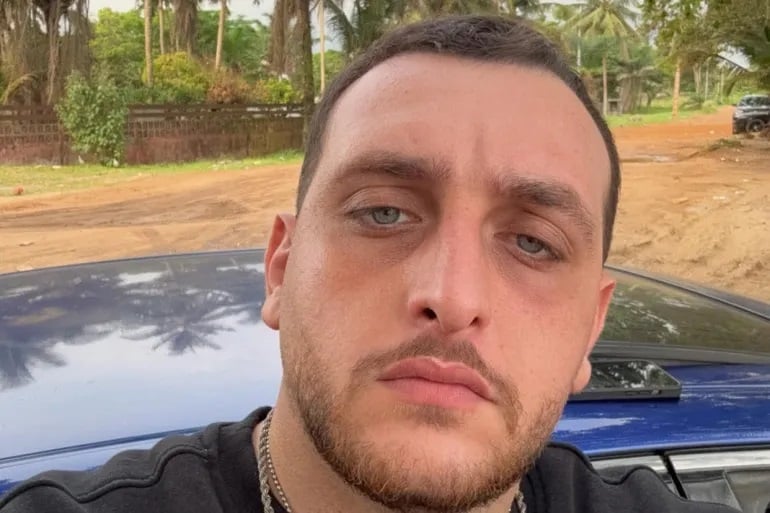
A photo of Nazih al-Azzi. (Credit: Photo taken from his Facebook account.)






Gabonese influencer Nazih Marwan al-Azzi, of Lebanese descent, was arrested in early August in Beirut at the request of Gabonese authorities, according to Lebanon’s General Security and a source cited by RFI (Radio France Internationale.)
The 25-year-old is accused of attempting to blackmail Gabonese President Brice Clotaire Oligui Nguema by demanding six billion CFA francs — about ten million dollars. In exchange for not releasing content he described as "compromising" against the president himself and other influential figures in the Gabonese regime, according to several international media outlets and the influencer's posts on Facebook.
"The General Security Directorate has arrested Lebanese citizen Nazih Marwan al-Azzi for undermining diplomatic relations between the Lebanese state and the Gabonese state, which compromised the interests of the Lebanese community in Gabon," reads a statement from the institution published on Aug.t 1.
This arrest comes after Nazih posted a first audio recording of what he presented as a private conversation between himself and the Gabonese head of state. The leak reportedly alarmed authorities in Libreville, especially since the influencer claims to possess no fewer than 46 other recordings and 14 "sensitive" videos.
This blackmail attempt, made public on social media, sparked an outcry in Gabon and neighboring countries.
The Lebanese community in Gabon, has been established for several generations, has distanced itself from their young compatriot, calling for respect for Gabon's institutions.
"The Lebanese community in Gabon strongly and vigorously condemns the behavior of Nazih, considered a black sheep and a stray, who is damaging social harmony," wrote its president Hassan Mezher Nfoumou in a statement, while also expressing "total deference" toward the Gabonese president.
Nazih, who had already been briefly detained and then released by Gabonese security services before leaving Libreville, repeated the act once he arrived in Lebanon by promising new revelations against Nguema.
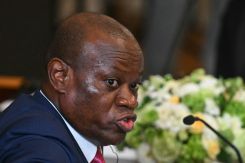
Possible extradition to Lebanon
The Gabonese presidency has not yet officially responded to the case. According to RFI, judicial sources in Libreville said that the authorities were preparing to open a criminal investigation upon Nazih's arrival in the country.
Although there is no judicial cooperation agreement between Beirut and Libreville, the two countries are reportedly negotiating a compromise for the possible return of Nazih to Gabon, where he could face charges of "organized group corruption, blackmail, and public insults," according to Gabonese media.
Contacted by L'Orient Today, General Security did not immediately respond to our inquiries, while the extradition of a Lebanese citizen to a foreign country is prohibited under Lebanese law.
The Gabonese-Lebanese, who has tens of thousands of followers on his social media accounts such as TikTok, Facebook, and YouTube, made headlines in Gabon after posting videos critical of Gabonese authorities.
He sometimes presents himself as an anti-corruption activist, sometimes as a victim of the "mafia regime," according to his own words. "I asked the chief for six billion, and they offered me a monthly income to keep quiet," he said in one of his latest audio files published on Aug. 1, 2025, before his arrest.
Political opponents of Nguema, who won by landslide in the last elections in April 2025 two years after leading a military coup against former President Ali Bongo, accuse the young man of being a former collaborator of the Gabonese General Directorate of Special Services (DGSS) before turning against the current government.
However, until last July 11, Nazih had been posting messages praising the Gabonese head of state. "The triumphant return of President Oligui: People march for their leader," he wrote on the day of Nguema's return from the United States, where he had met with several other African presidents and Donald Trump at the White House.
Photos of his Lebanese passport, indicating he was born in 2000 in Nabatieh al-Fawqa, and of his father, Marwan al-Azzi, are also circulating on Gabonese social media.

 7 p.m. recap: 1 person killed near border with Lebanon; 200 kilos of explosives carried by mules; Riyadh shuts its airspace