












Hezbollah followed President Joseph Aoun’s speech marking the 80th anniversary of the Lebanese Army with close attention. The group was keen to hear what the president would say ahead of Tuesday’s Cabinet session, which is expected to adopt a resolution calling for Hezbollah to hand over its weapons to the army, amid mounting local and international political pressure.
While Hezbollah believes Aoun has so far handled the issue in a rational and balanced manner, several parts of the speech raised concerns. The first was the president’s repeated warnings against “adventures” and “suicidal moves,” a thinly veiled reference to Hezbollah’s decision to open a support front for Hamas on Oct. 8, 2023.
The party was also struck by the final part of Aoun’s address, in which he appeared to call on the army to bear arms on behalf of all Lebanese and to take over border protection duties.
To Hezbollah, this sounded like an official declaration that the army is now tasked with executing a new mission: taking control of the “resistance’s” weapons.
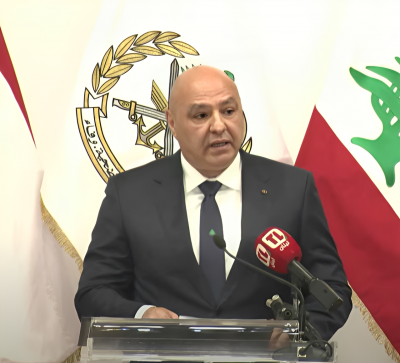
Hezbollah acknowledges that the president is currently under intense pressure to act swiftly. The party is closely following the details of the negotiations with U.S. envoy Tom Barrack, whether through direct dialogue with Aoun and his team or via Parliament Speaker Nabih Berri.
According to Hezbollah, the American envoy presented Lebanon with a document outlining a clear timetable for weapons control.
The plan consists of four stages spread over 120 days starting Aug. 1. The first stage, from Aug. 1 to 15, calls for the government to adopt a disarmament plan targeting Hezbollah.
In return, the Israelis would be expected to halt their attacks on Lebanon. The second stage covers the period from the 15th to the 60th day. During that time, Hezbollah would be required to hand over half of its weapons, not just those classified as heavy.
In exchange, the Israelis would withdraw from two of the five positions they still occupy in southern Lebanon.
The third stage, from the 60th to the 90th day, involves Hezbollah surrendering the rest of its weapons. In parallel, the Israelis would pull out from the remaining three positions.
The fourth stage runs from the 90th to the 120th day. During that period, all other militias and Palestinian factions would be required to hand over their weapons to the state.
However, when asked whether any guarantees had been secured to ensure Israeli compliance, Barrack made it clear that there were none, effectively stating the proposal was a take-it-or-leave-it offer.
The document was shared with officials and also presented to Hezbollah. The party immediately rejected it, stating that it does not consider itself bound by what it described as “Israeli demands.”
During discussions between Hezbollah and Lebanese officials, all parties agreed on the need to propose alternative ideas to the Americans. As a starting point, Lebanon called for an end to Israeli attacks on its territory, the withdrawal of Israeli forces from occupied positions and the release of prisoners.
Hezbollah maintains that it has fully honored its side of the cease-fire agreement, raising the question as to why Israel continues to exert pressure on Lebanon. According to the party, no answer has been given to that question.
During his discussions with President Aoun, Barrack called for a firm commitment from Hezbollah to hand over its weapons. Aoun advised him to raise the matter with Berri, who then proposed a full 15-day truce, after which Hezbollah would announce the start of the disarmament process.
The proposal seemed acceptable to Barrack, who described his meeting with Berri as “excellent” in a statement to the press. However, it seems that a third party later intervened to reject the proposal.
Barrack then requested a second meeting with Berri, who asked his adviser, Ali Hamdan, to meet him. The discussions resumed and seemed to be progressing well. But the atmosphere shifted once again after Barrack arrived in Paris and met with Israeli Minister Ron Dermer.
The Lebanese proposal was rejected on the grounds that it lacked specific dates. The Americans returned to the idea of a clear Cabinet decision requiring Hezbollah to hand over its weapons to the army within a set timeline.
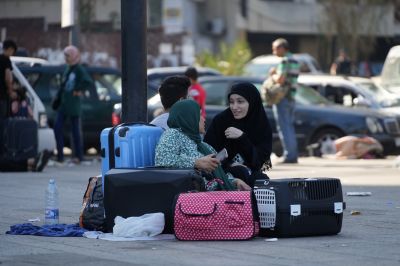
To preempt potential internal disputes or public controversy, the president chose to deliver a firm and unambiguous speech ahead of the Cabinet session, effectively announcing the Lebanese decision to place all weapons under the army’s control.
Hezbollah, which closely followed the speech, says it fully understands the Lebanese position and noted that it accepted the idea of placing its weapons under state control. However, the party is demanding guarantees about what comes next.
What happened in Syria, it says, offers little reassurance. According to Hezbollah, the Israelis demanded the creation of three areas outside the control of state forces, Deraa, Quneitra and Sweida. The group fears that Israel may seek a similar arrangement in Lebanon, reducing the army to a policing role or, as Barrack put it in one of his statements, “border guards.”
Hezbollah insists the moment calls for internal dialogue and national unity. And since Tom Barrack considers the issue of Hezbollah’s weapons to be purely a domestic Lebanese matter, then, the group says, he should leave it to the Lebanese to handle.
This article was originally published in French in L’Orient-Le Jour. It was translated by Michelle Abou Chaar.

 8 p.m. recap: Israel again threatens Beirut’s south suburbs; 2 ships hit near Hormuz; Riyadh football matches canceled