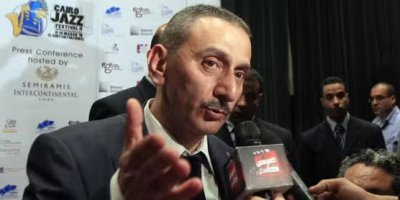
Ziad Rahbani at the Cairo Jazz Festival, March 2010. (Credit: Khaled Desouki/AFP)






Ziad Rahbani, a free and committed voice of the Lebanese cultural scene, passed away Saturday morning at the age of 69. The son of legendary singer Fairuz and composer Assi Rahbani, he was a figure some preferred not to hear — but one many will never forget.
The Rahbani family announced that the funeral will take place on Monday, July 28, at 4 p.m. at the Church of the Dormition of the Virgin in Mhaydseh-Bikfaya, in the Metn area. The family will receive condolences before and after the service, as well as on Tuesday the 29th, in the church’s reception hall.
A brief statement published by several of his “companions” also called for a farewell gathering in front of Khoury Hospital in Hamra on Monday at 8 a.m., to “say goodbye” to the late artist.
Born on January 1, 1956, in Antelias on the Metn coast, Rahbani studied at College Notre-Dame de Jamhour, a Jesuit school. He began his artistic career in the early 1970s with the play Sahriye (evening), which was followed by several others that offered sharp critiques of Lebanese society.
At just 17, he composed his first song, Sa’alouni el nas (“People asked me”), performed by his mother Fairuz. He would go on to write other notable songs for her, including Kifak enta (“How are you?”) and Bektob esmak (“I write your name”).
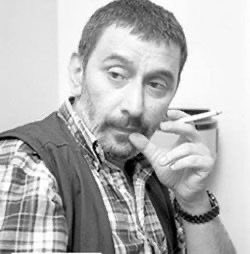
Ziad Rahbani, a staunch supporter of the Lebanese Communist Party and a fierce critic of the country’s sectarian system, remained in Beirut during the civil war (1975–1990), settling in the city’s western sector.
His offbeat humor and sharp political satire made him a cultural icon in Lebanon. Through plays like Bil nisbe la boukra chou? (“As for tomorrow, what?”) and Film amerike taweel (“A long American film”), he blended political satire, social critique, and politically charged jazz, leaving a lasting mark on the country’s artistic scene.
Read also
The Ziad Rahbani play that predicted the Civil War (and that Lebanon insists on replaying)
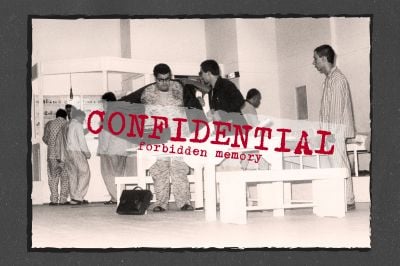
In recent years, Ziad Rahbani had largely withdrawn from the artistic scene, making only rare public appearances — most notably in 2018 at the Beiteddine Festival.
He also performed at the American University of Beirut (AUB) and collaborated quietly with young Lebanese artists, remaining active on the margins, away from the spotlight.