





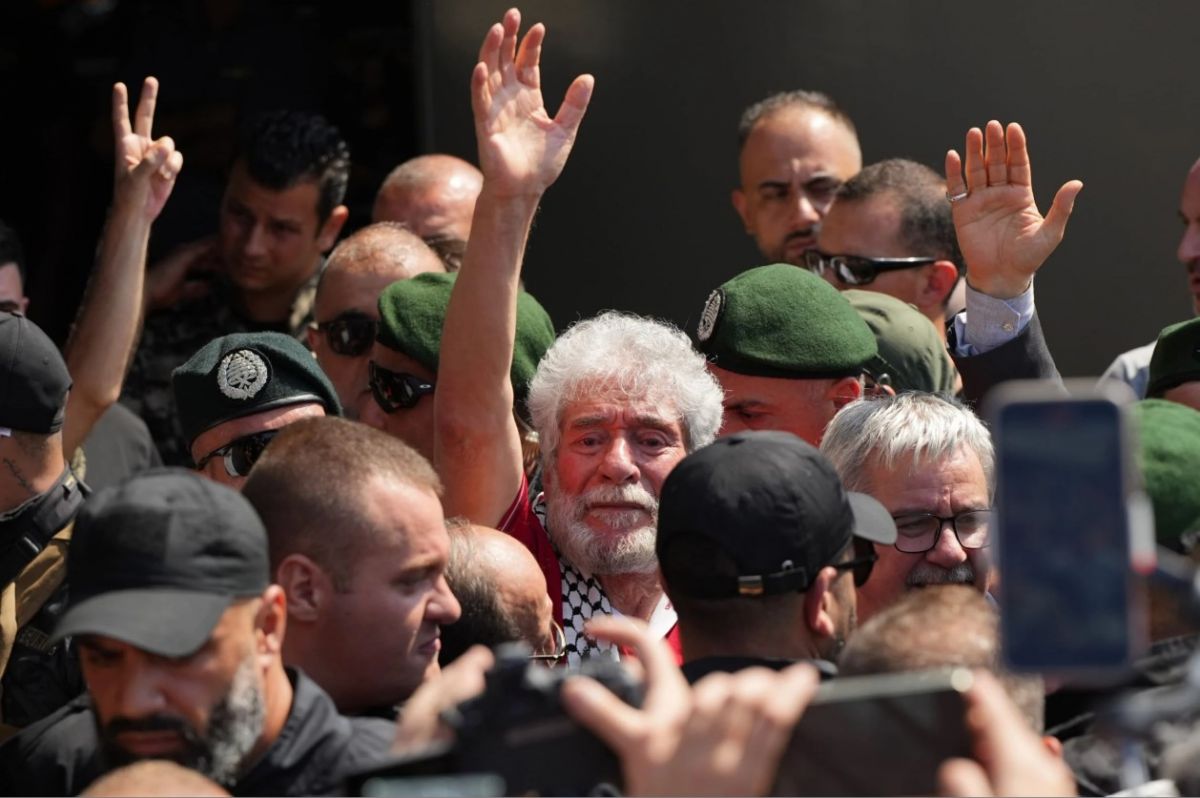
Georges Abdallah waves to the crowd as he leaves Beirut airport, July 25, 2025. (Credit: Mohammad Yassin/L'Orient Today)






BEIRUT — George Abdallah, one of France’s longest-serving prisoners, arrived in Beirut on Friday afternoon after being released in the morning following 40 years behind bars. From the airport, he urged continued support for the "resistance" — the term used for Hezbollah and its allies — and called for ongoing "fight" against Israel.
"We must continue to fight against the enemy and stand in solidarity with the resistance," said the Lebanese pro-Palestinian activist as he left Beirut airport, where several hundred people had gathered to welcome him. Abdallah was accompanied by Lebanese leftist political figures, including MP Osama Saad of the Nasserist Popular Organization, Lebanese Communist Party leader Hanna Gharib, and Hezbollah MP Ibrahim Moussawi.
"The resistance is not weak. It would be weak if its leaders were traitors, but its leaders died as martyrs," he said, in what was likely a reference to Israel’s killing of Hezbollah leader Hassan Nasrallah in September 2024 and several Hamas leaders, including Ismail Haniyeh, who was killed in Tehran in July 2024, and Yahya Sinwar, assassinated in Gaza on Oct. 16, 2024. Abdallah, who was convicted in the 1980s for complicity in the assassinations of American and Israeli diplomats, also lamented that "millions of Arabs" have not mobilized to support Gaza, singling out Egypt for criticism over its control of the enclave’s southern border in coordination with Israel.
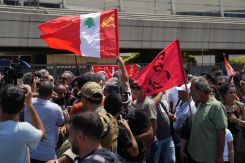
The plane carrying Abdallah landed shortly after 2:30 p.m. at Beirut’s airport, where several hundred people waited outside the terminal to greet him. Among them were supporters of the Lebanese Communist Party (LCP) and the Syrian Social National Party (SSNP), waving flags amid the crowd and chanting, "Tell the French, and the Lebanese state, that George Abdallah is freed."
Numerous journalists were also present. In the airport lounge, Abdallah was welcomed by his family alongside Saad and Gharib.
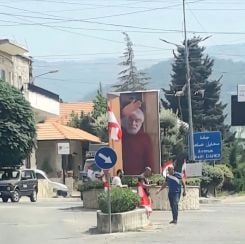
Abdallah was then expected to travel to his hometown of Qobeiyat in the northern Akkar district, where Lebanese flags and welcome banners had been put up, according to L’Orient Today’s regional correspondent. A popular reception was planned in his honor, with local notables, residents and members of his family attending. The former prisoner would then return to his family home in the center of the village, which he had not seen in more than 40 years.
‘Emotional shock and political victory’
Abdallah left prison during the night. At around 3:40 a.m. (0130 GMT), a convoy of several vehicles, including two black vans with flashing lights, departed from Lannemezan prison in southwestern France, an AFP team observed, though the activist—now with a white beard—was not visible.
According to his lawyer, Jean-Louis Chalanset, who spoke to L’Orient-Le Jour, the 74-year-old former teacher was escorted by a large prison convoy of six vehicles toward Tarbes-Lourdes-Pyrénées airport. From there, he was flown on a military plane to Roissy, near Paris, before departing for Beirut — a day earlier than originally planned. Chalanset immediately informed Ziad Taan, the chargé d’affaires at the Lebanese Embassy in Paris, of the schedule change.
"It’s both a joy for him, an emotional shock and a political victory after all this time," Chalanset told AFP after the convoy left.
The Paris Court of Appeal ordered Abdallah’s release last week, effective July 25, on the condition that he leave French territory and not return.
He had been eligible for release since 1999, but 10 previous requests had been denied. Inmates serving life sentences in France are typically freed after fewer than 30 years.
The Paris public prosecutor’s office announced Monday it would appeal the release decision to the Court of Cassation. However, the appeal — expected to be reviewed in several weeks — does not have a suspensive effect and could not prevent Abdallah’s departure.
‘Very happy’
Chalanset, who visited Abdallah in prison on Thursday, said the activist "seemed very happy with his upcoming release, even though he knows he is arriving in the Middle East in an extremely heavy context for the Lebanese and Palestinian populations." The lawyer added that he now had to "warn those who are waiting for him on Saturday in Beirut," as Abdallah was returning to his homeland a day earlier than planned.
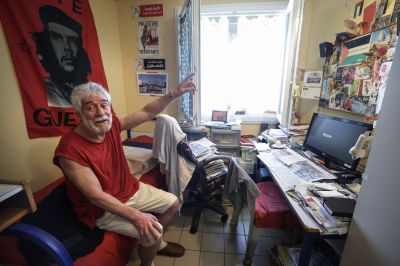
In recent days, Abdallah cleared out his cell, which had been decorated with a red Che Guevara flag and stacked with newspapers and books. He entrusted the items to his support committee, around 200 of whom were still demonstrating outside the prison on Thursday afternoon. Abdallah gave most of his clothes to fellow inmates and left with only "a small suitcase," his lawyer said.
His relatives had hoped he would be received at Beirut airport’s honorary salon and sought permission from Lebanese authorities, who had long pressed France for his release. From there, Abdallah was expected to travel to his native village of Qobeiyat in northern Lebanon, where "a popular and official welcome will be reserved for him," his family said.
AFP met Abdallah in his cell on the day of the court’s decision, accompanied by a parliamentarian. "Forty years is a long time, but you don’t feel them when there is a dynamic of struggle," he said.
The judges of the Court of Appeal ruled that the length of his detention was “disproportionate” to the crimes committed, especially given the age of the former leader of the Lebanese Armed Revolutionary Factions (LARF), a long-disbanded Marxist anti-Israel group.
‘Past symbol’
The court noted that LARF, the small group of Lebanese Marxist Christians, long since dissolved, had "not committed any violent action since 1984," and described Abdallah as a "past symbol of the Palestinian struggle."
While lamenting that he had not "evolved" or expressed "regret or compassion for the victims whom he considers enemies," the judges ruled that Abdallah — who wants to "end his days" in his village, possibly engaging in local politics — no longer posed a risk to public order.
At the time of the events, amid the Lebanese Civil War and Israel’s 1978 invasion of southern Lebanon, the LARF targeted Israeli and American interests abroad. Before Abdallah’s arrest in 1984, the group carried out five attacks in France, including the 1982 killings of two diplomats: U.S. Lt. Col. Charles Ray and Israeli diplomat Yacov Barsimantov, believed to be the Mossad chief in France, who was shot dead by a woman in front of his wife and two children.
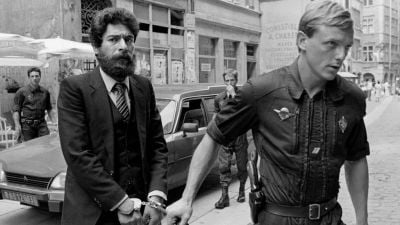
Abdallah was identified through fingerprints found in a hideout stocked with explosives and weapons, including the pistol used in both murders. He appeared alone before the Palais de Justice (Justice Palace) in 1987 and became public enemy number one in France, mistakenly believed to be behind the 1985-86 wave of attacks that killed 13 people and spread panic in Paris.
He was sentenced to life in prison but has always denied involvement in the diplomats’ assassinations, while refusing to condemn "acts of resistance" against "Israeli and American oppression."

 Evening recap: Netanyahu announces West Bank offensive; 7 killed in Jordan church shooting; tents burned in south Lebanon
 US strike on Iran this weekend? ‘Absolutely,’ says Barrack; ‘I have no idea,’ says Trump