





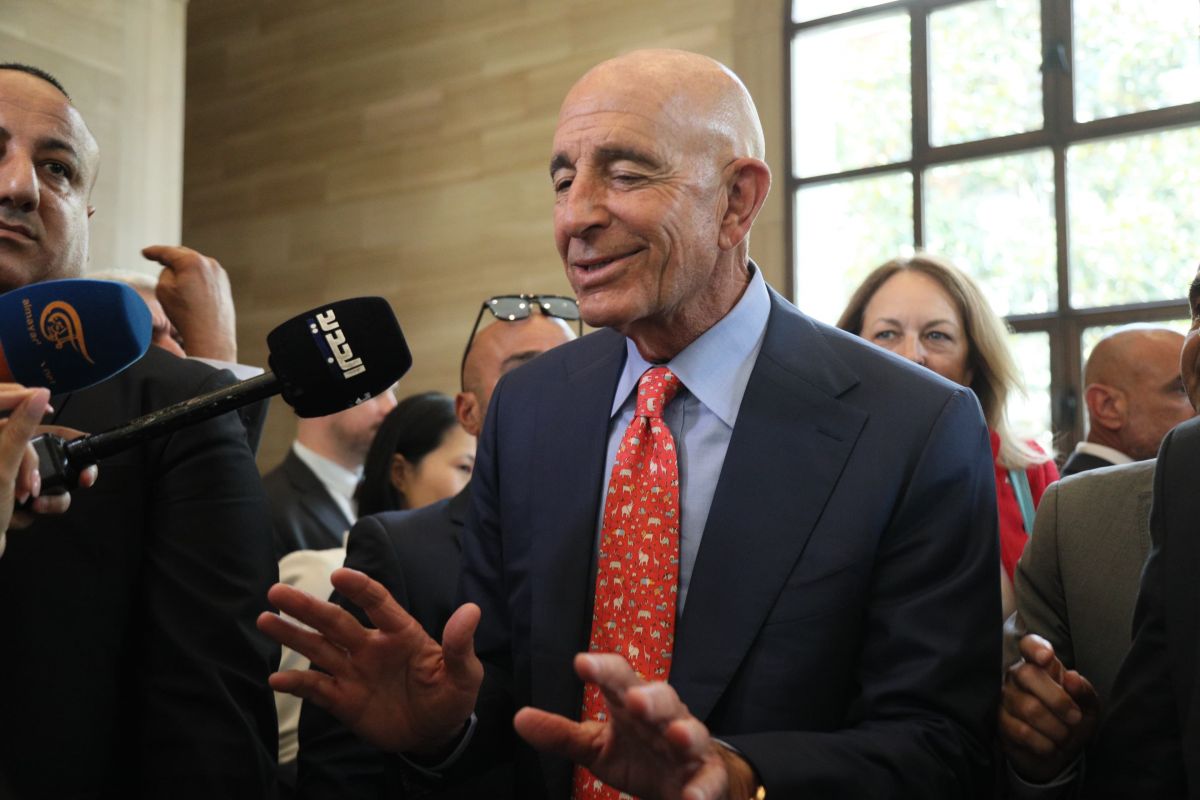
The American envoy for Lebanon and Syria To Barrack, during his visit to Beirut on July 22, 2025. (Credit: Mohammad Yassin/L'Orient Today)






BEIRUT — Tom Barrack, the U.S. envoy to Lebanon and Syria, called Wednesday for a national dialogue in Lebanon to address the "complex issue" of the state’s monopoly on arms. Speaking from Bkirki during his second visit to Lebanon in a month, Barrack stressed the urgency of reaching a consensus.
"It’s time to come together around a complex question. I came to offer advice. We have been working on this issue for four weeks. It is a complex process, and I understand the difficulties. President Trump wants Lebanon to succeed," Barrack said after meeting Maronite Patriarch Bechara Rai.
Barrack described the United States as an "honest broker" aiming to resolve disputes and said talks would continue with parties "still absent from the negotiating table." He promised to return to Lebanon to push the dialogue forward.
He also praised the efforts of Parliament Speaker Nabih Berri. "The process is underway, but it is up to the government to decide on its priorities. A clear decision must be made and the law on the arms monopoly must be enforced to limit the possession of weapons and put an end to aggression," Barrack said.
Advocating for "patience, to allow the dialogue to move forward without losses," he added: "Stability is important; without it, no one will come to help you."
'No new war'
A day earlier, in an interview with Lebanese broadcaster al-Jadeed, Barrack sought to ease fears of another major military confrontation with Israel, despite a recent escalation in Israeli strikes and cross-border infiltrations in southern Lebanon.
When asked by journalist Georges Salibi whether a new Israeli war could erupt if Hezbollah refuses to disarm, the U.S. envoy said the Lebanese "will certainly not face another Israeli war." He stressed that "no one wants war," adding that Israel also has no desire for further conflict.
Barrack clarified that he does not engage directly with Hezbollah. "I address only the government and the three official presidents," he said, emphasizing that U.S.-led dialogue is limited to Lebanon’s state institutions.
Berri 'optimistic'
After meeting Barrack on Tuesday, Parliament Speaker Berri told al-Modon newspaper he was "optimistic" about developments. "My optimism is due to his optimism. The meeting was excellent," he said, adding that the positive atmosphere helped ease the climate of fear that had prevailed in recent days.
Berri declined to elaborate on the reasons for his optimism but dismissed reports of any "new agreement" with the U.S. envoy. Instead, he said there was an existing agreement between the two sides that they would "strive to implement," which he said would help end Israeli attacks.
The debate over Hezbollah’s disarmament has further polarized Lebanon’s political scene as international pressure mounts on the issue following the Nov. 27, 2024, cease-fire that ended last fall’s devastating war between Hezbollah and Israel.
On Friday, Hezbollah Secretary-General Sheikh Naim Qassem reiterated the group would "not give up its strength" and was "ready to confront" Israel. Hezbollah has maintained that any dialogue on its weapons depends on an end to daily Israeli attacks in southern Lebanon and the withdrawal of Israeli troops from five positions they still hold.
Since the cease-fire, Israeli strikes and shootings have killed more than 270 people in Lebanon, mostly in the south and the Bekaa Valley.

 Evening recap: Netanyahu announces West Bank offensive; 7 killed in Jordan church shooting; tents burned in south Lebanon
 US strike on Iran this weekend? ‘Absolutely,’ says Barrack; ‘I have no idea,’ says Trump