





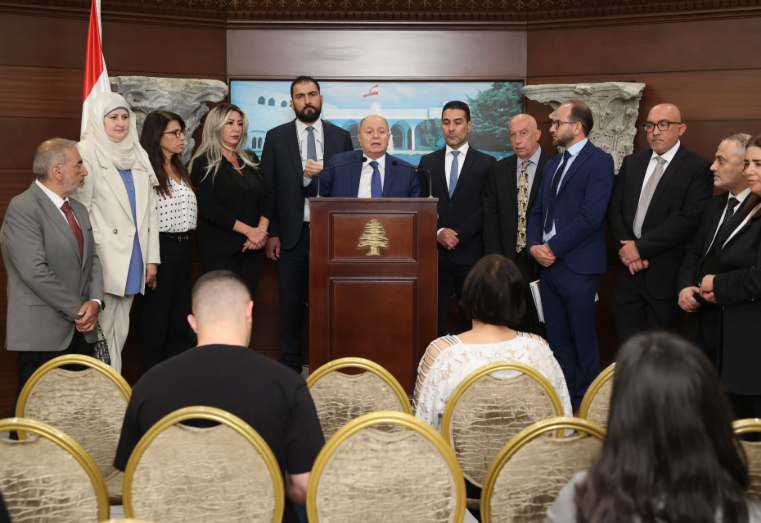
The president of the General Confederation of Lebanese Workers (CGTL), Béchara al-Asmar, during his press briefing following his meeting in Baabda with President Joseph Aoun on July 16, 2025. Photo published on the presidency's X account.






BEIRUT — Public sector workers in Lebanon have suspended their strike pending new negotiations on pay raises and end-of-service benefits, following a meeting with President Joseph Aoun at Baabda Presidential Palace, the head of the national trade union center said Wednesday.
Beshara Asmar, president of the General Confederation of Lebanese Workers (CGTL), said the strike that began earlier this month would be paused to allow the government to address their demands.
"We came to address the strike issue and achieve concrete results. The president has committed to following up on the case and placing it on the agenda of the Cabinet meeting scheduled for tomorrow [Thursday] in Baabda," Asmar said at the presidential palace, according to a statement published on the presidency's X account.
"We have decided to suspend the strike, in a positive gesture, to give a chance for our demands to be addressed," he added. When contacted, Asmar clarified that the strike suspension would extend beyond Thursday’s Cabinet meeting, marking the start of negotiations over pay increases and end-of-service benefits.
The "administrative committee of public administration employees," one of the civil servants’ leagues, issued a statement announcing the strike suspension to provide an opportunity to the president, as Aoun "promised to put the demands on the agenda of the Cabinet meeting tomorrow."
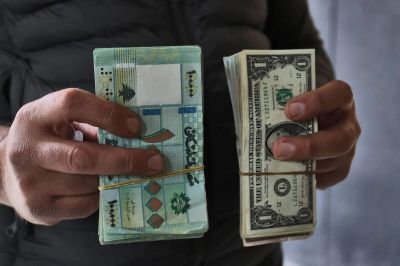
The strike began in early July after the government approved pay raises for senior officials, which several public sector unions described as "contemptuous," especially since public employees’ salaries have yet to return to their pre-2019 crisis levels. The Lebanese lira's sharp depreciation has severely eroded wages.
The League of Public Administration Employees and the Employees’ Committee of the Civil Servants’ Cooperative have been particularly active in the strike movement. However, earlier this week, reports indicated the strike lacked unanimous support across Lebanon, according to the state-run National News Agency (NNA).
The issue of public sector salaries remains one of the most challenging problems facing the government of Prime Minister Nawaf Salam, formed last February. Salaries have not been adjusted sufficiently to offset the lira's collapse, while critics argue the Lebanese administration is overstaffed, inefficient and overly costly.
Before the crisis, public sector salaries accounted for about a third of the state budget, which was approximately $15 billion at the time. The number of public servants is not precisely known but is estimated between 200,000 and 300,000, including members of the armed forces.

 7 p.m. recap: Iran warns Egypt, Israeli soldiers vote in south Lebanon, Haret Hreik responds to Kataeb