


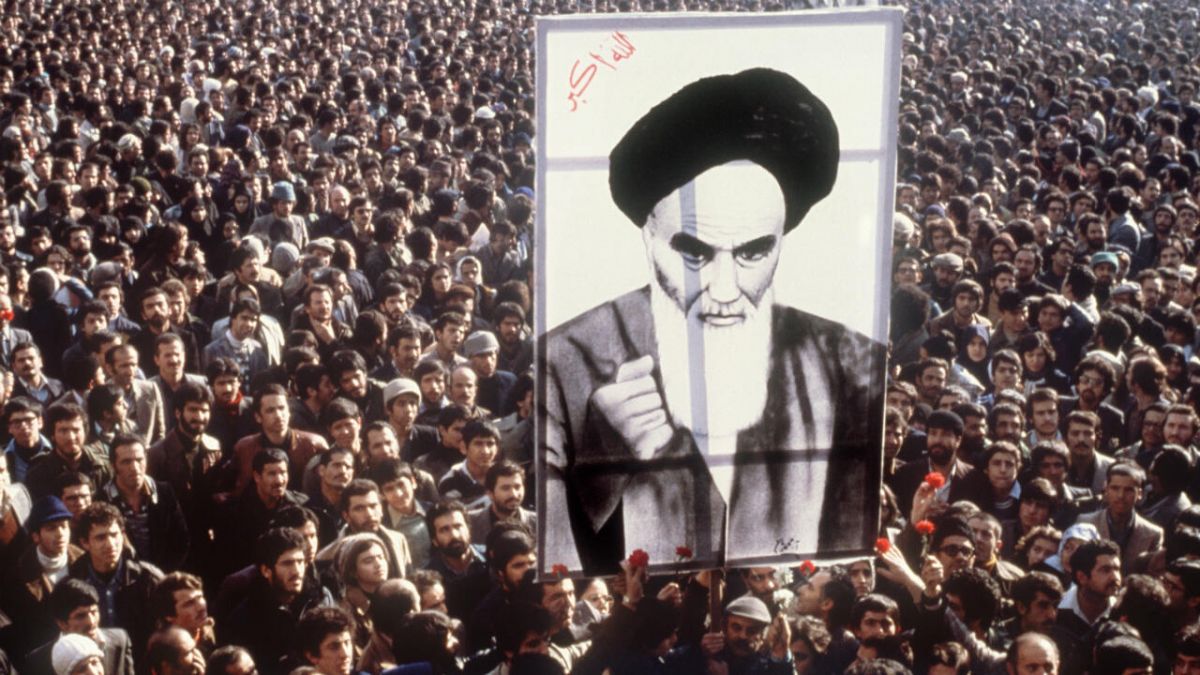
A giant portrait of Ayatollah Khomeini during a demonstration against the Shah, on Jan. 16, 1979, in Tehran. (Credit: AFP)






On Dec. 21, 1959, still youthful with a radiant smile and regal bearing, Farah Diba, 21, was about to wed Iran's shah, Mohammad Reza Pahlavi, who was 20 years her senior. Paris Match, like other celebrity press outlets, was fascinated by the fortunes and misfortunes of the dynasty. The lavish wedding of the new couple embodied both the interest in an exotic, glamorous and imperial "Eastern elsewhere" and the mutual admiration between two great nations, respective symbols of the West and the East — or, more precisely, what the West saw as the "best" of the East. An article in praise of Iran and, indirectly, the “king of kings” was devoted to the event. The story was rewritten to retain only its most flamboyant aspects, those that supported a monarchy’s narrative of leading a modern, Persian country open to the...
On Dec. 21, 1959, still youthful with a radiant smile and regal bearing, Farah Diba, 21, was about to wed Iran's shah, Mohammad Reza Pahlavi, who was 20 years her senior. Paris Match, like other celebrity press outlets, was fascinated by the fortunes and misfortunes of the dynasty. The lavish wedding of the new couple embodied both the interest in an exotic, glamorous and imperial "Eastern elsewhere" and the mutual admiration between two great nations, respective symbols of the West and the East — or, more precisely, what the West saw as the "best" of the East. An article in praise of Iran and, indirectly, the “king of kings” was devoted to the event. The story was rewritten to retain only its most flamboyant aspects, those that supported a monarchy’s narrative of leading a modern, Persian country open to...

 1 p.m. recap: Salam in Nabatieh; up to 10,000 more US troops heading to Middle East
