





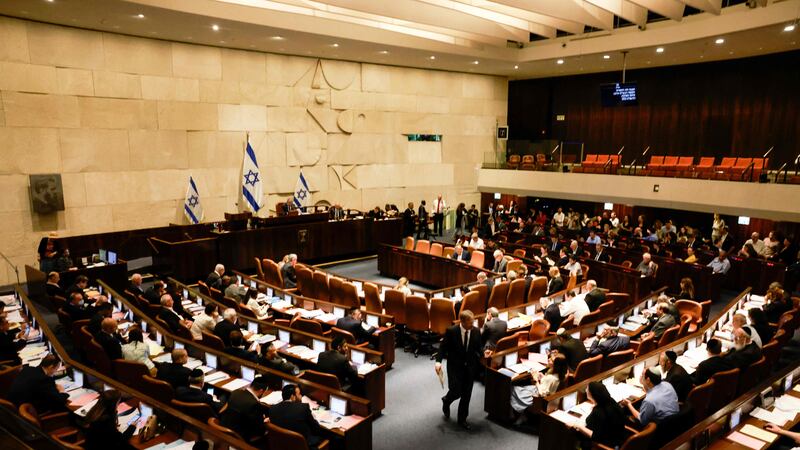
Israeli Knesset meeting. (Credit: AFP)






In a rare instance for the Israeli parliament, on July 9, the Knesset welcomed Saudi Arabian journalist Abdul Aziz Al-Khamis and Syrian national Shadi Martini, both from countries that have not normalized relations with Israel. Each spoke individually in favor of normalization, but with conditions — Khamis spoke of the need for a Palestinian state, and Martini spoke of the need for security guarantees as prerequisites for considering diplomatic relations.
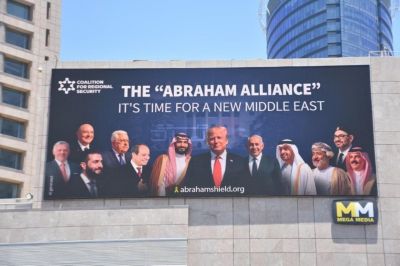
The caucus they spoke at was a new Israeli initiative focused on the expansion of the Abraham Accords, which are diplomatic agreements between Israel and several Arab states, including the U.A.E. and Bahrain, that center around economic and security cooperation.
During his speech, Khamis said normalization was more than just a bilateral move, but a total “regional realignment” that needs to include space for Palestinian dignity and sovereignty. “Today Saudi Arabia and Israel stand at the edge of a new era,” he said, specifically referring to their interests in energy transition, climate security and economic modernization. However, he emphasized that any hopes of normalization can only occur once Israel takes serious steps towards resolving the situation in Gaza. He identified this as a critical obstacle to peace when speaking to the Israeli news outlet The Jerusalem Post after the conference.

Additionally, Khamis stressed the need for a “full solution” in which Middle Eastern cooperation includes the whole region, notably Iran. However, following the recent 12-day war between Israel and Iran, which ended in a cease-fire on June 24, Israel still views Iran as a threat and sees normalization with other Arab states as protection against Iran.
Shadi Martini brought a unique perspective to the meeting, stating that he had met with Syrian President Ahmad Al-Sharaa only weeks prior. Martini recalled Sharaa’s words, stating that, “we only have these opportunities once every 100 years,” when referencing the current regional makeup.
Martini also stated that Israel’s killing of Hezbollah leader Hassan Nasrallah, in Sept. 2024 during the Hezbollah-Israel war, eventually enabled the overthrow of the Assad regime in Syria, calling the latter a “common enemy.”
However, he noted that Israeli military action after the fall of the regime, including the killing of Syrian farmers in border areas, created uncertainty and skepticism surrounding Israel’s intentions. “Israel needs to explain what's the end game here…we need to understand,” Martini said.
Despite expressing some optimism, the participants identified key remaining obstacles. Ever since Israel’s capture of the Golan Heights in 1967, Syria has made reclaiming its sovereignty a key demand, leading to an impasse in negotiations. Yair Lapid, Israeli opposition leader, has made it clear that Israel is unwilling to return the Golan Heights, and has stated that they will only be able to create a “regional coalition” with Syria if “he [Sharaa] takes the Golan Heights issue out of the equation.”
Additionally, Gaza remains a central issue, as cofounder of the Coalition for Regional Security Udi Dekel stated: “Arab states have placed a plan on the table in which they are prepared to take responsibility for the Gaza Strip — and the State of Israel has rejected this plan.” Without the Israeli state’s willingness to take concrete action towards the establishment of a Palestinian state, Saudi normalization seemingly remains off the table. Khamis warned, if Israel “treat[s] regional normalization as a zero-sum equation, it will not only lose Saudi Arabia. It will lose the Arab world’s new consensus for integration."

 Evening recap: Netanyahu announces West Bank offensive; 7 killed in Jordan church shooting; tents burned in south Lebanon
 US strike on Iran this weekend? ‘Absolutely,’ says Barrack; ‘I have no idea,’ says Trump