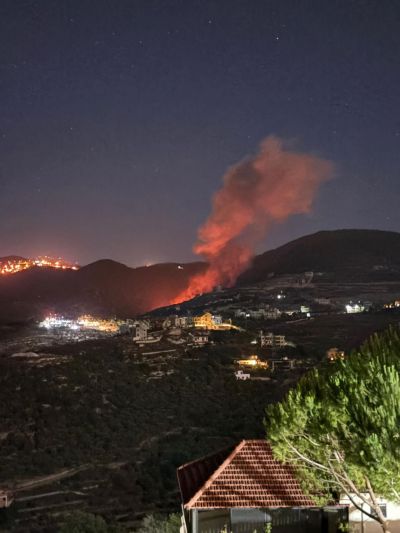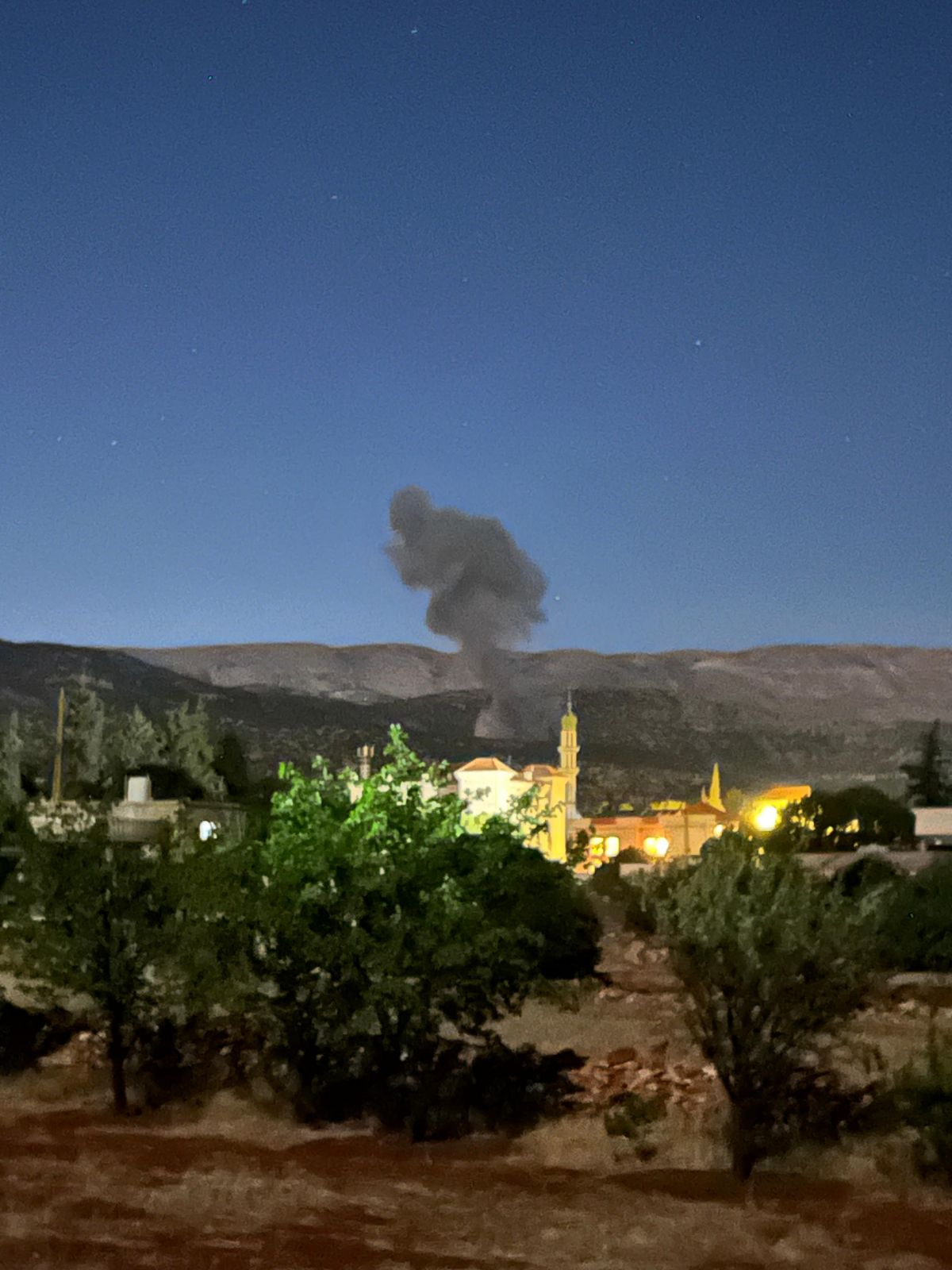
Israeli strikes on the Bekaa Valley on July 6, 2025. Photo sent by L'Orient Today correspondent Sarah Abdallah.






BEIRUT — The Israeli military launched a series of airstrikes Sunday night across southern Lebanon and the Bekaa Valley, L'Orient Today's local correspondents reported, on the eve of U.S. envoy Thomas Barrack's visit to Beirut.
In southern Lebanon, most of the strikes targeted valleys and hills north of the Litani River, as Israel and its allies intensify demands for Hezbollah to disarm across all of Lebanon — not just south of the river. Hezbollah maintains that the cease-fire agreement reached in late November 2024, after 13 months of war, only requires it to hand over its weapons to the state within the border strip south of the Litani. The international community and many Lebanese political actors are now pushing for full disarmament nationwide.
Barrack, a Lebanese-American who serves as U.S. ambassador to Turkey and special envoy to Syria, is expected in Beirut on Monday. He will meet with Lebanese officials to discuss Washington’s latest proposal, which calls for the disarmament of Hezbollah — and all armed Lebanese and non-Lebanese factions — by November 2025. The plan requires Lebanon to submit a detailed implementation mechanism to enforce the state’s monopoly on weapons.
Ahead of the visit, Hezbollah Secretary-General Naim Qassem said the group is prepared for both peace and confrontation but “will not capitulate to Israeli pressure.”
Meanwhile, Lebanese Forces leader Samir Geagea criticized the government for what he called its passive stance, accusing it of waiting for Hezbollah’s response instead of taking initiative. Prime Minister Nawaf Salam reiterated the need for the state to assert its exclusive right to bear arms, emphasizing that upholding Lebanese sovereignty is essential to national security and stability.
Strikes on the South and Bekaa
Sunday night’s strikes followed a rare day of relative calm. Shortly after 9 p.m., Israeli jets hit Boudai in the Bekaa, as well as the heights of Janta, near the Anti-Lebanon mountains. Boudai was targeted multiple times in recent days.
In the South, air raids struck Iqlim al-Tuffah — between Beslaya (Jezzine district) and Kfar Melki (Saida district) — as well as areas near Ain Qana, Houmin and Sarba (Sour). Other strikes hit the Bassatin area along the Arzi River (Saida) and the outskirts of Burj Rahhal (Sour).
Two emergency responders were injured when their ambulance overturned while heading to a strike site.
The Israeli military said the attacks targeted “military sites and strategic weapons storage and production facilities” used by Hezbollah, along with a rocket launch site, according to a post on X by the army’s Arabic-language spokesperson, Avichay Adraee.
The escalation follows Saturday’s deadly drone strikes, which killed one person and wounded at least five others.
Despite the cease-fire in place since Nov. 27, 2024, Israel continues to carry out near-daily strikes in southern Lebanon. More than 250 people have been killed in Israeli attacks since the truce, according to U.N. figures.