


Farmers harvesting crops in North Lebanon. (Credit: João Sousa/L'Orient Today/File photo)






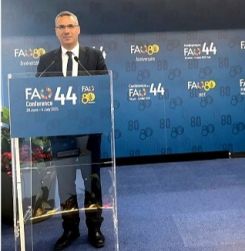
Agriculture Minister Nizar Hani led an official delegation to the 44th FAO Conference in Rome. There, he stressed that “food security is no longer a political or developmental luxury, but an existential priority imposed by the multiple crises facing humanity," the ministry said in a statement Friday.
Highlighting Lebanon’s internal struggles, Hani warned of the “accumulating challenges faced by Lebanon’s agricultural sector due to ongoing political and financial crises, in addition to the severe damages inflicted on agricultural infrastructure by attacks and war on Lebanon, which deprived thousands of farmers from accessing their lands and destroyed livelihoods in rural areas.”
He announced that upon taking office, the ministry declared an “agricultural state of emergency” to prevent further deterioration and to trigger a transformative shift toward a modern, sustainable model rooted in technology, governance, and partnerships.
The roadmap unveiled at the conference includes measures to update forestry laws to curb illegal logging and forest fires, draft a new fisheries law to protect resources and fishermen, strengthen agricultural cooperatives and invest in scientific research and labs to confront climate change and cross-border pests.
Hani also spoke of developing smart irrigation systems, water reservoirs, renewable energy infrastructure, and comprehensive institutional reform. This includes digitization and the establishment of new regulatory bodies, such as a Cannabis Cultivation Regulatory Authority. He emphasized support for high-value, climate-resilient crops tied to quality standards and market promotion — domestic and global — while reviving contract farming and activating joint trade committees with Arab nations.
A “One Health” integrated approach — balancing environmental and public health through unified policies and regulation — was another pillar. He highlighted the launch of a digital “Farmers’ Registry” to link farmers with support services, advice, funding and marketing opportunities.
Domestically, the ministry launched the national campaign, “Agriculture is the Pulse of the Earth,” aiming to reposition the agricultural sector as a sovereign and developmental engine that can ensure food security and reinforce rural resilience.
Finally, Hani outlined his eight foundational pillars for agricultural intervention: recognizing agriculture as a strategic economic sector; securing market access and promoting Lebanese products; upgrading infrastructure and production systems; expanding financing and risk management; endorsing climate-smart practices; nurturing human capital and research capacity; enhancing governance and institutional transparency; and developing precise agricultural information systems to support decision-making. He noted these pillars align with FAO’s 2022–2031 strategic framework and recommendations from the Near East and North Africa regional conference, particularly in climate adaptation, innovation and natural resource governance.
Lebanon, reeling from a severe economic and financial crisis since 2019, faces a severely dry season this year that could affect its agriculture.

 7 p.m. recap: 1 person killed near border with Lebanon; 200 kilos of explosives carried by mules; Riyadh shuts its airspace