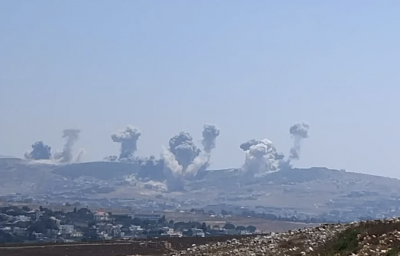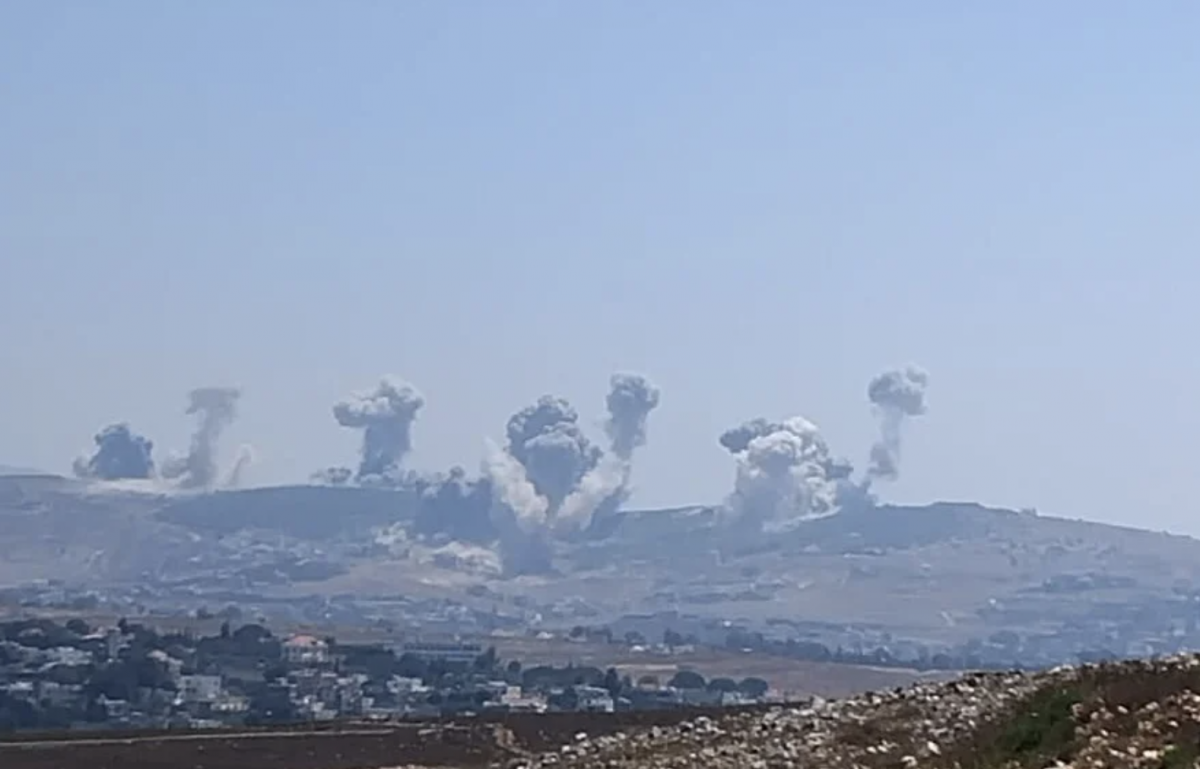
Strikes on Nabatieh, in southern Lebanon, on June 27, 2025. Photo sent by Mountasser Abdallah






Tensions are rising in southern Lebanon just days after the end of the war between Israel and Iran, as hopes for regional de-escalation fade. Israeli airstrikes on Lebanese territory over the past two days have killed at least three people and wounded dozens more.
On Friday, a woman identified as Afaf Shahrour was killed and 21 others injured in the Nabatieh region following a drone strike that hit the upper floors of her building in Nabatieh Fawqa. Fourteen people were wounded in that strike alone. Earlier, Israeli forces launched about 20 air strikes on wooded areas in the Nabatieh highlands, injuring seven others, according to Lebanon’s Health Ministry.
The Israeli military said it had targeted "a site used to manage Hezbollah’s fire and protection systems," describing it as part of an underground facility rendered inoperative by Israeli strikes. In a separate statement, Israeli military spokesperson Avichay Adraee denied that a civilian building was intentionally hit, claiming that “a shell located at the targeted site was propelled and exploded” during the strike. He blamed Hezbollah for storing munitions near residential areas and held the Lebanese government responsible for failing to seize those weapons.
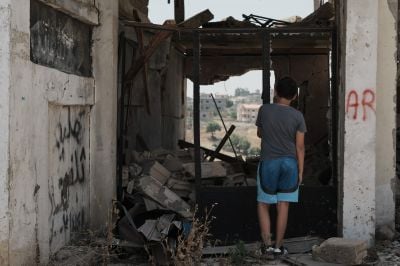
Prime Minister Nawaf Salam condemned the attacks near Nabatieh as a “flagrant violation of Lebanese sovereignty and the cease-fire agreement concluded last November.” President Joseph Aoun also denounced what he described as “continued Israeli violations targeting innocent civilians and breaching the November 2024 accord.”
New threats and clashes across the South
Later Friday, the Israeli army reportedly warned that it had booby-trapped three homes in the southern town of Khiam (Marjayoun district) and threatened to blow them up. The Israeli army notified both the Lebanese Army and the U.N. Interim Force in Lebanon (UNIFIL) through the cease-fire monitoring committee.
On the night of Thursday into Friday, Israeli drones dropped three bombs on the Shwat neighborhood of Aita al-Shaab (Bint Jbeil district), and two artillery shells also struck the area. Gunfire from Israeli machine guns targeted the outskirts of Kfar Kila (Marjayoun district), and artillery fire hit the Haramoun hill (Bint Jbeil district).
At dawn, Israeli forces opened fire with medium-caliber weapons from their Radar military site toward the outskirts of Shebaa in the Hasbaya district.
Earlier Thursday, two people were killed in similar Israeli strikes. The Israeli military said in a statement that it had killed a commander from Hezbollah’s elite Radwan Force in the Braasheet area, as well as a member of the group’s observation unit in Beit Lif (both in Bint Jbeil district).
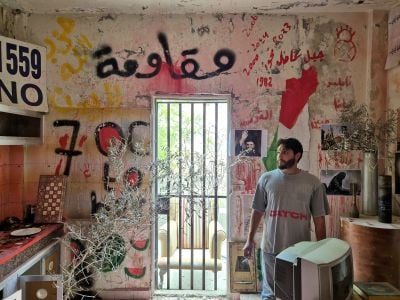
French General takes over Task Force Cedar
As the situation worsens, a new French general has taken command of Task Force Cedar, the international group overseeing the cease-fire arrangements between Lebanon and Israel. Gen. Valentin Seiler assumed his duties during a ceremony Thursday at the Résidence des Pins in Beirut, attended by French Ambassador Hervé Magro and senior Lebanese Army officers.
Task Force Cedar includes representatives from UNIFIL, Israel, Lebanon, France and the United States — the latter serving as chair. The group’s main role is to ensure the implementation of the cease-fire and to support the Lebanese Army in disarming armed groups in southern Lebanon.
Aoun briefed on security and diplomacy
Amid the mounting tensions, President Aoun met separately Friday with Army Commander Rodolph Haykal and Salam. Salam briefed the president on his recent trip to Qatar, where he held meetings with Emir Sheikh Tamim bin Hamad al-Thani and other top officials, according to the state-run National News Agency (NNA). Haykal updated Aoun on the latest security measures and developments along the southern border.
Hezbollah vows to resist
In a speech Thursday evening marking the start of the Muslim holy month of Muharram, Hezbollah Secretary-General Naim Qassem said the party would "resist for our country, whatever the sacrifices." He praised Iran’s resilience during its recent war with Israel and said the Islamic Republic remains a vital ally and a “pillar of regional security.”
“Iran today is stronger than it was before the war,” he said. “It supports the resistance, stands with its neighbors and friends, and can provide collective security for the region without relying on America or its allies.”