


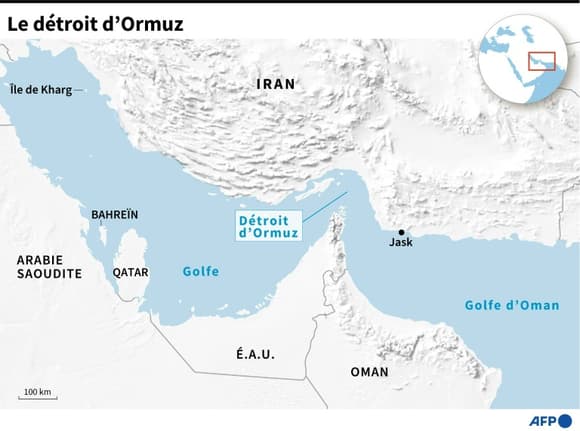
The Strait of Hormuz Stock (Credit: AFP)






BEIRUT — Iran is considering closing the Strait of Hormuz — a vital waterway for global energy supplies — after U.S. strikes targeted three nuclear sites inside the country, raising fears of a broader conflict and potential global economic fallout.
In overnight strikes between June 21 and 22, the United States hit nuclear facilities at Fordow, Natanz and near the city of Isfahan. The Fordow site, located beneath a mountain, is believed to be buried between 80 and 110 meters underground. The Natanz enrichment plant had already been targeted by Israel days earlier.
Following the unprecedented strikes, Iran’s parliament voted in favor of closing the Strait of Hormuz, through which about 20 percent of the world’s oil and gas flows. However, the measure still requires approval from the Supreme National Security Council. Esmail Kosari, a senior MP and commander in the Islamic Revolutionary Guard Corps, told Iran’s Young Journalists Club that the closure "will be implemented if necessary."
Earlier that day, Foreign Minister Abbas Araghchi said Iran had "various options" to respond to the U.S. attack.
The war raging between Israel and Iran, now more than a week old, has prompted concerns of a regional escalation and a potential spike in oil prices. So far, global markets have remained relatively stable, though nervous. Crude prices rose following the U.S. strikes and Iran’s vote, but they remain below the 2024 average of around $81 a barrel.
The risk to U.S.-associated commercial shipping in the region is high, particularly in the Red Sea and Gulf of Aden, amid ongoing hostilities. Danish shipping giant Maersk said its vessels continue to operate through the Strait of Hormuz but added that it is closely monitoring the situation. "We will continuously monitor the security risk to our ships in the area and are ready to make operational adjustments if necessary," the company said in a statement.
The current threat to U.S.-associated commercial shipping in the Red Sea and the Gulf of Aden is considered high, Reuters reports, adding that it occurs in the context of ongoing hostilities between Israel and Iran. Maersk ships continue to navigate through the Strait of Hormuz, but the company is ready to reassess the situation based on available information, the group said in a statement following the U.S. strikes overnight. "We will continuously monitor the security risk to our ships in the area and are ready to make operational adjustments if necessary," said the Danish container shipping company.
U.S. Secretary of State Marco Rubio called on China to press Iran over the potential closure of the waterway.
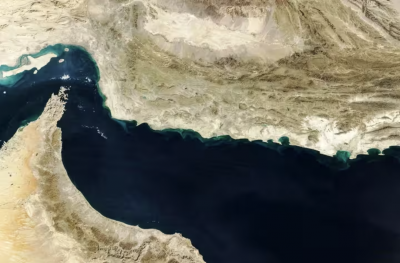
The Strait of Hormuz, located off the Iranian port city of Bandar Abbas, is about 50 kilometers wide at its narrowest point. It links the Persian Gulf with the Gulf of Oman and is considered the world’s most important maritime chokepoint. According to the U.S. Energy Information Administration, roughly 20 million barrels of oil — about 30 to 40 percent of global tanker-borne crude — pass through the strait daily.
 The 7 p.m. recap: Houthis advance, government announces counteroffensive; Iran raises stakes; Israeli shells hit close to journalists in south Lebanon
 2 Israeli soldiers injured in 'operational accident,' as army continues attacks in the South