





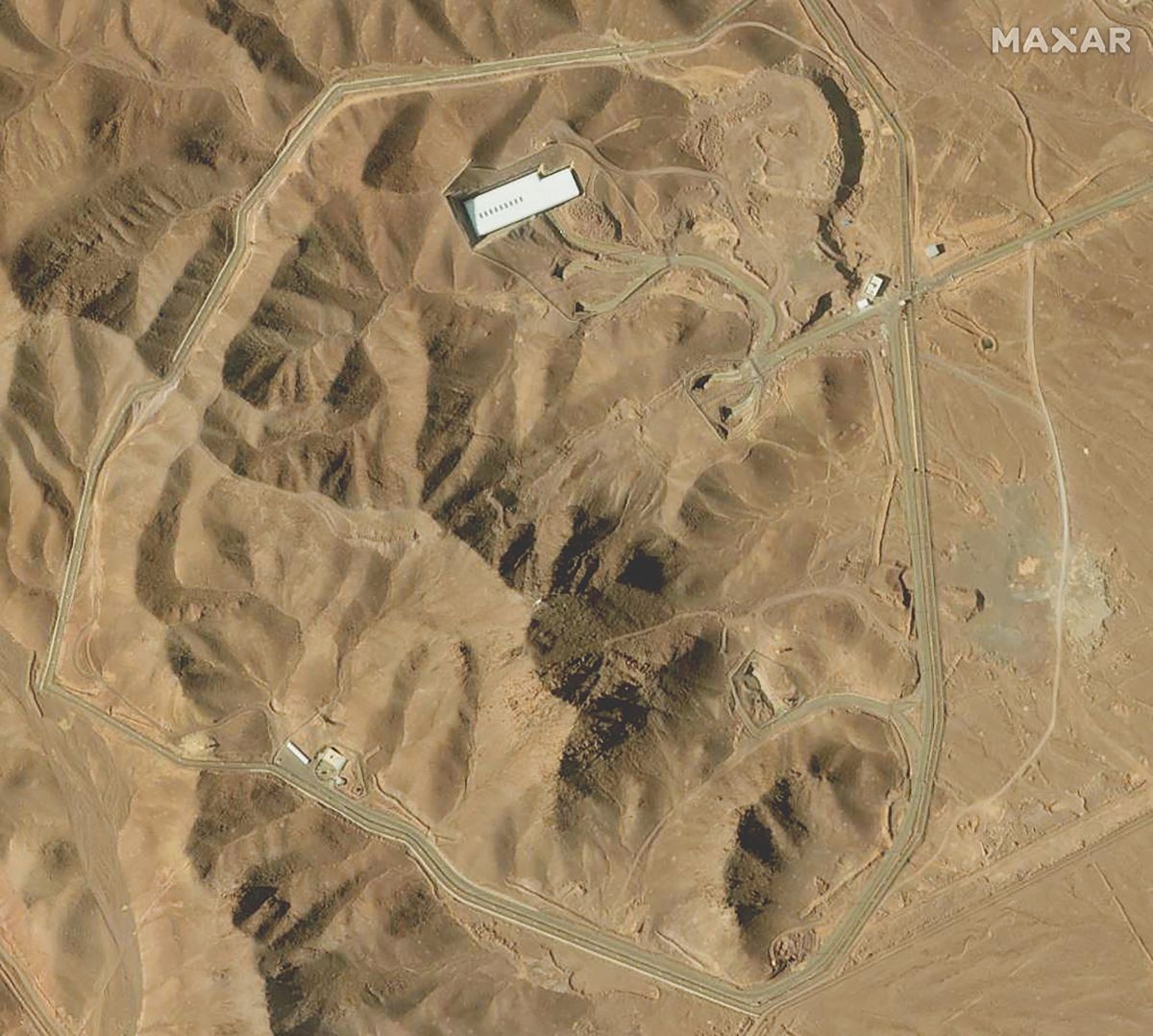
The uranium enrichment site of Fordo, in central Iran. Photo dated February 12, 2025. (Credit: AFP/Satellite image ©2021 MAXAR TECHNOLOGIES)






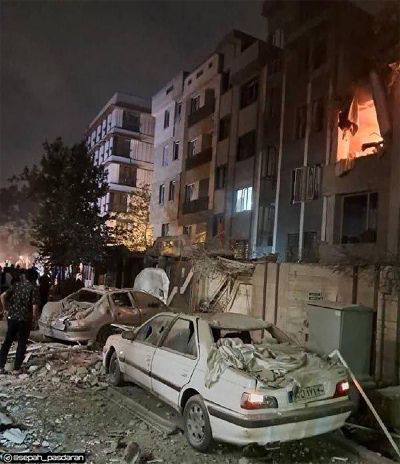
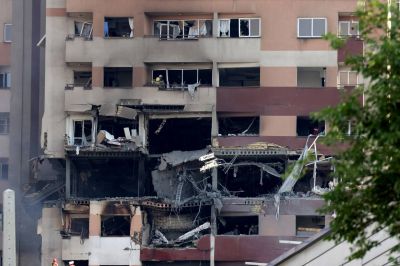
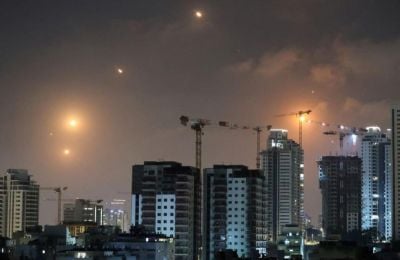
Israel conducted airstrikes against a hundred military and nuclear targets in Iran, who is suspected of wanting to acquire nuclear weapons. Iran retaliated by launching a salvo of drones towards Israeli territory. Here is what you need to know about the Iranian sites and the impact of the Israeli strikes.
The sites affected (or not) by the Israeli strikes
NATANZ: The International Atomic Energy Agency (IAEA) confirmed on Friday that the Natanz uranium enrichment site in central Iran was affected by the Israeli strikes.
The Natanz plant, discovered in 2002, is arguably the most well-known of Iran's nuclear facilities. The site comprises two buildings, one underground and the other on the surface, totaling nearly 70 cascades of centrifuges – more than 10,000 of these machines used to enrich uranium. The facility was the target of a surprise attack in April 2021, attributed by Iran to the Israeli secret services.
For more analysis on the situation:
Israel attacks Iran and the Middle East plunges into the unknown
“The IAEA is closely monitoring the deeply concerning situation in Iran,” wrote Rafael Grossi, the agency's director, on X. “The Agency can confirm that the Natanz site is among the targets,” he continued, adding that the IAEA is “in contact with Iranian authorities concerning radiation levels” as well as with its inspectors on site.
FORDO: The Fordo uranium enrichment site in central Iran was not affected by the Israeli strikes, according to the IAEA.
The construction of the underground Fordo plant, between Tehran and Qom (central Iran), in violation of U.N. resolutions, was disclosed by Iran to the IAEA in September 2009, creating a crisis between the Security Council members. Tehran claimed the plant — located in a mountainous area near a military base — was a "back-up site" needed to protect against air attacks, later indicating that it was a high-rate uranium enrichment facility, capable of housing some 3,000 centrifuges. It was there that particles of uranium enriched to 83 percent were detected at the beginning of 2023. Iran cited “involuntary fluctuations” in the enrichment process.
ISFAHAN: The uranium conversion and research site in Isfahan (central Iran), in the center of the country, was also not affected by an Israeli strike, stated Rafael Grossi.
The Isfahan conversion plant, tested industrially in 2004, converts “yellowcake” (concentrated uranium ore powder extracted from the Iranian desert mines) into uranium tetrafluoride and then uranium hexafluoride (UF4 and UF6). These gases are then introduced into centrifuges to produce enriched uranium. A laboratory producing low-enriched fuel intended for potential power plants, which opened in April 2009 is also located in the city. In early 2024, Iran announced the start of construction on a new research reactor at the site.
OTHER SITES
No information was given on the Arak site, also located in central Iran, where the construction of a heavy water reactor, officially intended to produce plutonium for medical research purposes, began in the 2000s. The project had been frozen in accordance with the 2015 Vienna agreement, which provided for its reconfiguration to limit proliferation risks. The reactor core was thus removed and concrete was poured to make it inoperative. The site, now called Khondab, is expected to be operational in 2026, according to information provided by Iran to the IAEA. The complex also includes a heavy water production plant.
No information, either, on the Tehran nuclear research center which has a reactor supplied by the Americans in 1967 for the production of medical isotopes.
No information on the Bushehr nuclear power plant (southern Iran) constructed by Russia, which supplies its fuel, and began operating at low capacity in September 2011 before being connected to the electricity grid the following year. Moscow resumed construction of this 1,000-megawatt site in 1994, started by the Germans before the 1979 Islamic revolution.
Note that two other reactors are under construction with the help of Russia:
- Iran began construction of a 300-megawatt power plant in late 2022 in the Darkhovin district (southwest Iran);
- Construction work began in early 2024 to build in Sirik, on the Strait of Hormuz, a new complex comprising four individual plants with a combined production capacity of 5,000 megawatts.
Nuclear contamination after the strikes?
“The Natanz attack has not caused nuclear contamination so far,” wrote the official IRNA news agency Friday morning, quoting a police official in Isfahan province, and adding that the attack caused no casualties. No increase in radiation levels was observed at this site, the IAEA had indicated earlier.
At least six Iranian nuclear program scientists killed
At least six scientists from Iran's nuclear program were killed by the Israeli strikes, reported Iranian media Friday morning. Among the six names cited by the Tasnim news agency were Mohammad Mehdi Tehranchi, president of the Islamic Azad University in Iran, and Fereydoun Abbasi, who previously headed the Iranian Atomic Energy Organization, IAE.
Where do we stand on enriched uranium stocks?
Before Friday's Israeli strikes, Washington and Tehran conducted several negotiation rounds on the rapidly developing Iranian nuclear program. Iran has significantly increased the scale of its nuclear program in recent years, in response to the U.S. withdrawal in 2018 from the agreement intended to regulate its atomic activities in exchange for lifting international sanctions.
As of mid-May, Tehran held a total stock of 9247.6 kg of enriched uranium, which is 45 times the limit authorized by this pact known by the acronym JCPOA, according to the most recent report from the International Atomic Energy Agency (IAEA). Of this total, its reserves of 60 percent enriched material, close to the 90 percent required to develop a nuclear weapon, stood at 408.6 kg – enough to produce nearly nine bombs, according to the definition of the Vienna-based U.N. body.
Iran denies wanting to acquire nuclear weapons and claims to pursue a civilian nuclear program.

 7 p.m. recap: Iran warns Egypt, Israeli soldiers vote in south Lebanon, Haret Hreik responds to Kataeb