






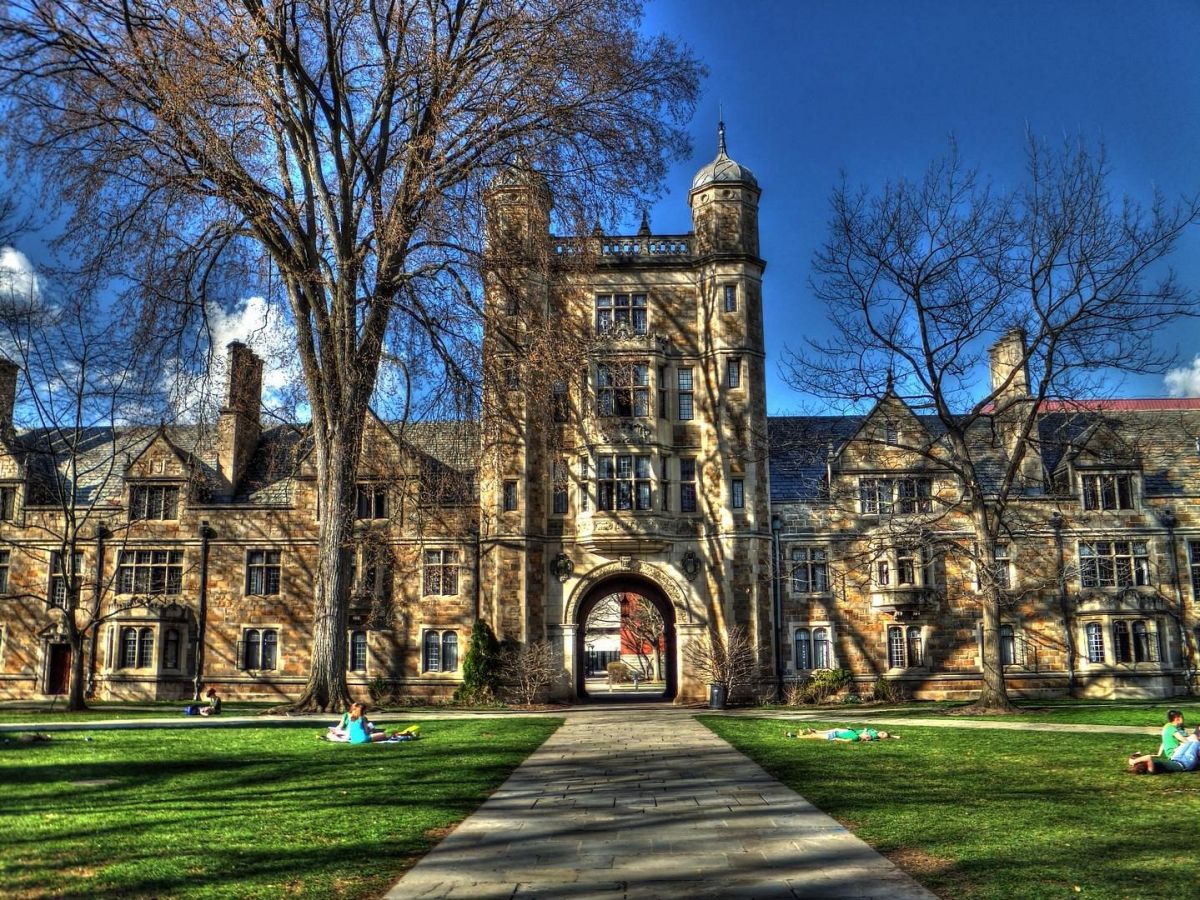
University of Michigan. (Credit: University of Michigan website)






“The University of Michigan is using private undercover investigators to surveil pro-Palestinian campus groups, including trailing them on and off campus, covertly recording them and eavesdropping on their conversations,” the Guardian reported on Saturday.
According to five students who reported being followed, recorded, or eavesdropped on, the surveillance efforts seem primarily intended to intimidate. They alleged that undercover investigators cursed at them, issued threats and, in one instance, even drove a car toward a student, forcing them to leap out of the way, The Guardian reported.

These claims are supported by student testimonies and video evidence shared with The Guardian. Students said they’ve often recognized and confronted the undercover agents. In one particularly strange incident caught on video, a man trailing a student pretended to have a disability and loudly – and falsely – accused the student of attempting to rob him.
Students told The Guardian they have tracked dozens of investigators shadowing them across campus and throughout Ann Arbor. These investigators often operate in teams and have sometimes sat at nearby tables in cafes and bars to listen in on conversations. Their claims are backed by videos reviewed by The Guardian — some recorded by students capturing those tailing them, as well as police body-camera footage — and further supported by consistent accounts from multiple students under surveillance.
In a statement, the University of Michigan said it didn’t receive any complaints about the investigators. It did not deny conducting surveillance.
The university has had an antagonistic relationship with pro-Palestinian campus groups, which organized protests, demanded university divestment from Israeli companies and set up an encampment in 2024, The Guardian reported.
The university took the unusual step of recruiting Nessel to prosecute students charged with alleged crimes during 2024 protests, rather than allowing local prosecutors to handle the cases as typical. The Guardian previously detailed the regents’ close personal, financial and political ties to Nessel.
Regent documents and media reports show at least $3 million spent by the university on security — both undercover and overt — and higher education consultants in response to student activity on campus.
Evidence gathered by undercover investigators has also been used by university administration in internal disciplinary hearings. The administration cannot initiate cases against students — only other students or staff can — so it spent $1.5 million on two consultants hired to initiate internal disciplinary action, according to four attorneys and students who went through the process.
'He knew he was being followed'
Last summer, Muslim student Josiah Walker told The Guardian he “knew he was being followed.” He kept catching people covertly recording him on their phones, so after a few encounters, he said he “counter-surveilled.”
“In a university parking lot, Walker began recording several people in cars who had been recording him. One car accelerated toward Walker, who had to step out of the way to avoid being hit,” The Guardian reported.
“I thought to myself, ‘If this is how I go out, then this is how I go out, but it’s really unfortunate that this random group of people got me,’” Walker said. He later learned they were not a random group, but probably undercover investigators.
Students say Walker has been among the most heavily surveilled for reasons that are unclear. He counted 30 different people following him before he stopped keeping track last year, and said they now even regularly park at an off-campus convenience store he frequents.
Harvard has been at the forefront of Trump's campaign against top universities after it defied his calls to submit to oversight of its curriculum, staffing, student recruitment and "viewpoint diversity."
Trump has also singled out international students at Harvard, who accounted for 27 percent of total enrollment in the 2024-2025 academic year and are a major source of income.
In its filing, Harvard acknowledged that Trump had the authority to bar an entire class of aliens if it was deemed to be in the public interest, but stressed that was not the case in this action.

