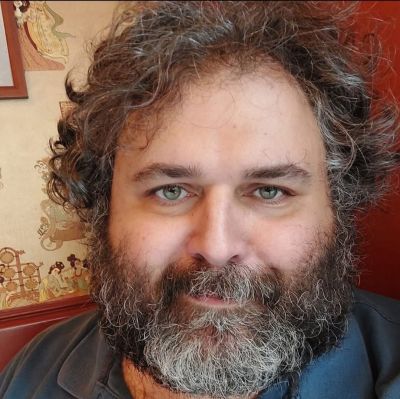
Wissam Saade. Photo shared on X.






BEIRUT — Journalist and writer Wissam Saade was released from custody on Friday afternoon after being summoned for questioning by General Security, the day after his home had been searched and several of his personal belongings confiscated.
Saade was released on "proof of residence," as part of a process by which detainees, usually those arrested during protests or other situations, are released pending further investigation and where the proof of residency serves as a form of collateral to ensure their appearance in court or during the ongoing inquiry.
According to an informed source, Saade was questioned about phone calls made to Israel by a former housekeeper and a message he reportedly received in 2019 from a Cambodian number. The message asked the journalist to "call immediately," and the General Security initially suspected that the author of this message was Israeli.
The search and interrogation were carried out based on a request from the government commissioner to the military court, Judge Fadi Akiki. The move drew swift reactions from journalists and political figures.
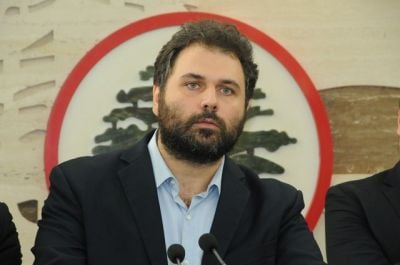
“All my support to my friend Wissam Saade, one of the most important intellectuals in Lebanon and the Arab world, facing the remnants of the system of weapons, regression and obscurantism,” journalist Dima Sadek posted on X.
Charles Jabbour, spokesperson for the Lebanese Forces, wrote on the platform: “All my support to the journalist Wissam Saade. It is time to remove those who belong to the dark era and prevent them from tarnishing the clarity of the new phase.”
Prime Minister Nawaf Salam contacted Justice Minister Adel Nassar in the afternoon to express his "total commitment to the preservation of public and private freedoms," which he said were "one of the fundamental pillars of the Lebanese democratic system and are enshrined in the Constitution," reported the state-run National News Agency (NNA). Salam also stressed "the importance of strengthening legal and security procedures in line with international standards and the requirements of the rule of law."
In 2013, Saade was briefly detained at Beirut’s airport while returning from Cairo after customs officers found the complete works of Egyptian scholar Rifaat al-Tahtawi in his luggage. The officers reportedly asked whether he had prior authorization from General Security, citing concerns over intellectual property rights. Although Saade identified himself as a journalist and academic, authorities insisted the number of books exceeded the legal limit.