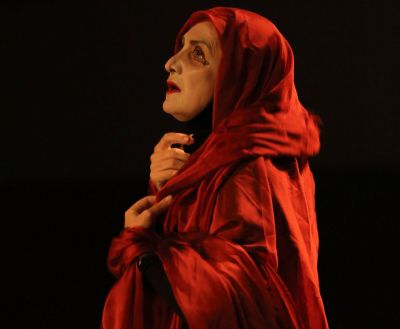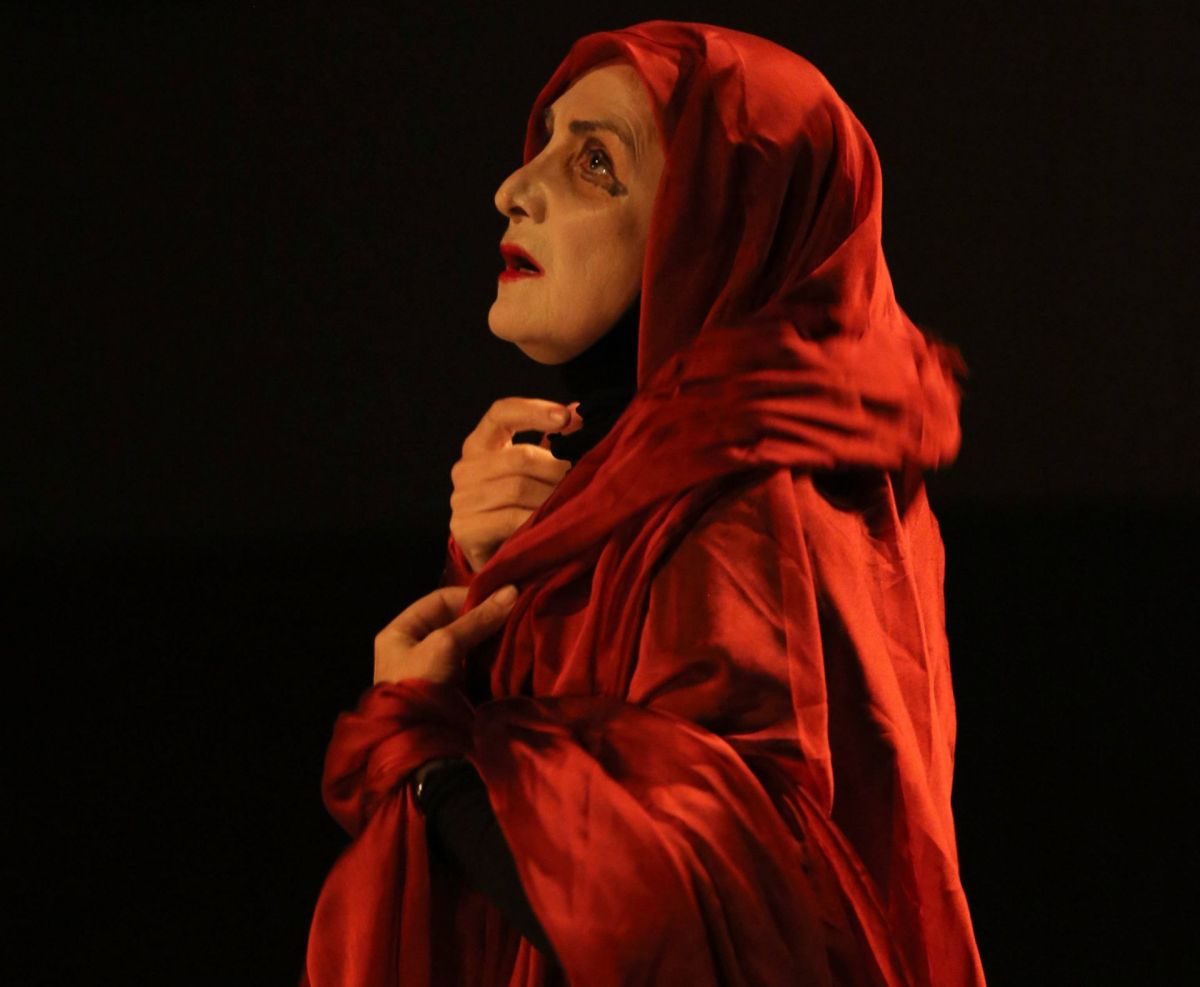
Hanane Hajj Ali in her play "Jogging." Photo courtesy of the owner.






Assembled as a collective, artists, programmers, designers, researchers, theater directors and representatives from cultural or research institutions are raising the alarm: In the face of absent cultural policy, chronic sector insecurity and repeated attacks on creative freedom, it is time to fundamentally rethink the role of culture in Lebanon.
The breaking point? A new defamation and takfir campaign targeting artist Hanane Hajj Ali following a performance in Saida. The episode, the signatories say, “tragically illustrates the vulnerability of our cultural field, exposed to hatred, manipulation and impunity.”
Hajj Ali, a leading figure in contemporary Lebanese theater, experienced the backlash firsthand. On April 16, she presented her play at the Lebanese International University in Saida. It was just another stop on a tour that has taken her across Lebanon and abroad. But this time, the performance ignited a storm.
Jogging is no ordinary play. Since 2016, it has explored society’s taboo zones — motherhood, religion, the female body and war. Written in the first person, the text is radical, lyrical and at times raw. It has been praised at major festivals from Beirut to Avignon.
Only hours after the show in Saida, a student secretly recorded two excerpts and posted them to the Facebook page “Weniye al-dawleh,” ("Where's the state?") known for sensationalist content.
The most controversial moment? A scene in which Hajj Ali, kneeling under a spotlight, recites: “La ilaha illa Allah... Allahumma salli ‘ala Muhammad wa ali Muhammad.” A Muslim prayer, delivered with pain, embodied by a woman burdened by social and religious pressures. A moment of theatrical intensity was reinterpreted online as presumed blasphemy.
Within hours, accusations of takfir, insults and personal threats flooded social media. Some even mentioned the Israeli army’s spokesman, demanding sanctions.
Under pressure, the university — which had officially approved the play — quickly distanced itself. It issued a statement lamenting “inappropriate content,” without naming the performance or its author. The professor who organized the event was summoned. A protest was announced for the following Friday but was canceled after the university publicly disavowed the event.
Meanwhile, Hajj Ali persists. She contacted the Ministry of Culture. “I was asked to send screenshots via WhatsApp, which I did. But no one ever called me back,” she told L’Orient-Le Jour. Facing official silence, she submitted a full written testimony to the ministry and the actors’ union.
A sector without a safety net
Hajj Ali sees the broader impact. “It’s no longer just me being attacked, but an entire sector already weakened,” she said. Beyond her case, many in Lebanon’s cultural scene view the situation as alarming.
The incident has highlighted a stifling climate for Lebanese artists, caught between a negligent state and a rise in organized, aggressive intolerance — amplified by social media and met with institutional silence. The warning signs have been visible for years: shows canceled under sectarian pressure, exhibitions censored, artists summoned by special courts, cultural spaces placed under moral scrutiny or left to decay.
“This country pushes its artists into exile or silence. We are made to believe that culture is a luxury when it is a necessity,” Hajj Ali said.
But she refuses to back down. She is documenting events, sounding the alarm and resisting pressure. “I will not yield to intimidation or defamation. Theater is a space of freedom, not a place of submission.”
The cultural world, already on edge, responded quickly. More than 50 Lebanese cultural institutions — independent venues, collectives, companies, research centers — issued a joint statement condemning the lack of legal protections for artists and the return of moral censorship. They called for clear, enforceable laws, the lifting of prior censorship, and the creation of an emergency response unit within the Ministry of Culture.
“The Lebanese cultural sector is suffocating,” the statement read. “It functions without public policy, without sustainable support, and under constant threat. We cannot continue to produce, distribute and educate while risking defamation, censorship or prosecution.” The signatories stressed that culture contributes to Lebanon’s economy, projects the country abroad and serves as a vital social glue. Yet artists are expected to carry that burden with little to no institutional support.
A cultural and legal coalition is now being developed. Its goal: to support, protect and legally represent artists targeted by repression or defamation. “What’s at stake isn’t just the freedom of a script,” said Junaid Sarieddine of the Zoukak theater collective, a signatory to the statement. “It’s the very existence of a critical space — the right to ask questions, to provoke, to challenge society.”
Without clear laws protecting artistic expression and without legal recourse, Lebanese artists navigate in the dark. Financial precarity is compounded by symbolic vulnerability: the fear that their work, words, or image could be weaponized against them at any moment.
Hania Mrouweh, director of Metropolis, said: “We uphold an industry that connects people, educates generations and projects Lebanon’s image outward. Yet we work without a safety net, exposed to the online mob, to social aggression, to political and religious censorship.”
The paradox is bitter: Even as culture remains one of Lebanon’s few arenas for public debate, memory and collective identity, it is also among the most vulnerable to attack. Some artists flee the country. Others adopt self-censorship — more subtle, but no less damaging.
The joint statement calls for a serious cultural policy, integrated with education and social priorities. Culture, it argues, should not be treated as a luxury but as a structural need. The statement also urges professional unions to step forward and defend artists more forcefully. Reform of union structures, mandates and tools of defense is now seen as urgent.
“We can’t just respond to every threat with a statement,” Sarieddine said. “We need lasting tools of resistance — legal, institutional and union-based. We must build cross-sector solidarity that brings together artists, jurists, educators and journalists.”
The proposed cultural and legal coalition would serve as a watchdog and support system — documenting abuses, defending those under attack and pressuring authorities to act. In short, it seeks to end impunity and put culture at the center of Lebanon’s social contract.
As Hajj Ali reminds us: “A country that leaves its artists to face hate alone is abandoning far more than art — it is giving up on what ties it to itself.”