






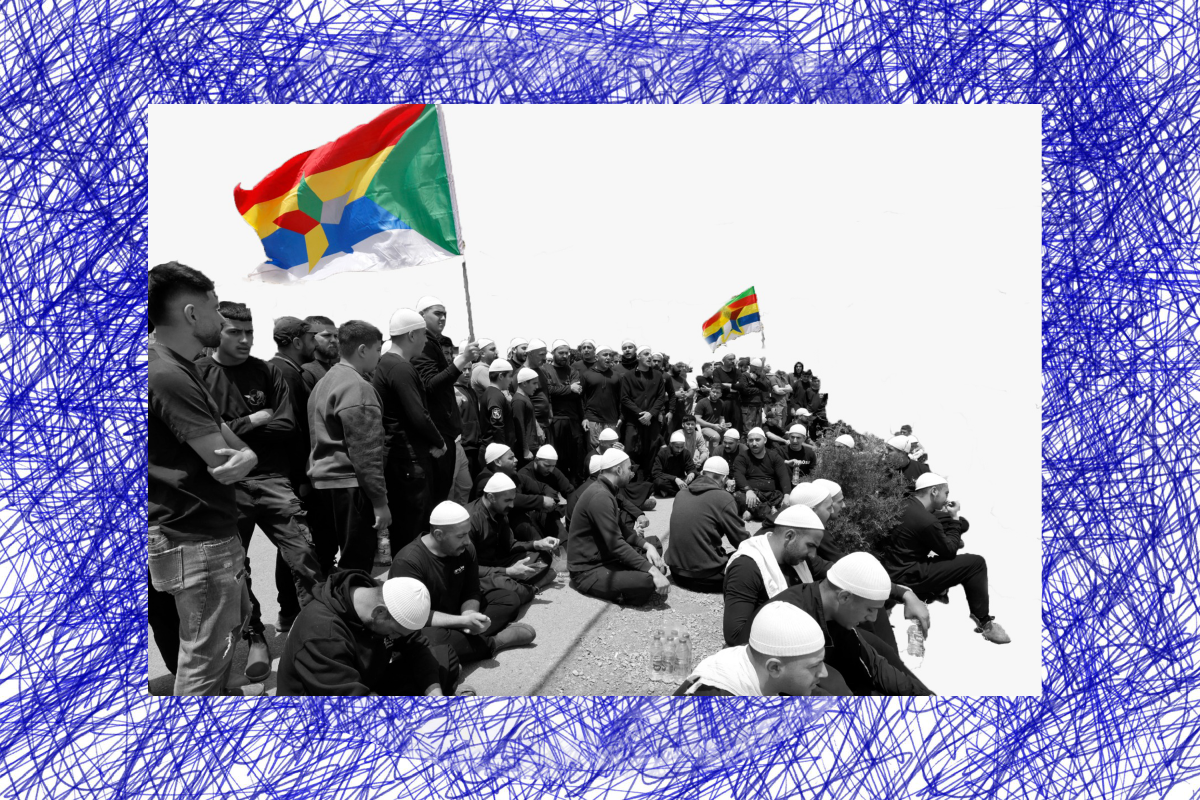
Illustrations by Jaimee Lee Haddad.






You’ve been hearing the word “Druze” a lot lately: headlines about Syria, Walid Joumblatt, Israeli airstrikes, even street tensions back home in Lebanon. But what’s actually going on?
Let’s break it down. Who are the Druze, why do they matter in the region, and what’s been happening lately?


1. So, who are the Druze minority in the region? And where do they stand in Lebanon?
The Druze are a small religious minority in the Middle East, mostly found in Lebanon, Syria, Palestine and Israel, and the community ties are strong across borders. Their faith emerged in the 11th century as a secretive offshoot of Islam (more specifically Ismailism, which is a branch of Shiite Islam) with influences from Greek philosophy and mysticism. You can’t convert in; you're born Druze.
Druze have long played a major political role in Lebanon, despite only making up about five percent of the population. Two main families dominate:
- The Joumblatts, with Walid Joumblatt as the longtime leader (after his father Kamal Joumblatt, who founded the Progressive Socialist Party [PSP]), have historically opposed the former Syrian regime and leaned toward Arab nationalism and reform.
- The Arslans, led by Talal Arslan (who took over from his father Majid Arslan), were closely aligned with the Assad regime in Syria and often echoed pro-Damascus positions.
When the Syrian civil war broke out in 2011, these rivaling positions became even clearer: Joumblatt spoke out against Assad’s repression, while Arslan doubled down on support for the regime.


2. Why are they in the news now?
In recent weeks, things got heated in Syria, especially in Druze-majority areas like Jaramana and Sahnaya near Damascus. At least 100 people were killed and several were injured after clashes broke out on April 29 between local Druze gunmen and pro-government fighters, triggered by a fake audio clip insulting the Prophet Muhammad circulated online.
To understand what’s happening now, we need a bit of context.
After years of war, Syria’s new regime is now dominated by Islamist groups, including some with extremist roots. The new interim president, Ahmad al-Sharaa, is a former jihadist. While he’s promised to protect minorities, sectarian violence continues.
For the Druze, this is deeply unsettling. They still remember the 2018 Islamic State (ISIS) attack in Sweida, where dozens were killed and others kidnapped. Many Islamist groups view the Druze as heretics.

In a bid to show his commitment to a more inclusive post-Assad Syria and to unifying and centralizing the country’s authority, Sharaa signed two major agreements with minority groups. The first was with the Kurdish-led Syrian Democratic Forces (SDF) to bring their autonomous administration under state control. The second was with Druze leaders to integrate their home province of Sweida into state institutions.
This was not enough to stop the eruption of clashes, striking fear among the community. Not only in Syria but also for the neighboring Lebanese Druze.
Walid Joumblatt, the longtime leader of the Druze in Lebanon, sprang into action. He reached out to regional powers (Saudi, Qatar, Turkey, UAE), made a surprise visit to Damascus, and called for calm and unity. His message? Don’t let outside forces, especially Israel, drag the Druze into a war they don’t want.

3. What’s Israel got to do with this?
A lot, actually.
Israel has been bombing targets in Syria for years, but since the fall of Bashar al-Assad’s regime on Dec. 8, 2024, it has intensified its attacks on military sites, moving further into Syrian territory.
What’s more, Israel is now publicly presenting itself as a protector of the Druze.
It is important here to mention the Golan Heights, which is a strategic plateau situated between Syria, Lebanon and Israel.
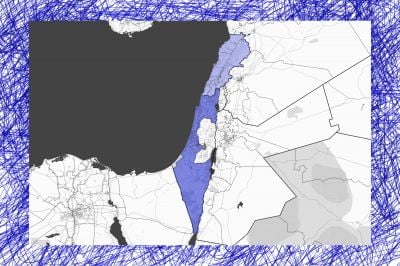
For Israel, the region is seen as crucial for its national security, giving it a military advantage over the three neighboring countries. Israel occupied it in the 1967 Arab-Israeli war and later annexed it (only the U.S. recognized Israel’s annexation; the U.N. considers the region as Syrian territory occupied by Israel).
The Golan Heights is home to around 22,000 Druze who live as permanent residents. Most of them refuse Israeli citizenship, choosing to maintain their Syrian identity.
But Israel’s “friendly” posture vis-à-vis the Druze is raising alarms. Joumblatt and others believe it’s part of a long game, a way for Israel to divide Syria, isolate minorities, and gain influence under the cover of "protection."
He’s warned that if Druze in Syria or Lebanon get too close to Israel, it could spark a sectarian war, one that Israel won’t pay the price for, but the Druze will.

4. What does this mean for Lebanon?
Tensions almost spilled over. After the Syria clashes, some Druze youth in Aley attacked a Sunni cleric. It was quickly contained, but the fear of “imported conflict” is real.
That’s why Joumblatt, Sheikh Sami Abilmona (the Druze spiritual leader), and top officials are working hard to prevent any spread. They’ve been coordinating with foreign ambassadors and the Lebanese Army to keep the peace.
This isn’t just about religion, it’s about politics, identity, and survival. The Druze don’t want to be pawns in anyone’s game, whether it’s Israel’s, Syria’s, or anyone else’s.
 3 p.m. recap: Washington to evacuate 'non-essential' staff from Riyadh embassy; Iran threatens to hit US bases in response to Hormuz escorts