






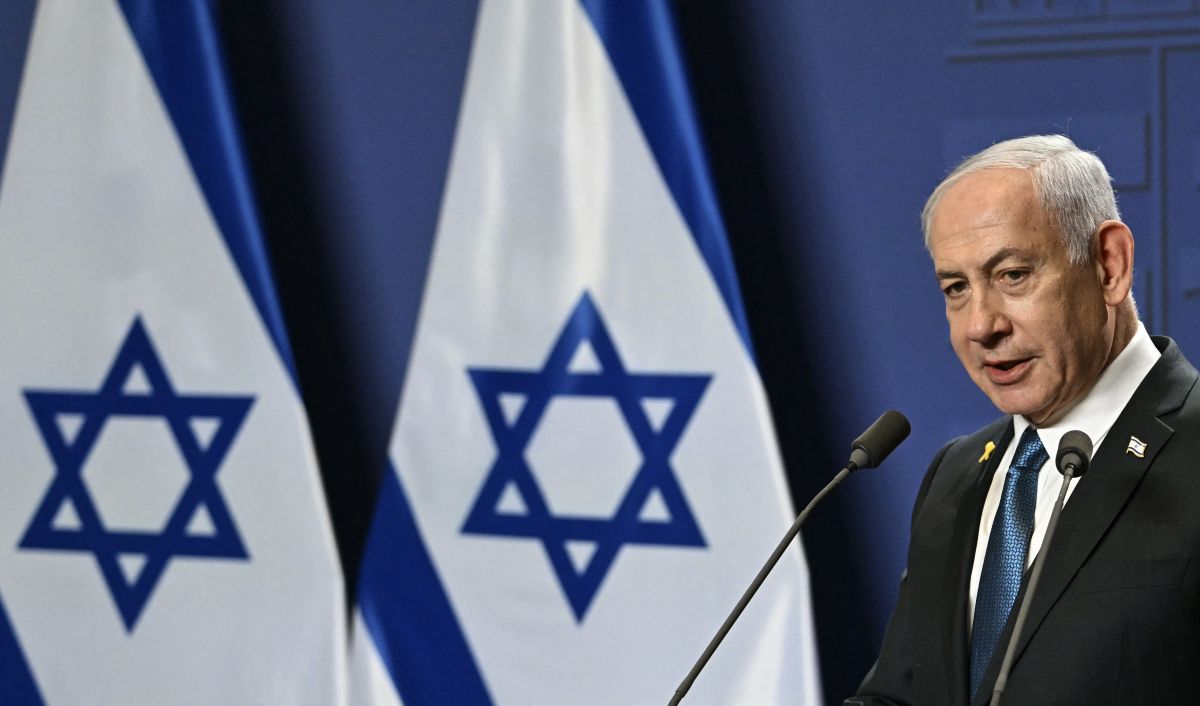
Israeli Prime Minister Benjamin Netanyahu speaks at a press conference with the Hungarian Prime Minister following bilateral discussions on April 3, 2025, in Budapest. (Credit: Atilla Kisbenedek/AFP.)






Israeli Prime Minister Benjamin Netanyahu will meet with U.S. President Donald Trump at the White House on Monday, confirmed an U.S. official to Reuters on Saturday.
Earlier in the day, three Israeli officials discussed the possibility of a meeting between Netanyahu and Trump to address the tariffs imposed by the latter.
This impromptu visit was first reported by the American news site Axios. According to "four sources familiar with the matter," Netanyahu is expected to negotiate an agreement to remove U.S. tariffs. The two leaders will also discuss the Iranian nuclear issue and the war in Gaza, according to Axios journalist Barak Ravid.
Netanyahu's visit was contingent upon his ability to cancel scheduled hearings in his corruption trial, where he was due to continue his testimony, Axios noted on Friday. The Israeli leader will thus be the first foreign leader to meet Trump in person to negotiate a deal aimed at removing the tariffs, the site added.
Benjamin Netanyahu was the first foreign leader to meet Donald Trump after his inauguration, visiting Washington on Feb. 3. At that time, discussions focused on "the second phase of the ceasefire in Gaza," which ultimately did not materialize. The truce broke down on March 18. Since then, over 1,300 people have been killed, according to the Hamas Ministry of Health.
17% Tariff
Trump's surprise invitation came during a phone call with Netanyahu on Thursday, while Netanyahu was in Hungary. During the call, the Israeli prime minister raised the issue of tariffs, according to anonymous Israeli officials.
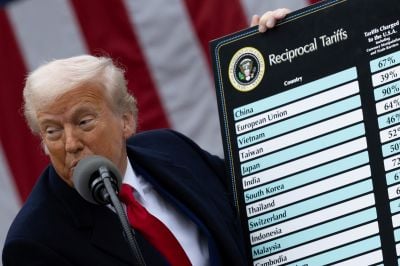
As part of a new, sweeping tariff policy announced by Trump, certain unspecified Israeli exports to the U.S., Israel's closest ally and main trading partner, will be subject to a 17% tariff.
An Israeli Finance Ministry official stated on Thursday that the latest tariff announcement by Trump could impact Israeli exports of medical equipment and machinery.
Israel had already decided on Tuesday to remove the last tariffs on imports from the U.S. The two countries signed a free trade agreement 40 years ago, and about 98% of U.S. products are now exempt from taxes.
Possible "Principle Agreement" on Strikes in Iran?
In addition to the tariff issue, which has shaken the global economy since the "liberation day" of Trump on Wednesday, the situation in Gaza and Iranian nuclear issues are expected to be on the agenda during the discussions at the White House.
A senior Israeli official indicated that the prime minister considers the chances of reaching a nuclear agreement between the U.S. and Iran as "extremely weak," and thus wants to secure a "principle agreement with Trump on strikes against Iranian nuclear facilities if diplomacy fails," Axios reports.
The White House is reportedly seriously considering an Iranian proposal for indirect nuclear talks, while also significantly increasing the U.S. military presence in the Middle East in case President Trump opts to bomb Iran's nuclear sites, according to two U.S. officials who spoke to Axios on Wednesday.
