






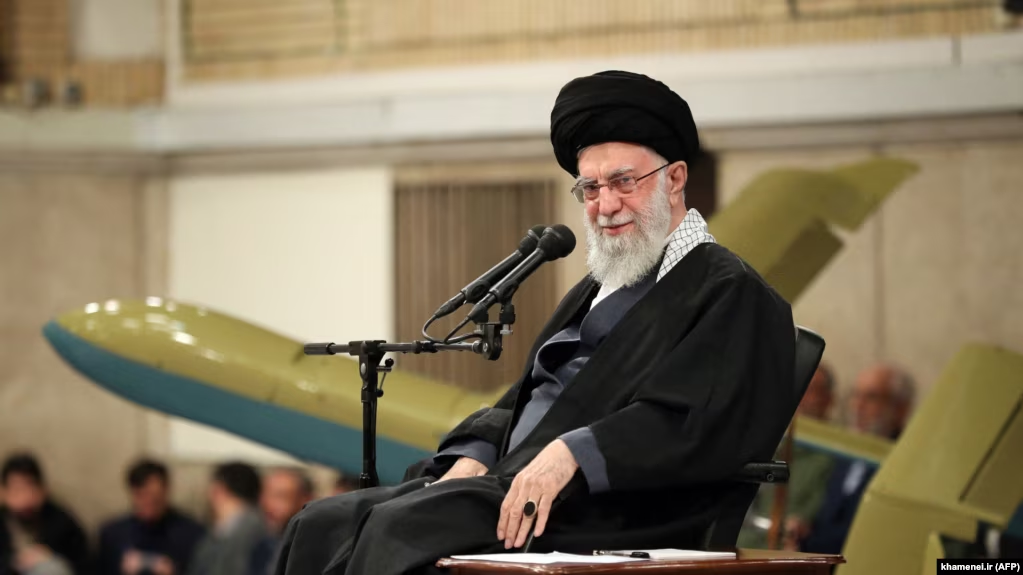
The Iranian supreme leader, Ayatollah Ali Khamenei. (Credit: Archived photo khamenei.ir/AFP)






Iran’s supreme leader, Ayatollah Ali Khamenei, warned Monday of a "firm response" if the country is attacked, following threats from U.S. President Donald Trump over a potential diplomatic failure on the nuclear issue.
"They threaten to cause damage (...), and if that happens, there will certainly be a firm response from Iran," Khamenei said in a speech in Tehran marking the end of Ramadan, the Muslim holy month of fasting.
While he did not mention Trump by name, his remarks appeared to be a direct response to recent threats from the U.S. president. In an interview with NBC on Sunday, Trump said that "there will be bombings" in Iran if an agreement is not reached on its nuclear program. "If they don’t sign a deal, there will be bombings," he said.
Western countries have long suspected Tehran of seeking to develop nuclear weapons, an allegation Iran denies, insisting its program is solely for civilian purposes, including energy production. In 2015, Iran reached a nuclear agreement with the five permanent members of the U.N. Security Council — China, France, Russia, the United Kingdom, and the United States — along with Germany, to regulate its nuclear activities. However, in 2018, Trump unilaterally withdrew the U.S. from the deal and reimposed sanctions.
Since returning to the White House in January, Trump has expressed willingness to engage in talks with Tehran and sent a letter to Iranian leaders to that effect. Iran said Thursday that it had responded to the letter through Oman, which has often acted as a mediator.
Letter and 'maximum pressure'
At the same time, Trump has intensified his "maximum pressure" policy on Tehran, imposing additional sanctions aimed at reducing its oil exports and revenue to zero, while also threatening military action if Iran refuses talks. He has also warned Tehran over its support for Yemen’s Houthi rebels, whom the U.S. has targeted in recent strikes.
"From now on, every Houthi gunshot will be considered a shot fired by Iranian weapons and Iranian leaders, and Iran will be held responsible and face consequences — terrible consequences," Trump wrote two weeks ago on his social media platform, Truth.
In his speech Monday, Khamenei appeared to indirectly respond to these accusations, saying, "There is only one auxiliary force in the region, and that is the corrupt and usurping Zionist regime," referring to Israel, Iran’s longtime adversary and a key U.S. ally in the Middle East.
Iran has been accused of backing the Houthis, who control large parts of Yemen, including the capital, Sanaa, and have launched dozens of missile and drone attacks on Israel and commercial ships in the Red Sea since the war in Gaza began, claiming to act in solidarity with the Palestinians.
The U.S. and Iran have had no diplomatic relations since 1980 but communicate indirectly through the Swiss Embassy in Tehran, which represents American interests. Oman has played a key role as a mediator in the past, with Qatar also occasionally involved. Trump's letter to Iran was reportedly delivered via the United Arab Emirates.
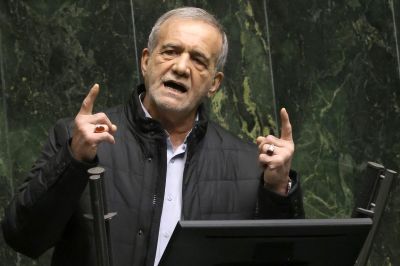
On Sunday, Iranian President Masoud Pezeshkian reiterated that Tehran opposed direct negotiations with Washington under threat but remained open to indirect communication.
