


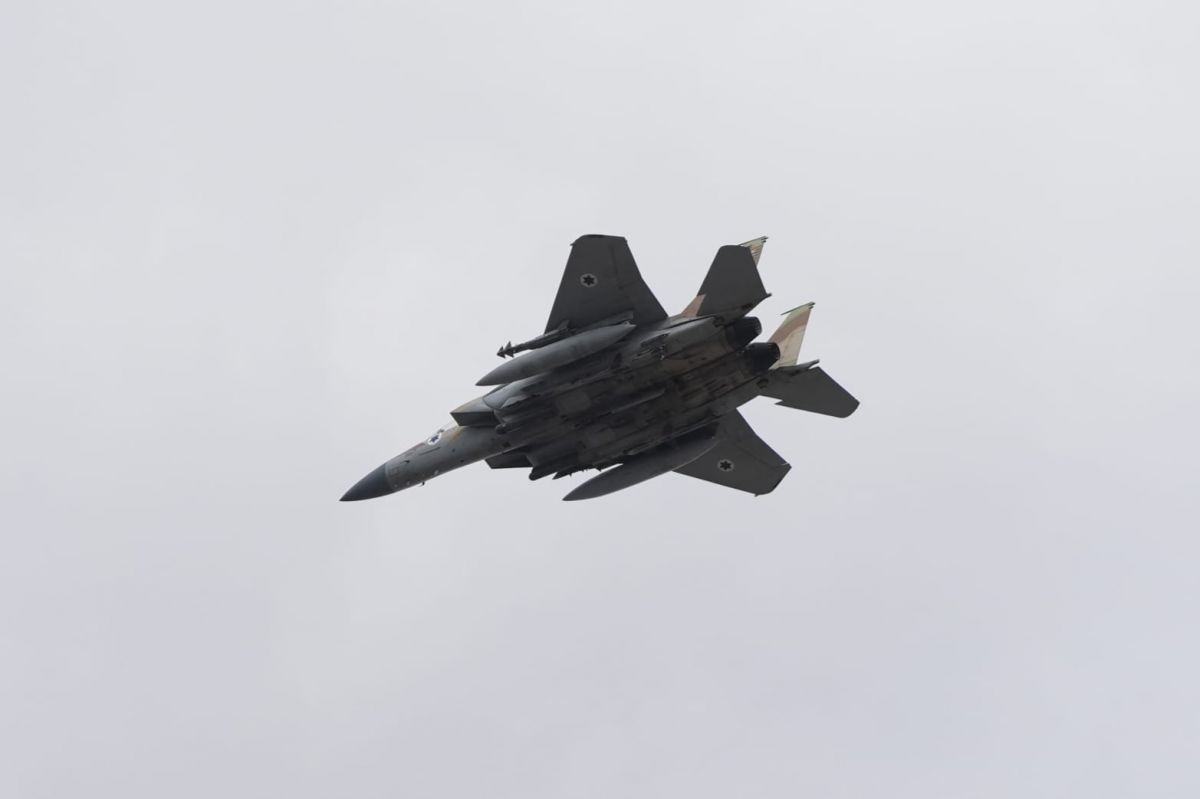
One of the four Israeli planes that flew over the funerals of Hassan Nasrallah and Hachem Safieddine on Sunday, Feb. 23. (Credit: Mohammad Yassin/L'Orient Le-Jour)






BEIRUT — The Israeli army reportedly considered bombing the funerals of Hezbollah leader Hassan Nasrallah and his designated successor Hashem Safieddine in Beirut’s southern suburbs on Sunday, Feb. 23, according to Herzi Halevi, who appeared in an undated video aired by Israeli Channel 14 on Wednesday evening.
Addressing newly graduated officers of the first Infantry Division in Holon, near Tel Aviv, Halevi said:
“I spent 10 to 15 minutes in the car outside, in full consultation. Want to guess what about? About Nasrallah’s funeral, we were undecided,” he told the audience, speaking at a podium in a gymnasium where civilians were also present. When one attendee responded, “Attack,” Halevi smiled and replied: “You got it. Who’s in favor?” prompting laughter and expressions of approval from the audience.
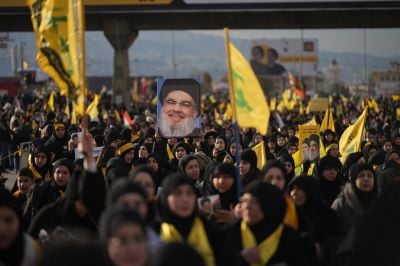
However, four Israeli fighter jets flew at low altitude over Camille Chamoun Sports City Stadium, where the ceremony took place, and across Beirut, initially causing panic in the capital. That same day, Israel carried out 14 airstrikes in southern Lebanon and the Bekaa Valley — the highest number since the cease-fire agreement.
The footage sparked outrage on social media, with critics condemning the apparent discussion of targeting a mass gathering attended by hundreds of thousands. “It’s not surprising. Israel is capable of anything with U.S. support since no entity holds it accountable,” one user wrote. Another posted: “Demons, nothing more, nothing less. These people don’t consider Arabs human beings.”
Israeli social media users were also critical, focusing their ire on Halevi. The general resigned in late January, citing his “responsibility” for Hamas’s Oct. 7 attack on Israel. His decision, confirmed in a letter relayed by the army to AFP, was welcomed by far-right ministers in Prime Minister Benjamin Netanyahu’s government and much of the public, who hold him accountable. He is set to leave his post on March 6, 2025.
Concern over the Egyptian army
During his speech, Herzi Halevi also raised security concerns about Egypt’s military.
“Egypt has a large-scale army, equipped with sophisticated weapons, planes, submarines and a large number of tanks and infantry soldiers,” the Israeli army chief of staff said, according to Israeli media reports.
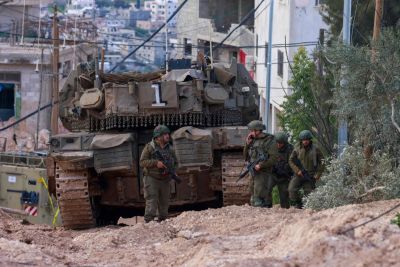
Egypt has been at peace with Israel since the 1978 Camp David Accords, and its military relies heavily on U.S. funding. Last September, Washington approved $1.3 billion in military aid to Cairo.
While Israel does not view Egypt as an immediate threat, Halevi warned that this “can change in an instant.” He cited the 2011 rise of Mohamed Morsi and the Muslim Brotherhood as an example of how quickly the country’s leadership — and its military’s stance — could shift.
Morsi, who was democratically elected after the Arab Spring uprising, was ousted in a military coup on July 3, 2013, led by Abdel Fattah al-Sisi, now Egypt’s president and a close U.S. ally.
This month, former U.S. president Donald Trump reportedly threatened to cut aid to Egypt if it refused to cooperate with his plan to take control of Gaza and relocate its population.

 7 p.m. recap: 1 person killed near border with Lebanon; 200 kilos of explosives carried by mules; Riyadh shuts its airspace