






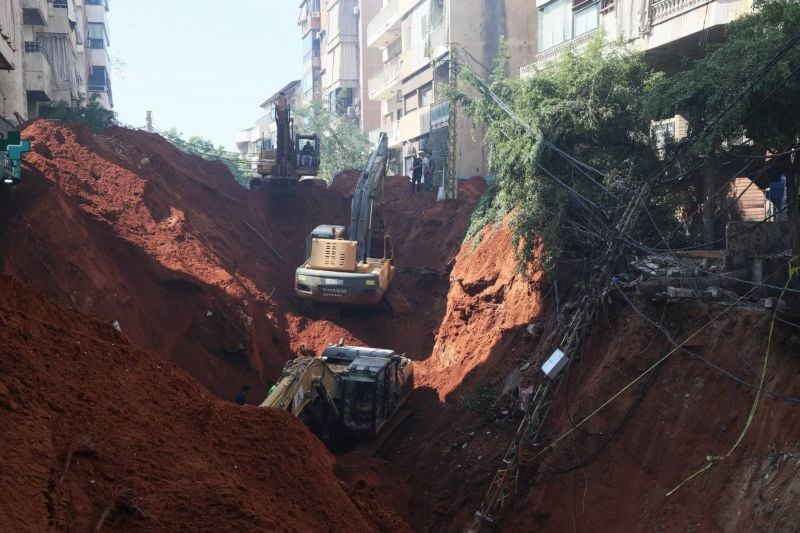
The crater left by the Israeli strike on Friday, Sept. 27, 2024, that killed Hassan Nasrallah. (Credit: Mohammad Yassin/OLJ)






The bunker-buster munitions used by the Israeli army to assassinate Hezbollah's secretary-general Hassan Nasrallah on Sept. 27 have also supposedly destroyed part of the party's cash reserves.
Saudi magazine al-Majalla made this claim on Monday, stressing that Hezbollah's dollar reserves, "essential" to finance its activities, "were allegedly stored in safes deep within the enclosure where Nasrallah was killed."
The bunker-buster munitions are designed to penetrate armored structures buried in the ground over several dozen meters. This type of munition was also used a second time in Beirut's southern suburb last Thursday night, to target the president of Hezbollah's Executive Council, Hachem Safieddine, anticipated to succeed Nasrallah, and who has been "unreachable" since.
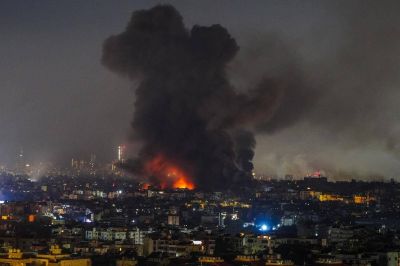
The two bombardments caused extremely loud explosions, compared to those caused by other Israeli strikes that have hit Beirut's southern suburb since September.
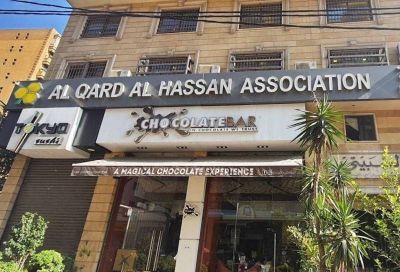
The Saudi magazine also supposes that "if the funds of Hezbollah and its microcredit organization, Qard al-Hassan, were destroyed, the party will struggle to pay its thousands of fighters, staff and supporters, as well as the thousands of families whose relatives have been killed or disabled in past conflicts." It recalls that "many health, educational and social institutions associated with Hezbollah also depend on the group's financing."
Several billions of dollars
The magazine highlights that "Hezbollah prepared for this eventuality after the July 2006 war when several of its sites (and its Qard al-Hassan branches) were destroyed, by storing strategic reserves in fortified bunkers in Lebanon's eastern mountain range." The party reportedly holds funding reaching several billion dollars, generated through various covert channels, despite successive waves of sanctions targeting members working for or with it over recent years.
In 2014, former Special Inspector General for Iraq Reconstruction Stuart Bowen confided to New York Times investigative journalist James Risen that over $1.6 billion of Iraqi funds had been stolen and moved to a bunker in a rural area of Lebanon for safekeeping. Bowen stated that the discovery was made just before his office closed.
Le Monde recently devoted an article to the parallel economy set up by Hezbollah, which "relies on a vast money laundering network linked to drug, diamond, wood, and arms trafficking in South America and West Africa, benefiting from the complicity of its diaspora along the way."
"Hezbollah has denied any connection with organized crime, claiming such accusations are slander," continued al-Majalla. However, the magazine noted that the party has been "blacklisted by several countries, preventing any official interaction with it or its institutions."
