






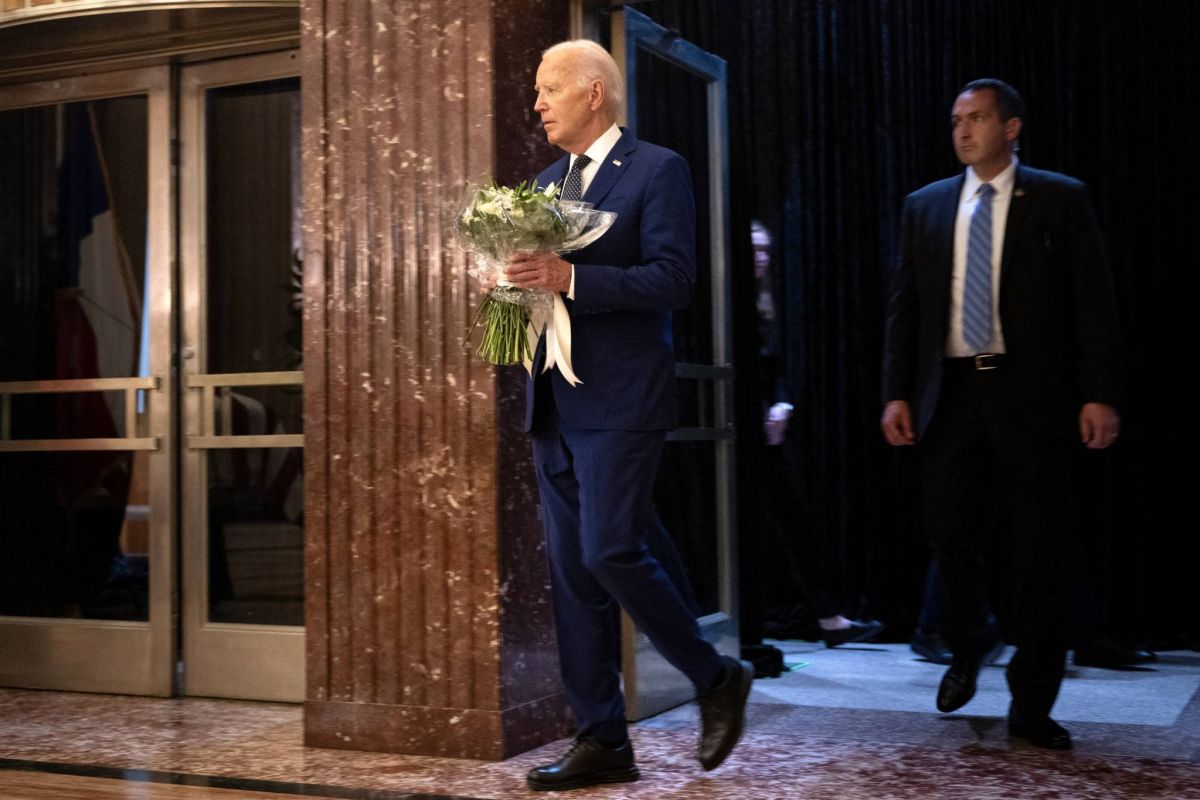
U.S. President Joe Biden pays his respects to the casket of Rep. Sheila Jackson Lee (D-TX) at City Hall in Houston, Texas, on July 29, 2024. (Credit: Brendan Smialowski/AFP)






U.S. President Joe Biden has extended the national emergency in Lebanon for one year, which was in effect until August 1, 2024, amid a border conflict between Hezbollah and Israel since Oct. 8, 2023, the day after Hamas attacked Israel.
The notice comes days after the U.S. president granted a waiver to Lebanese nationals in the United States to protect them from expulsion and allow them to remain in the country for an additional period of time, due to the situation in Lebanon.
In a notice published Monday on the White House website, President Biden explained that "certain ongoing activities, such as Iran's continued arms transfers to Hezbollah – which include increasingly sophisticated weapons systems – serve to undermine Lebanese sovereignty, contribute to political and economic instability in the region, and continue to pose an unusual and extraordinary threat to the national security and foreign policy of the United States."
"For this reason, the national emergency declared on Aug. 1, 2007, must remain in effect beyond Aug. 1, 2024," Biden stated. "Therefore, pursuant to section 202(d) of the National Emergencies Act, I am extending for one year the national emergency regarding Lebanon declared in Executive Order 13441," the American president added.
The text noted that on Aug. 1, 2007, by Executive Order 13441, the president declared a national emergency concerning Lebanon under the International Emergency Economic Powers Act. This was to address "the unusual and extraordinary threat to the national security and foreign policy of the United States posed by actions by certain individuals aimed at undermining the legitimate and democratically elected government of Lebanon or democratic institutions."
It also said that these actions aim "to contribute to the deliberate breakdown of the rule of law in Lebanon, including through politically motivated acts of violence and intimidation, to reassert Syrian control or contribute to Syrian interference in Lebanon, or to infringe upon or undermine Lebanese sovereignty." "These actions contribute to political and economic instability in this country and in the region," it states.
President Biden's notice will be published in the Federal Register and transmitted to Congress.
On July 26, the U.S. president ordered the secretary of homeland security to "take appropriate action to authorize the employment of individuals whose deportation has been deferred ... and to consider suspending regulatory requirements for F-1 nonimmigrant students who are Lebanese nationals." This decision applies to all nationals whose right to stay in the United States is no longer valid or will soon expire.
In the aftermath of the war in the Gaza Strip triggered by Hamas's unprecedented attack on Israel on Oct. 7, 2023, Hezbollah opened a front with Israel in support of the Palestinian movement. Since then, hostilities have been almost daily on the Lebanese-Israeli border.
This article originally appeared in French in L'Orient-Le Jour.
