






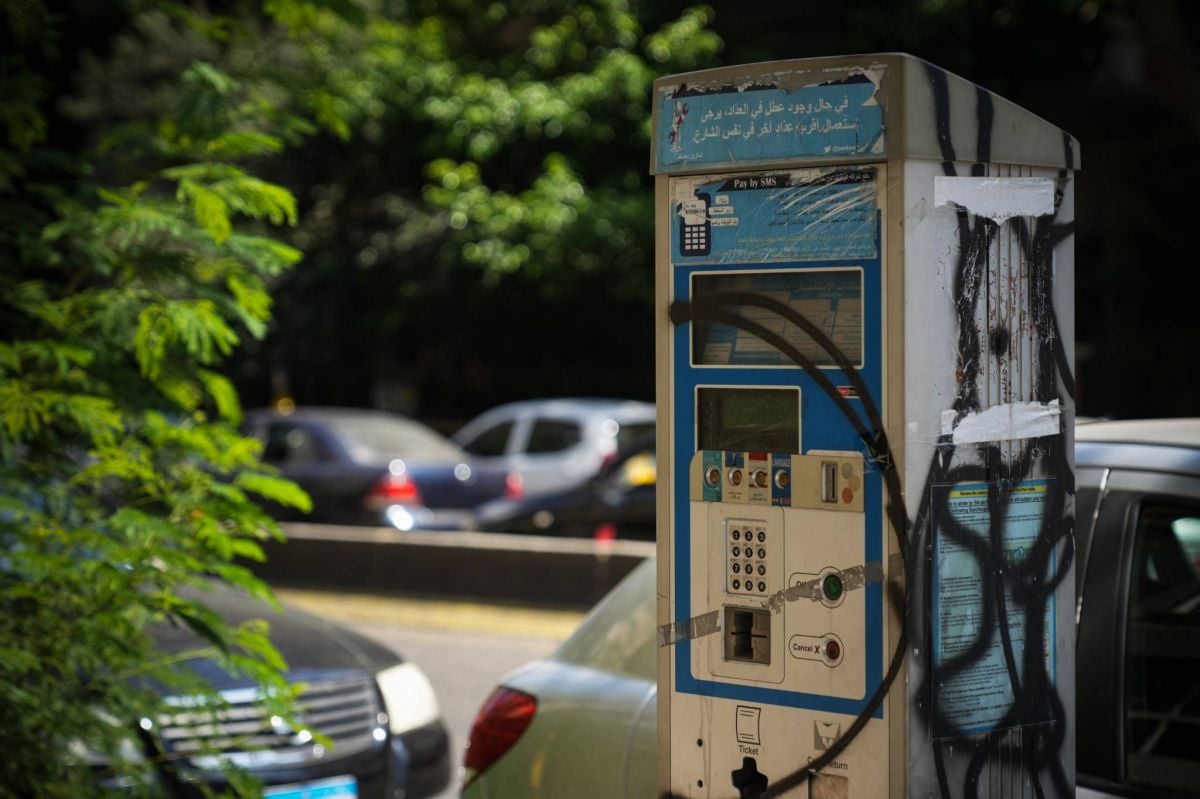
A parking meter in Beirut. (Credit: Mohammed Yassine/L'Orient Today)






BEIRUT — It’s been over four years since parking meters stopped working in Beirut, becoming somewhat of a “foreign concept” to visitors and residents across the capital. But that is soon changing as the Beirut Municipality is planning their revival around the city.
“The project is currently being studied and finalized and will take at least five to six months to be officially relaunched,” said Said Fatha, engineer, member of the municipal board and head of the Planning and Public Works Committee of the Beirut Municipal Council.
Between the economic crisis and chaos across the country, the situation the past three years was not conducive to projects such as parking meter revival. “But today, things feel relatively more stable, and we felt it was the right time to bring back some order to the parking situation in Beirut,” said Fatha.
Embezzled funds, a court case, an arrest: A tumultuous past
Between being ransacked in 2019 during the October Revolution and the rift between the Beirut Municipality and the Ministry of Interior’s Traffic Management Organization (TMO), the history of parking meters around the city is a tumultuous one.
The TMO had managed and maintained parking meters since their initial introduction in 2004. An agreement drawn up at the start of the project mandated the TMO to revert any surplus it generated to the municipality of Beirut, something it failed to do for years. The TMO had long claimed to put the funds toward the maintenance of traffic lights. Their revenue had been estimated to reach LL10 billion a year (or the equivalent of $6.6 million at the LL1,500-to-the-dollar exchange rate).
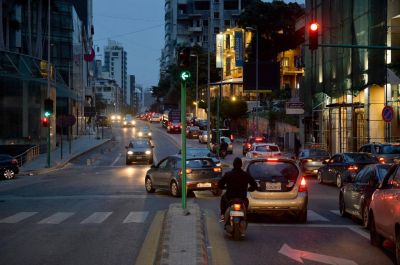
When former Beirut governor Ziad Chbib took office, he repeatedly contacted the Ministry of Interior to ask it to hold the TMO — then headed by Hoda Salloum — accountable. After many requests went unanswered, Chbib filed an appeal on behalf of the municipality to the State Shura Council to order an expert report on the use of funds collected via park meters by the TMO since 2004. It wouldn’t be until 2019 that the case would go to court, leading to the arrest of TMO’s Hoda Salloum, who would subsequently be released on bail.
“We won the case against the TMO in 2022 and regained full control of setting up, managing, and operating park meters in Beirut,” said Fatha.
What are the municipality's new plans?
The plan is to replace old parking meters with new “smart” meters, Fatha said, through which citizens will have multiple options to pay their fees: a mobile application, the purchase of a card, or the purchase of special coins.
The meter prices are still being discussed, the council member explained, and they hope to reach an outcome that is “in line with the current inflation, but not burdensome to citizens.”
However, it will be ultimately up to the companies subcontracted to run the meters to either take the municipal council’s prices, or set their own.
“Beirut will be split into five zones, and we intend to operate through Public-Private Partnerships (PPP), whereby each zone will be subcontracted to one company exclusively, and those companies will be in charge of setting up and maintaining the new smart meters,” he said. “These will then be linked to a system owned by the municipality to track daily transactions.”
According to Fatha, revenues will be split between subcontractors and the municipality according to percentages that are yet to be determined.
Once the plan is finalized, a call for tenders will be launched for companies interested in managing one of each of the five zones.
“For the time being, parking meters will only be set up across main and commercial roads.” As for residential areas and side roads, there’s an “ongoing debate” among the committee as to whether monthly parking permits will be free or paid, and whether they will be restricted to use by each neighborhood’s residents only.
“Discussions are still ongoing,” Fatha said, “as we’re weighing the pros and cons of each option.” Fatha