



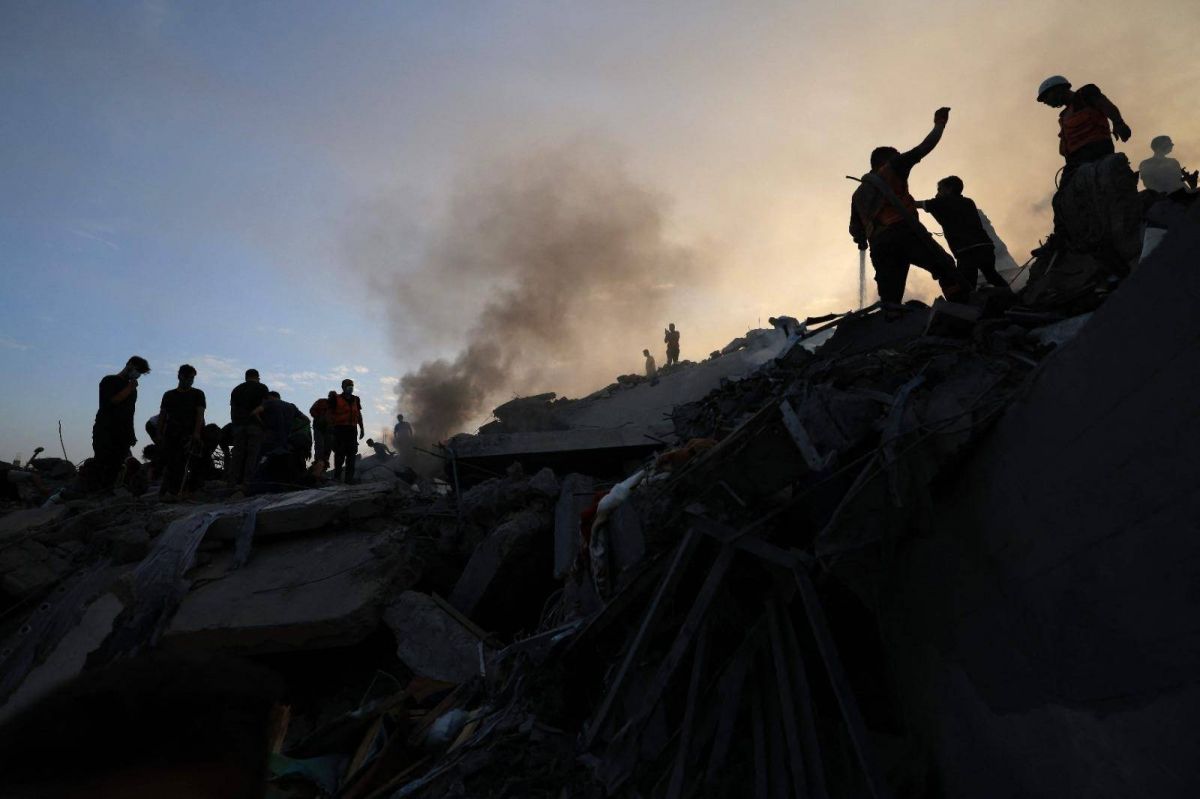
Palestinians search for survivors in the rubble of a building in the Nuseirat refugee camp, in the central Gaza Strip on Oct. 31, 2023, amid relentless Israeli bombardment of the Palestinian enclave. (Credit: Mahmud Hams/AFP)






Want to get the Morning Brief by email? Click here to sign up.
Catch up on our LIVE coverage of Day 25 of the Israel-Hamas war here.
Palestinian factions called for a “day of anger” inside Palestinian refugee camps in Lebanon today, including marches and sit-ins, to oppose Israeli attacks on Gaza. The call particularly references yesterday's strike on the enclave's Jabaliya refugee camp, which leveled 10 residential buildings and killed at least 20 people. Approximately 300 demonstrators gathered yesterday near the French Embassy in Lebanon, to participate in a protest organized by Hezbollah and pro-Palestinian factions, according to L’Orient Today’s reporter at the scene. Although Hezbollah also called for participation in the rally, it insisted that it would not be held "in its name," which explains the absence of the party's flag in the crowd. "We are here to condemn Macron, who is banning pro-Palestinian demonstrations in France," shouted one man on his megaphone.
Lebanon plans to file a complaint to the United Nations Security Council over Israel’s use of incendiary white phosphorus shells, which have charred swathes of land in southern Lebanon. Human rights watchdog Amnesty International said Israel potentially committed a “war crime” by attacking Dhayra, in southern Lebanon, with white phosphorus. The incendiary shells “seriously endangered the lives of civilians, many of whom were hospitalized and displaced, and whose homes and cars caught fire,” Amnesty MENA deputy regional director Aya Majzoub said. Another of Israel’s white phosphorus attacks destroyed large parts of Alma al-Shaab’s vineyards and olive groves, threatened the town’s inhabitants and led to the injury of a firefighter attempting to extinguish the resulting fire.
Israeli shelling hit a Lebanese Army base in Wadi Honein, south Lebanon, while other areas were reportedly targeted with incendiary strikes amid further cross-border fire with Hezbollah. The strike on the army base did not cause any casualties. Rockets fell on southern Lebanese areas near Aitaroun, Blida, Maroun al-Ras, Markaba and at least eight other localities. The shells landed close to homes, and one house was damaged in Baraachit, the state-run National News Agency reported. Israel also fired phosphorus shells on Aita al-Shaab, al-Bustan, Wadi al-Aleq, and Ramia, according to local officials and the NNA. Hezbollah said it perpetrated at least five separate attacks, which, according to the party, resulted in direct hits and casualties on an Israeli tank and infantry units. Israel’s National Security Adviser Tzachi Hanegbi said military operations on the border with Lebanon remained defensive to avoid overstretching Israel's forces and maintain focus on the war in Gaza. Hanegbi said the Israeli army would apply the lessons learned from fighting Hamas to Hezbollah.
Some 8,525 Palestinians have been killed, including 3,542 children, in Israeli strikes on Gaza since Oct. 7, according to figures from the enclave's Health Ministry. A Gaza City resident told L’Orient Today she was scared the Israeli army “would kill everyone” as it rapidly moved through the enclave. Israel intensified its shelling of Gaza as it began a ground operation last Friday. The Israeli army said two of its soldiers were killed yesterday during combat in northern Gaza. Earlier in the day, Hamas said it was "engaging in a confrontation” with the Israeli army “in the northwest of Gaza." Three additional staffers for the UN agency dedicated to Palestinian refugees were killed in the last 24 hours while in houses with their families, bringing the death toll among its staff members to 67, UNRWA said in a statement. Piling on to the shelling and armed invasion, Israel has cut off access to vital resources and damaged key infrastructure. Water output in Gaza has dropped to 5 percent of its normal level, the United Nations' Children's Fund (UNICEF) said, warning of the risk it poses to infant mortality. The World Health Organization says that Gaza is an "imminent public health catastrophe" with overcrowding, mass displacement, as well as damage to water and sanitation infrastructure, Reuters reported. The largest aid shipment since Israel paused its bombardment of the Rafah crossing entered Gaza yesterday with 66 trucks, still a fraction of what entered daily before Oct. 7. Egyptian medical and security sources told AFP they were preparing to receive injured people coming from Gaza, as relentless bombardment and equipment shortages have shut down at least 12 hospitals in the enclave.
In case you missed it, here’s our must-read story from yesterday: “Lebanon reaches one year with no president: What happened?”
Compiled by Abbas Mahfouz

 7 p.m. recap: 1 person killed near border with Lebanon; 200 kilos of explosives carried by mules; Riyadh shuts its airspace