







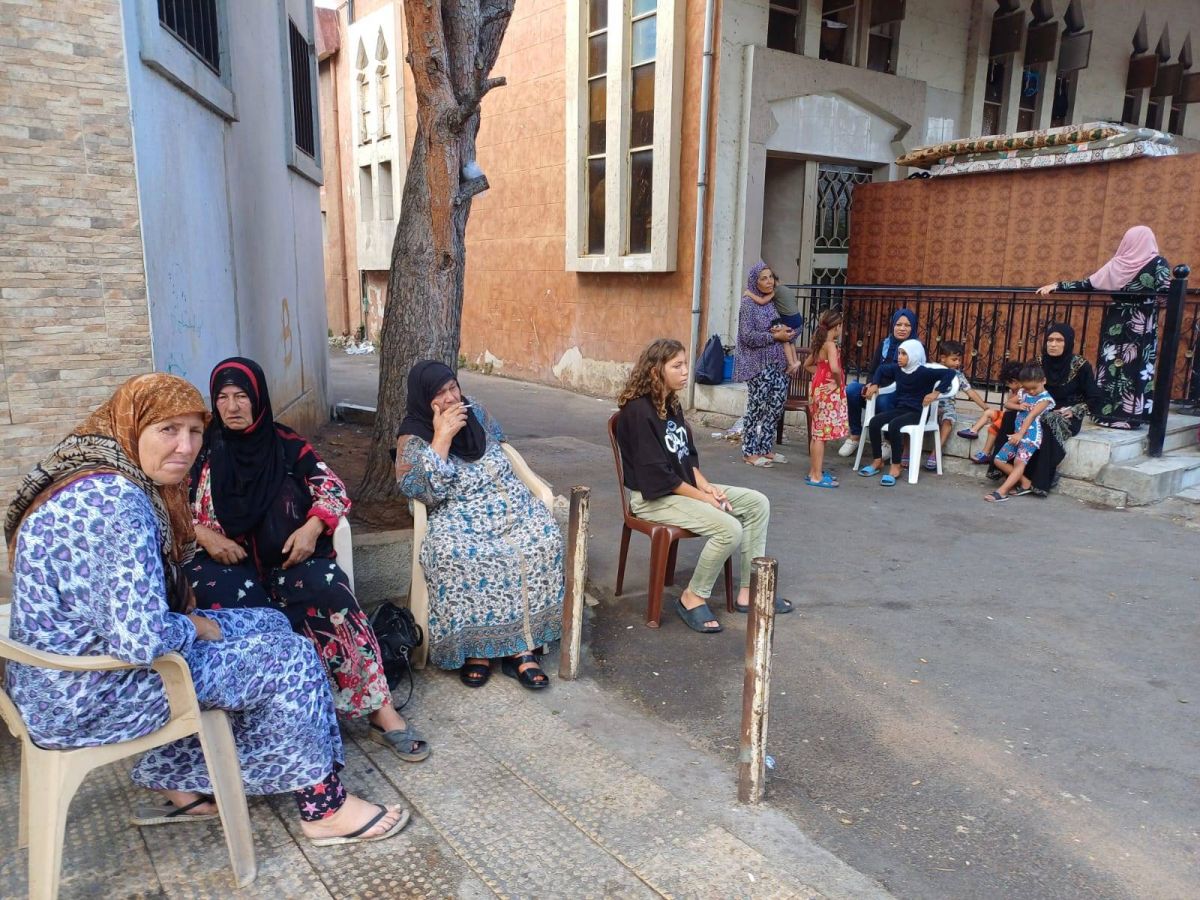
Displaced civilians in Saida who fled the clashes in Ain Al-Hilweh camp, on Aug. 1, 2023. (Credit: Muntasser Abdallah/L'Orient Today)






Caretaker Premier Najib Mikati called on Parliament to pass a law demanded by the new central bank leadership to finance government expenses with Banque du Liban funds. Meanwhile, Chami expressed concern over the state’s ability to pay back the debt. Mikati argued that obtaining approval for the debt from ministers would take longer and might face objections, as the caretaker cabinet has regularly been criticized for allegedly overstepping its prerogatives amid the presidential vacuum. That same day, Deputy Prime Minister Saade Chami said the requested funds “represent a significant proportion” of projected revenues in the draft 2023 budget, fueling concern over the state’s ability to repay amid precarious economic conditions. On Monday, caretaker ministers received a bill allowing the government to borrow funds financing public employee salaries and other expenses from the central bank. Acting governor Wassim Manssouri earlier Monday said he intends to curb BDL’s financing of the state and government borrowing “without a legal framework.”
A stray bullet reportedly fired in the Ain al-Hilweh Palestinian refugee camp on Tuesday injured a pregnant woman near the camp a day after a cease-fire was called to end clashes that killed at least 11 people. Some of the “more than 2,000 people” estimated by UNRWA, the UN agency responsible for Palestinian refugees, to have been displaced since Saturday told L’Orient Today on Tuesday they hoped the cease-fire would expedite their return home. Sporadic gunfire and shelling were still heard in and around the camp on Tuesday, despite the announcement of a cease-fire Monday evening after a third consecutive day of clashes between Fatah and rival Islamic factions in the camp. The clashes have killed at least 11 people, wounded dozens and caused extensive property damage.
Caretaker Foreign Affairs Minister Abdallah Bou Habib reaffirmed Lebanon’s commitment to “revealing the circumstances” of the Aug. 4, 2020 Beirut port blast after a meeting with ambassadors from 15 countries expressing concern over the case. The ambassadors expressed concern over “ongoing obstruction” to the port blast probe, representing countries that signed the joint statement on the Beirut Port explosion at the UN Human Rights Council. The port blast probe has been halted since January, after the failure of an attempt to relaunch it from over a year of paralysis due to unresolved complaints against lead investigator Judge Tarek Bitar. In March, at the 52nd session of the Human Rights Council, Australian Ambassador Amanda Gorely called on behalf of 38 countries for the Lebanese government to conduct “a prompt, independent, impartial, credible and transparent investigation into the blast.” The youngest victim of the Aug. 4, 2020, explosion, which killed over 220 people, was two-year-old Australian citizen Isaac Oehlers.
Caretaker Health Minister Firass Abiad confirmed the presence of contaminated water, vegetables and ice in a Zahle restaurant where some 60 people got food poisoning in July. “The Health Ministry will test the water again to ensure that it is free from bacteria and that the restaurant meets the required health conditions before” allowing it to reopen, Abiad continued. Abiad confirmed the complete recovery of all 60 food-poisoning victims, noting that four of them required hospitalization. Internal medicine and infectious disease specialist Georges Khalil told L’Orient Today that “the situation is not alarming,” while noting that “power cuts combined with the summer heat” can increase the risk of consuming infected food.
In case you missed it, here’s our must-read story from yesterday: “No man’s land: Lebanon’s major property disputes ”
Compiled by Abbas Mahfouz