






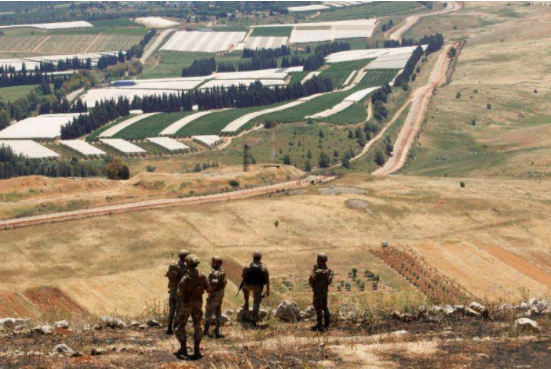
Lebanon's southern border with Israel. (Credit: Aziz Taher/Reuters)






Want to get the Morning Brief by email? Click here to sign up.
Lebanon revealed it dismantled at least 17 Israeli spy networks in one of the largest nationwide crackdowns in recent years. The pro-Hezbollah Al-Akhbar newspaper broke the news Monday, which was later verified by acting Information Minister Abbas Halabi after a cabinet meeting. According to a judicial source cited by AFP, 21 arrests were made in the operation, which was carried out by the country's Internal Security Forces. Between April 2009 and 2014, Lebanese authorities detained over 100 people accused of spying for Israel, the majority of whom were members of the military and telecom employees. The rate of arrests, however, had declined in recent years. The massive bust comes during a time of heightened tensions between the neighboring countries, which have officially been at war since 1948. In addition to occasional cross-border fire incidents, regular violation of Lebanese airspace by Israeli planes and frequent fiery rhetoric between Israel and Hezbollah, Israel’s normalization efforts in the region and the enduring standoff between the two countries over gas and oil exploration in the Mediterranean Sea continue to fan the flames.
No major progress has been made on securing cabinet approval for the preliminary draft budget 2022. Acting Information Minister Abbas Halabi said at the end of Monday’s session that “there was an in-depth discussion of Article 135 related to giving social assistance to workers in the public sector.” The government has studied the social assistance it aims to provide to residents, allocating a budget of LL400 billion to associations caring for people with disabilities, the elderly, children and abused women. However, it remains to be seen whether the state will be able to come up with sufficient funds to finance all the projects it has so-far discussed, which at this point have become necessary for a large section of the population, 82 percent of which lives below the multidimensional poverty line, according to the United Nations. The review and validation of this budget is a crucial first step to beginning reforms and to kick-starting the country’s economic recovery, all of which will help convince the International Monetary Fund to finance such efforts through a dedicated program. On Monday night, the Amal Movement criticized an article in the 2022 budget under which the state power provider Electricité du Liban would receive an advance payment to buy fuel, describing such a move as contributing to the “continued failure” to resolve the electricity crisis in the country. The next session is scheduled for Wednesday at 9 a.m.
President Michel Aoun yesterday again took aim at Banque du Liban for causing delays in handing over data for the long-awaited forensic audit, saying he hoped the central bank “doesn’t have anything to hide in its accounts.” Aoun said he had previously warned against deliberate procrastination from the Central Bank in delivering the required information by the auditing firm Alvarez & Marsal. Lebanon’s central bank quickly responded to the president’s comments, claiming in a statement that it had handed over all the necessary documents as of Jan. 21 and had asked the Finance Ministry for the “immediate proceeding of the audit.” The heavily indebted state and the paralyzed banking sector, its biggest creditor, have been trading blame since the start of Lebanon’s financial meltdown, which the World Bank has dubbed “one of the worst in modern history.” The audit is a key condition for unlocking foreign aid the country is in increasingly dire need of.
Lebanese Forces leader Samir Geagea yesterday announced the candidacy of former Information Minister Melhem Riachi for the Greek Catholic seat in the Metn District in the upcoming parliamentary elections. He also expressed his party’s support for “independent candidate” Razi al-Hajj, who is running in the same constituency for one of the Maronite seats. In the last elections in 2018, Hajj unsuccessfully contested this seat, while in 2018, the LF only secured one seat in this constituency. Geagea used this opportunity to once again accuse Hezbollah and the Free Patriotic Movement of preparing “a new plan to postpone or torpedo the next legislative elections” by reopening the subject of the expatriate vote, which the FPM opposes in its current form. Under the prevailing electoral law, expatriates will cast ballots in Lebanon’s 15 existing constituencies rather than in a specialized six-seat, 16th constituency.
In case you missed it, here’s our must-read story from yesterday: “Public high school teachers, badly affected by the slump, vote for... the parties in power”
