






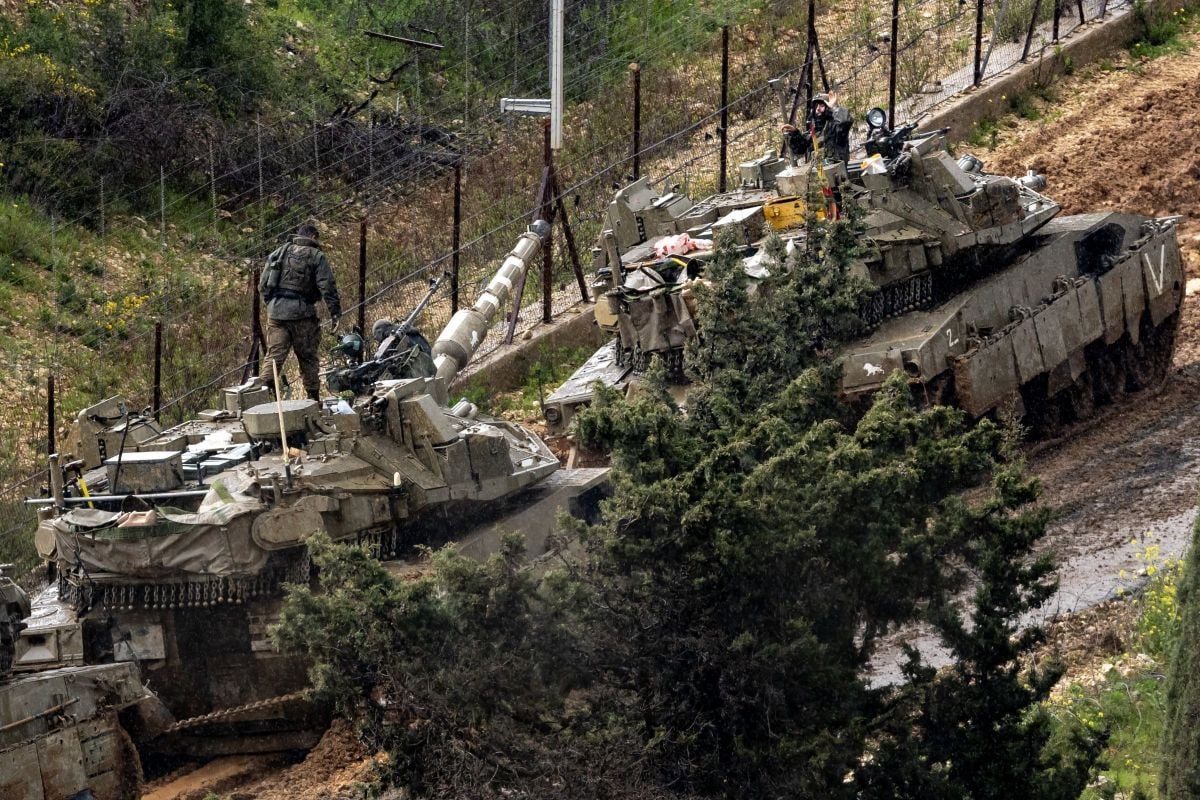
Israeli soldiers try to tow a tank stuck in the mud on the Israeli side of the border with Lebanon, in the Upper Galilee in northern Israel, on March 21, 2026. (Credit: AFP)






BEIRUT — Israeli Prime Minister Benjamin Netanyahu said Sunday that Israel would remain in its "security zone in southern Lebanon until Hezbollah is disarmed," saying he does not trust the Lebanese government to carry out the task, according to an interview with Radio North 104.5FM published Sunday and reported by Israeli daily Maariv.
“No, I don't trust them to disarm Hezbollah,” Netanyahu told host Gadi Ness. “That's why we said that as long as it is not disarmed, we will remain in this zone that changed the situation in the north.”
He described the area as a security zone “free of all terrorist systems,” claiming that many villages in the area had been strongholds for Hezbollah and were no longer so.
“We created a security zone free of all terrorist systems, a large part of the villages were simply terrorist strongholds and they are no longer there,” he said.
Netanyahu also said Israel would continue its military operations against Hezbollah “as much as necessary” and vowed to ultimately eliminate the group.
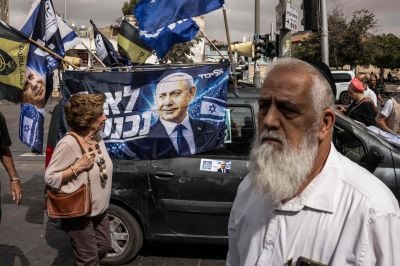
“We will eliminate Hezbollah, although it is weakened and a shadow of itself,” he said, adding that Israel also needed to address the threat posed by Hezbollah's drones.
Israel has maintained positions in southern Lebanon despite the November 2024 cease-fire agreement, which called for Israeli forces to withdraw from Lebanese territory. The agreement also provided for the deployment of the Lebanese army in the South and the dismantling of unauthorized armed infrastructure in the area.
Netanyahu remarks come amid heightened tensions between Israel and Iran and growing Israeli threats against Lebanon. On Wednesday, Israeli Defense Minister Israel Katz threatened to expand Israel’s occupation of southern Lebanon and strike Beirut’s southern suburbs if Hezbollah joined Iran in attacking Israel. The warnings come as the wider regional conflict and negotiations over Lebanon’s security arrangements continue, with Israel maintaining troops in parts of southern Lebanon despite calls for a withdrawal.
Netanyahu criticizes opposition figures
During the interview, Netanyahu defended his handling of the conflict with Hezbollah and criticized opposition politicians Gadi Eisenkot and Naftali Bennett, who have both presented themselves as alternatives to his leadership ahead of Israel's 2026 legislative elections.
Netanyahu claimed that Eisenkot had opposed his approach to Hezbollah and accused former prime ministers Bennett and Yair Lapid of failing to address security threats during their time in office.
“Bennett and Lapid were in power for a year and a half and did nothing,” he said, accusing their government of making concessions to Hezbollah.
Asked about the attack on Washington Post photographer Heidi Levin, Netanyahu "condemned the violence" and called on "those involved to stop."
The comments came after The Washington Post photojournalist Heidi Levine was attacked by masked Israeli settlers on Oct. 16 while covering Palestinian olive harvesters in Abu Falah, near Ramallah, in the occupied West Bank. Levine was beaten and sustained injuries, while her camera equipment and other belongings were reportedly stolen. The incident drew condemnation and renewed attention to violence by Israeli settlers against Palestinians and journalists covering the occupied territory.
“Any violent and wild behavior is against the law, is unacceptable in itself and causes harm to the State of Israel,” he said. “I call on everyone who is involved in this to stop immediately, and I call on and instruct law enforcement officials to deal with them to the full extent of the law.”
Netanyahu says Iran could interfere in elections
Netanyahu also alleged that Iran would seek to influence Israel's upcoming elections and campaign against him.
He said Israel was now stronger and Iran weaker, but argued that further action was needed to achieve the campaign's objectives. “The choice here is an existential question, it's the right or Palestine,” he said, claiming that an opposition-led government would establish a Palestinian state.
Israel's legislative elections are scheduled for Oct. 27, 2026, with Netanyahu facing opposition from several political figures.
The Israeli prime minister also responded to allegations by former Shin Bet chief Ronen Bar, who filed a defamation lawsuit against Netanyahu over claims concerning the government's handling of security warnings before Hamas' Oct. 7, 2023, attack on Israel.
Bar has alleged that Netanyahu repeatedly refrained from approving the assassination of Hamas leader Yahya Sinwar because he feared retaliation against himself and his family.
Netanyahu rejected the allegations, calling Bar a liar and saying he had submitted nearly 1,000 documents to Israel's state comptroller to support his account.
 Update at 2 p.m.: Aoun announces new tripartite talks in Florida, hundreds arrested in France, Raggi calls on Iran and its allies to stop attacking Gulf countries