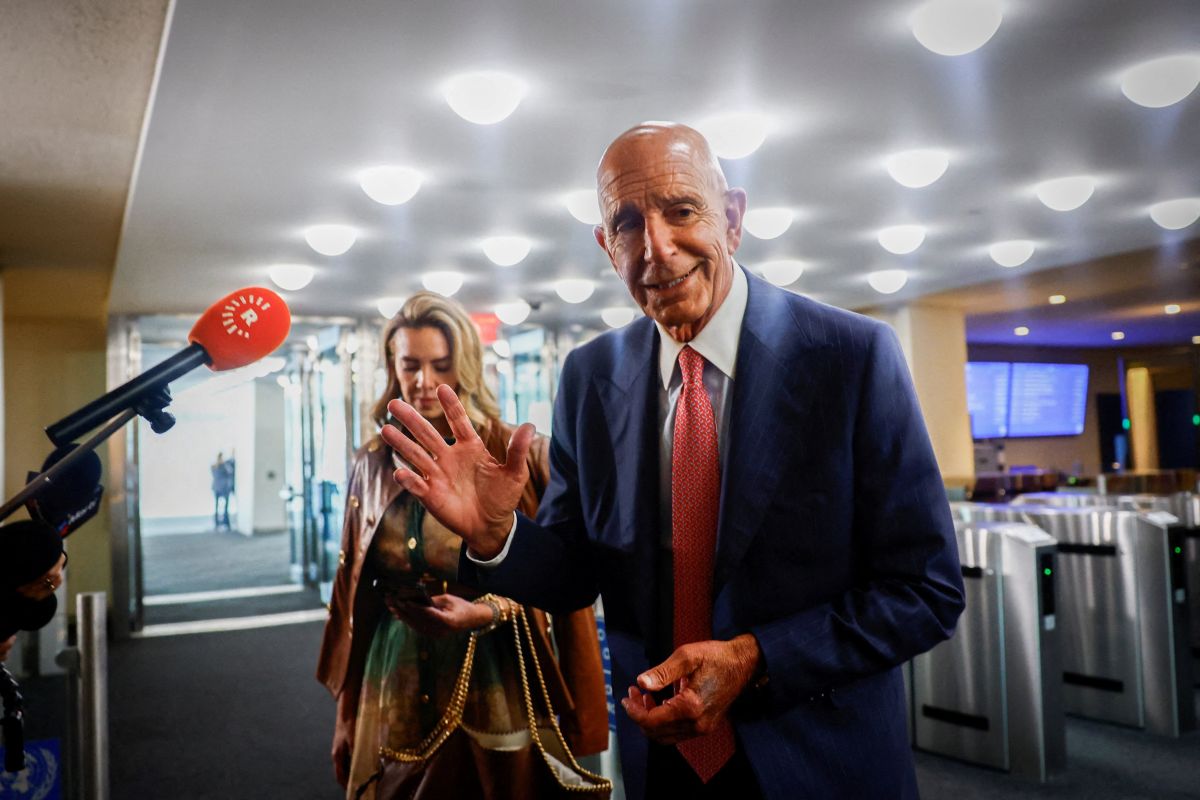
Thomas Barrack, U.S. Special Envoy for Syria and Iraq, addresses the media at the United Nations headquarters in New York on Sept. 24, 2026. (Credit: Jeenah Moon/Reuters)






Thomas Barrack, special envoy of U.S. President Donald Trump to Iraq and Syria and ambassador to Turkey, reportedly lobbied Iraqi and Syrian officials to support the participation of a company connected to his business partner in a $15 billion oil pipeline project between Iraq and Syria. His actions raise questions about compliance with U.S. conflict-of-interest rules.
In July, Iraq and Syria signed memorandums of understanding with a consortium including TI Capital, a California-based investment firm, U.S. oil giant Chevron, and Qatari company UCC Holding. The goal is to study restarting the Kirkuk-Banias pipeline, which would allow Iraqi oil to flow to the Mediterranean without passing through the Strait of Hormuz.
According to a Reuters investigation, Thomas Barrack has maintained business ties for several years with Ziad Ghandour, the founder of TI Capital. Barrack holds a stake in a real estate project near San Francisco managed by this firm, which entitles him to up to 20% of the profits.
According to multiple sources, after the outbreak of the war in Iran, Barrack pressed Iraqi and Syrian officials to ensure TI Capital’s involvement in the pipeline project. In a joint statement with Iraqi Prime Minister Ali al-Zaidi on June 16, he welcomed the decision to advance an agreement with TI Capital on restoring the infrastructure. Neither Chevron nor UCC Holding was mentioned in this statement.
There is no evidence at this stage that Barrack is directly benefiting financially from the pipeline project. However, his ties with Ghandour and his lobbying on behalf of TI Capital raise concerns about his impartiality, according to ethics experts.
Richard Painter, a former White House ethics lawyer and law professor at the University of Minnesota, called this intervention "a serious problem" given the rules governing conflicts of interest in U.S. public service. Asked what Barrack should have done, Painter responded: "Have nothing to do with the pipeline. Recuse himself completely. Say: 'This matter is not for my involvement.'"
Ann Skeet, an ethics expert at Santa Clara University, said the issue is "the appearance of a conflict of interest." Don Fox, former general counsel and acting director of the Office of Government Ethics, the federal body overseeing ethics compliance, believes that Barrack promoting TI Capital could violate rules prohibiting officials from using their positions for private interests.
According to documents reviewed, the American diplomat did not seek any official waiver to intervene in this matter despite his links to TI Capital. His office declined to comment.
The U.S. State Department, however, stated that Barrack has "no connection, no role and no financial interest in the Kirkuk-Banias pipeline project." It added that his statements reflected the longstanding U.S. interest in greater energy integration in the Middle East and that the ambassador was complying with ethics rules.
A strategic project amid tensions over Hormuz
Out of service since the U.S. invasion of Iraq in 2003, the Kirkuk-Banias pipeline could provide Iraq with a route to export its oil to the Mediterranean, bypassing the Strait of Hormuz — a strategic chokepoint for global oil trade. Restrictions on traffic in the strait by Iran, amid the war with the United States, have revived interest in this infrastructure. Bringing it back online would require at least four years of work and cost about $15 billion.
Barrack and Ziad Ghandour’s business relationship dates back at least to 2020. That year, the two men created an investment company with $250 million in capital. It was later dissolved after Barrack’s arrest in 2021 in a case involving his relations with the United Arab Emirates. He was acquitted in 2022.