






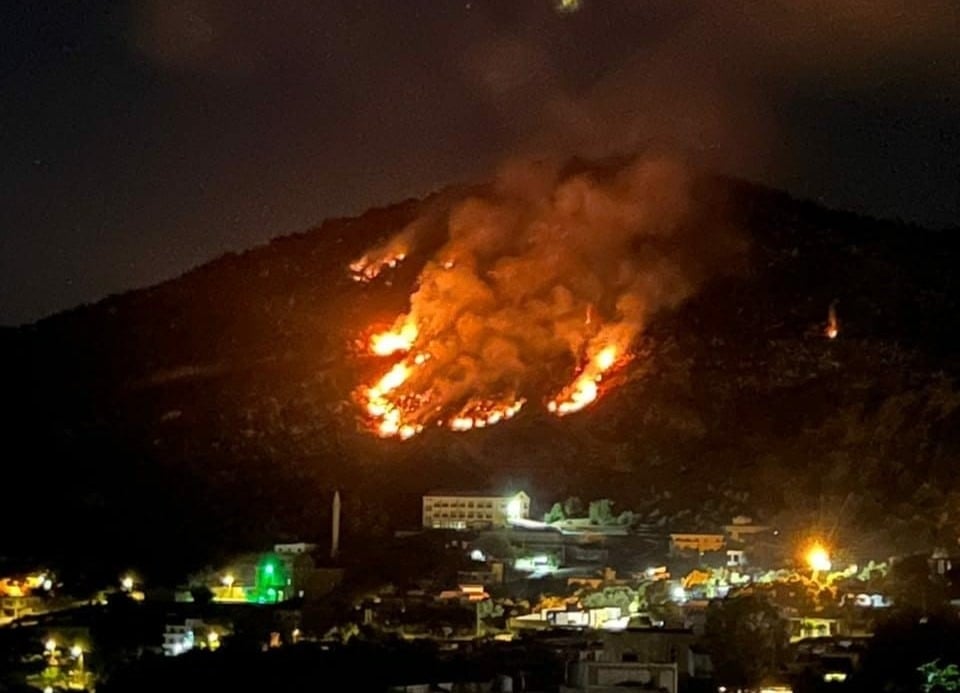
A fire caused by Israeli bombings in the Kfar Shuba area, in southern Lebanon. (Credit: Photo shared by our correspondent Mountasser Abdallah)






BEIRUT — Lebanese Environment Minister Tamara Elzein on Monday denounced the "ongoing environmental destruction" in south Lebanon caused by repeated Israeli army bombardments, including the use of highly flammable white phosphorus. According to the minister, the attacks have ravaged 16,000 hectares of land.
"Phosphorous bombardments have compounded the large-scale fires that have ravaged agricultural land, woodlands and forests, as well as to earthworks and the uprooting of trees that have destroyed vegetation and changed the characteristics of the soil. Furthermore, the enemy has spread glyphosate-based herbicide over vast areas. We are facing multiple forms of closely connected Israeli aggression against the environment and natural resources of south Lebanon," the minister said in a statement.
"More than 16,000 hectares of agricultural land, woodlands and forests in Lebanon have been ravaged by flames between October 2023 and August 2026 as a result of Israeli attacks, while more than 2,000 hectares have been affected by the glyphosate herbicide," Elzein added. "These figures do not reflect the full magnitude of the environmental damage, which also includes earthworks, uprooting of trees, destruction of vegetation cover and impacts on soils, natural habitats and the agricultural sector," she said.
The minister denounced "a violation of the rules governing the use of weapons during armed conflict," as well as "an attack on national resources and the rights of the Lebanese people." "The Environment Ministry will continue its efforts to determine the extent of the damage inflicted on the South," Elzein said, promising to "ensure environmental protection and the rehabilitation of affected areas."
The use of white phosphorous bombs by Israel in south Lebanon has been documented since the 2024 conflict, as well as during previous wars. The Israeli army has frequently used the substance in its strikes, in addition to deliberately setting fires in certain areas and carrying out earthworks and demolitions.
In a document published in French in August 2025, Amnesty International recalled that white phosphorus is a “so-called conventional” weapon with multiple uses, including creating smoke screens to conceal troop movements, marking targets for attack, illuminating a battlefield and tracking the trajectory of a projectile. The text also notes that its military use “is permitted but strictly regulated.”
