


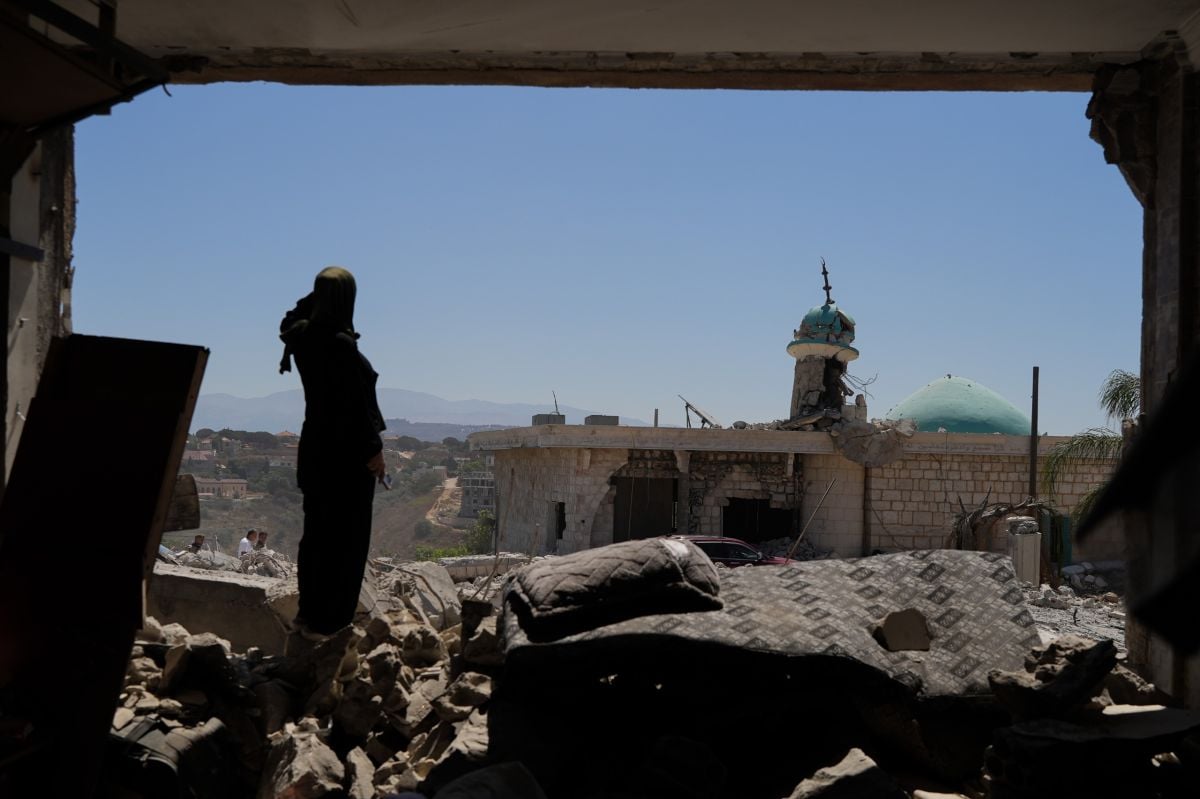
Leila standing in front of the torn-open facade of her apartment in Zawtar Gharbieh, south Lebanon, on July 28, 2026. (Credit: Mohammad Yassine/L'Orient-Le Jour






SOUTH LEBANON — The first prefabricated houses provided by the Council for the South were delivered early Monday afternoon to Zawtar Gharbieh, one of the pilot areas where the Lebanese Army is set to deploy as part of efforts to disarm Hezbollah, in accordance with the framework agreement reached between Lebanon and Israel.
Five units have already arrived in the town, with four more expected soon. During the 15-month cease-fire between Israel and Hezbollah, from November 2024 to March 2026, the Israeli army regularly bombed prefabricated houses, most of which had been installed by an organization described as close to Hezbollah. Dozens of these structures were destroyed, with Israel claiming they were used by Hezbollah.
Zawtar Gharbieh's mayor, Abed Ezzeddine, told L’Orient-Le Jour that the nine homes were intended for families facing difficult housing conditions and in urgent need of accommodation. Their installation is part of a "gradual plan to allow residents to resettle in the village," he said. The municipality will prepare the plots needed to install the units so that additional houses can be delivered, he added.
The town would, however, need about 200 prefabricated houses to accommodate all the displaced residents currently living in temporary shelters. Of the roughly 500 families who lived in Zawtar Gharbieh before the war, only about 100 have so far returned to the village.
According to figures from the Council for the South as of April 30, 47 of the 102 prefabricated houses installed after the withdrawal of Israeli troops had been damaged in 13 localities across southern Lebanon, in the districts of Sour, Bint Jbeil and Marjayoun.
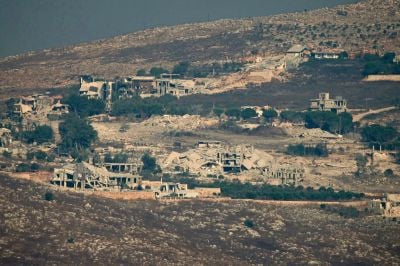
Series of Israeli strikes in the South
The initiative was announced in late July by Prime Minister Nawaf Salam during a visit to Zawtar Gharbieh. It is part of the authorities’ ongoing efforts to encourage residents of border villages to return to their homes.
The deliveries come as the Israeli army stepped up its operations in several parts of southern Lebanon early Monday. Several airstrikes were carried out, while gunfire continued in different areas.
An Israeli incursion was reported near Kfar Shuba (Hasbaya), a still-inhabited village on the edge of the “buffer zone” occupied by Israel. Military vehicles and a pickup truck were seen approaching the area under the cover of machine-gun fire.
From 5 a.m., airstrikes targeted the outskirts of Kfar Tibnit and a neighborhood of Nabatieh Fawqa, near the strategic Ali Taher hill in the Nabatieh district, as well as the Wadi Zebqine valley in the Sour district. The latter, which contains a nature reserve, was also targeted by artillery and machine-gun fire.
The wooded area east of Mansouri was of strategic importance during the war, particularly because it formed a geographic boundary between the Sour and Bint Jbeil districts. “That’s really no longer the case today since the entire area is under Israeli control,” our correspondent in the South, Mountasser Abdallah, said.
According to Abdallah, the intensification of attacks in different sectors in recent days can mainly be explained by Israeli operations shifting from one area to another. “For a time, attacks intensified in Nabatieh Fawqa, then in Zawtar, before shifting toward Mansouri, Qantara and Wadi Zebqine,” he said.
Israeli strikes resumed in the early afternoon, targeting, in particular, the outskirts of Wadi Hujeir and Deir Siryane in Marjayoun district, as well as the outskirts of Braasheet in Bint Jbeil district.
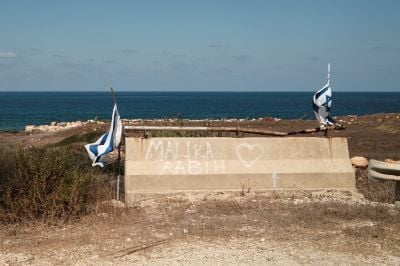
The Wadi Slouqi valley was also targeted. Before Israeli air forces bombed the area, it was shelled by artillery from the Touline sector, in Marjayoun district, where movements of Israeli vehicles were also observed. Helicopter gunfire also targeted Deir Siryane, while machine-gun fire from Mais al-Jabal targeted the area around the Doubieh citadel, near Shaqra.
Sunday night into Monday was already marked by several successive detonations in Mansouri, Sour district, as well as between Braasheet and Kounin in Bint Jbeil district. Operations continued during the day in Ainata and Blida in Bint Jbeil district, as well as in Alman al-Shumrieh in Marjayoun district. Israeli artillery also shelled the outskirts of Zawtar Sharqieh, while Israel fired automatic weapons toward the locality. On the outskirts of Khiam in Marjayoun district, an Israeli drone also dropped a stun grenade.
A 'long and complex' diplomatic process
On the diplomatic front, Lebanese Foreign Minister Joe Rajji said Sunday evening on Saudi broadcaster Al Arabiya that Lebanon had “regained its freedom of decision” and would not allow any party to negotiate on its behalf. He stressed that “there is no choice but negotiation to end the Israeli occupation” in the South, which covers more than 600 square kilometers and remains subject to daily strikes despite a cease-fire that has theoretically been in effect since June.
He also said that Lebanon had “succeeded, through negotiation, in putting an end to attacks against Beirut and its suburbs.” Rajji acknowledged that negotiations with Israel under U.S. auspices, which have stalled for several weeks, were “long and complex,” but said Lebanon intended to continue them “until full sovereignty is restored.”
The latest round of negotiations, which had been scheduled for early September, has been postponed to October.

 7 p.m. recap: 1 person killed near border with Lebanon; 200 kilos of explosives carried by mules; Riyadh shuts its airspace