






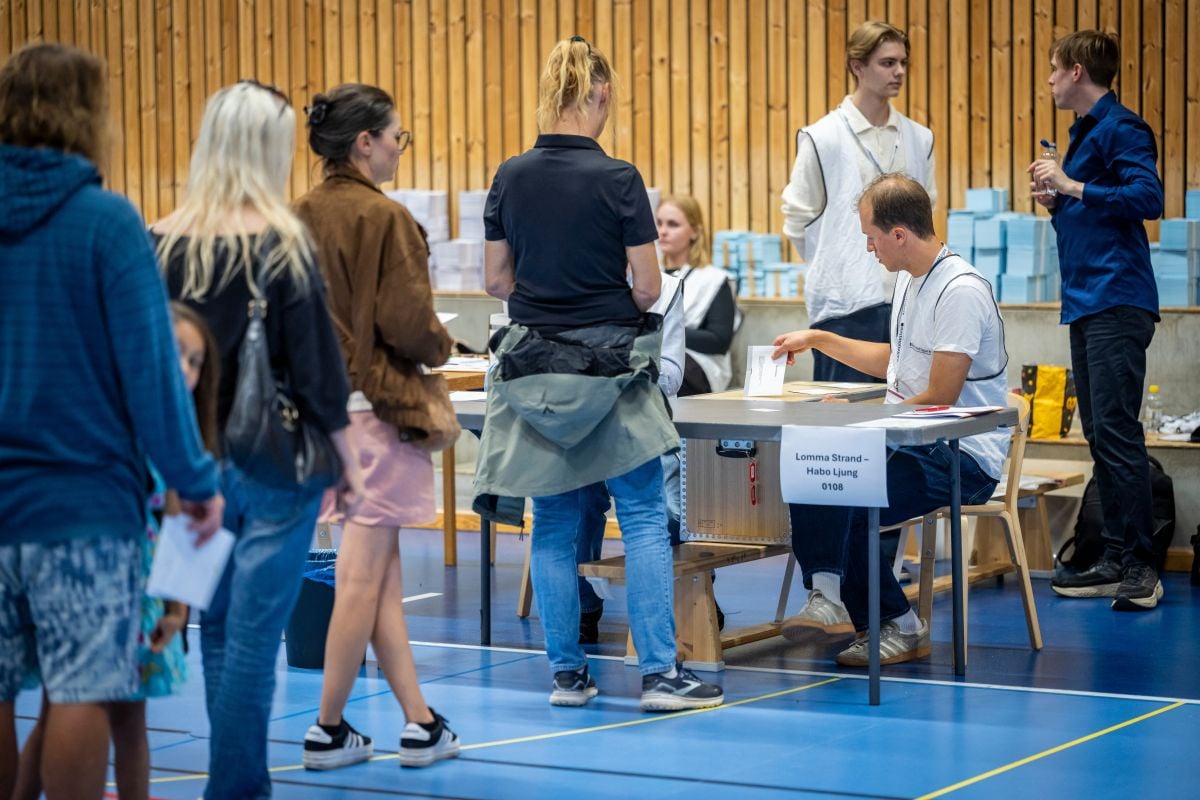
Voters queue to cast their votes in the Swedish general election at a polling station in a sports hall in Lomma, southern Sweden, on Sept. 13, 2026. (Credit: Johan Nilsson / TT News Agency/AFP)






Swedish Prime Minister Ulf Kristersson submitted a letter of resignation to the speaker of parliament on Thursday following the announcement of a final vote count for Sunday's election.
A group of centre-left opposition parties headed by the Social Democrats under Magdalena Andersson won 176 seats in Sunday's vote for parliament. Kristersson's incumbent right-wing bloc secured 173 seats, the election authority said.
Andersson, who became Sweden's first woman prime minister in 2021, said the country would take a new direction after four years during which the government has driven a hard line on immigration and crime.
"In recent times there are those who have not felt welcome in our country," she said in a speech carried on the X platform. "To you, I want to say this: This is a new era now. That is what the Swedish people have voted for."
It may, however, take some time to form a government.
Of Andersson's potential backers, the Centre Party says it will not join a coalition that includes the Left Party. The Green Party is also a potential member of a left-of-centre government.
The daily Dagens Nyheter reported that the Social Democrats had invited other opposition parties for talks, but gave no further details.
If Andersson fails to cobble together a coalition, the right bloc will most likely try to persuade the Centre Party to switch sides, something analysts say is unlikely.
Outgoing deputy prime minister Ebba Busch, leader of the Christian Democrats, said "it remains to be seen" what happens next.
If parliament rejects four candidates for the prime minister's job, a new election must be held.
The election pitted Andersson's loose alliance against Kristersson's centre-right bloc.
He had planned to bring the far-right into the coalition, to secure a majority, but the Sweden Democrats, with roots in the neo-Nazi fringe, saw their share of the vote decline for the first time since they entered parliament in 2010, tipping the vote in favour of the opposition.
The setback for the Sweden Democrats puts Sweden at odds with most of Europe, where the far-right is on the front foot.
The result remains subject to formal certification.
