


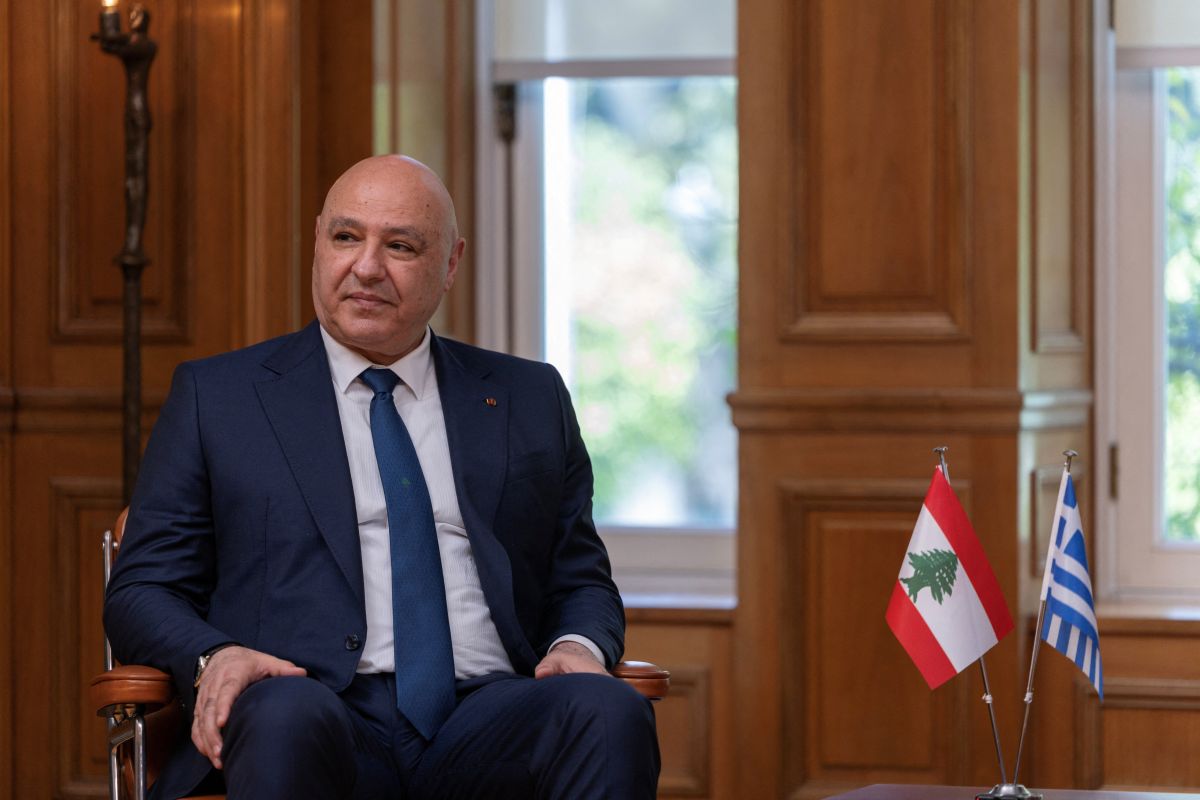
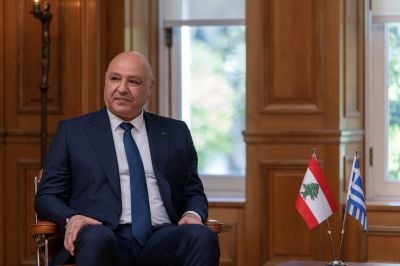
President Joseph Aoun during his meeting with Greek Prime Minister Kyriakos Mitsotakis at the Maximos Mansion in Athens, Greece, on Aug. 31, 2026. (Credit: Almais Konstantinidis/Reuters)






BEIRUT — President Joseph Aoun declared during the Cabinet meeting on Thursday that "it's time for the state to return to the South," assuring that he had "heard the calls from the residents of Nabatieh, Sour, and Arab Salim," cities that have been heavily impacted by Israeli strikes since the re-escalation of Israel's war on Lebanon on March 2.
"We have heard your calls, we stand by your side, and under no circumstances can we remain distant from you," the president said during the meeting, which was mainly devoted to the upcoming state budget. "It's time for the state to return to the South. This is a responsibility shared by all of us and a duty towards our fellow citizens. The South is an essential part of Lebanon, and every ministry must contribute to confirm our support for our people, without any shortcoming."
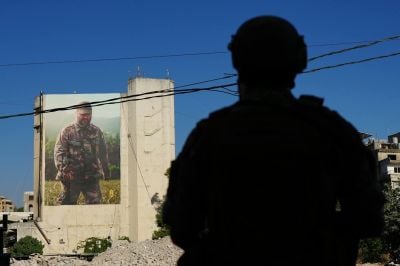
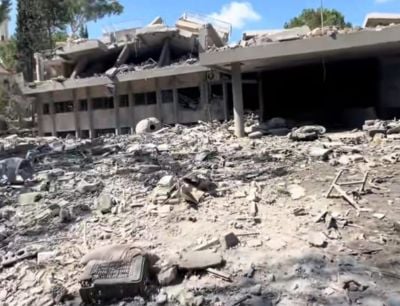
Residents of the cities of Sour and Nabatieh, as well as of the village of Arab Salim (Nabatieh), have in recent days issued calls urging the state to "take responsibility" and to "immediately establish army control in areas where there is no direct Israeli occupation." This comes amid an uptick in Israeli bombardments in the south of the country which have killed nearly thirty people since last weekend. These calls have not been officially endorsed by the municipal authorities of the affected towns and have been issued by groups of residents.
'Ensuring resilience' for southern residents
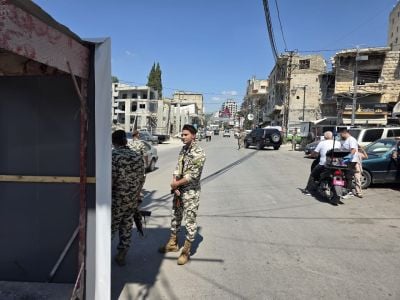
In response to these repeated calls, a heightened presence of the army and security forces has been especially visible since Tuesday on the streets of Nabatieh, where multiple army units and vehicles have been deployed along the city's main thoroughfares, later joined by units from General Security and State Security.
Aoun thus promised that the authorities would do "everything possible" to support the residents of the South, in order to "ensure, as much as possible, the conditions of their resilience," while Israel continues its daily bombardments, destruction, and occupation of over 600 km² of Lebanese territory.
At the end of Thursday's meeting, Information Minister Paul Morcos said that Prime Minister Nawaf Salam had noted that "the presence of the army and state institutions in the South is a factor of trust and reassurance for residents who remain steadfast and who wish for a complete return of the state."
Morcos also stressed that it would be necessary to provide "prefabricated housing" to residents to facilitate their return to their villages. These prefabricated homes have been widely targeted in southern Lebanon by Israeli strikes, particularly during the 15 months of "cease-fire" between the escalation in autumn 2024 and the one that began on March 2, 2026, in order to prevent residents of border villages from returning to their land.
He also announced a ban on all real estate sales in areas currently occupied by the Israeli army.
The president also welcomed the laying, on Thursday, of the foundation stone for the Beirut Port expansion project, describing it as "a positive sign that brings much hope" and "good news for everyone."
The president also called on ministries to speed up the preparation of projects that might "attract Emirati investments," noting that officials and businessmen from the United Arab Emirates had shown willingness to invest in Lebanon. "Some are eager to help us. It's up to us to coordinate our efforts and seize all opportunities," he emphasized.
Regarding the budget, Aoun also welcomed the consecutive holding of recent cabinet meetings so that it could be adopted "within the constitutional deadlines," at the end of December, stressing that this is the second consecutive year in which the budget bill was presented "on time," that is to say before the start of the October parliamentary session.

 1 p.m. recap: Salam in Nabatieh; up to 10,000 more US troops heading to Middle East
 Exchange of strikes between Saudi Arabia, Houthis; Sanaa, Medina targeted