


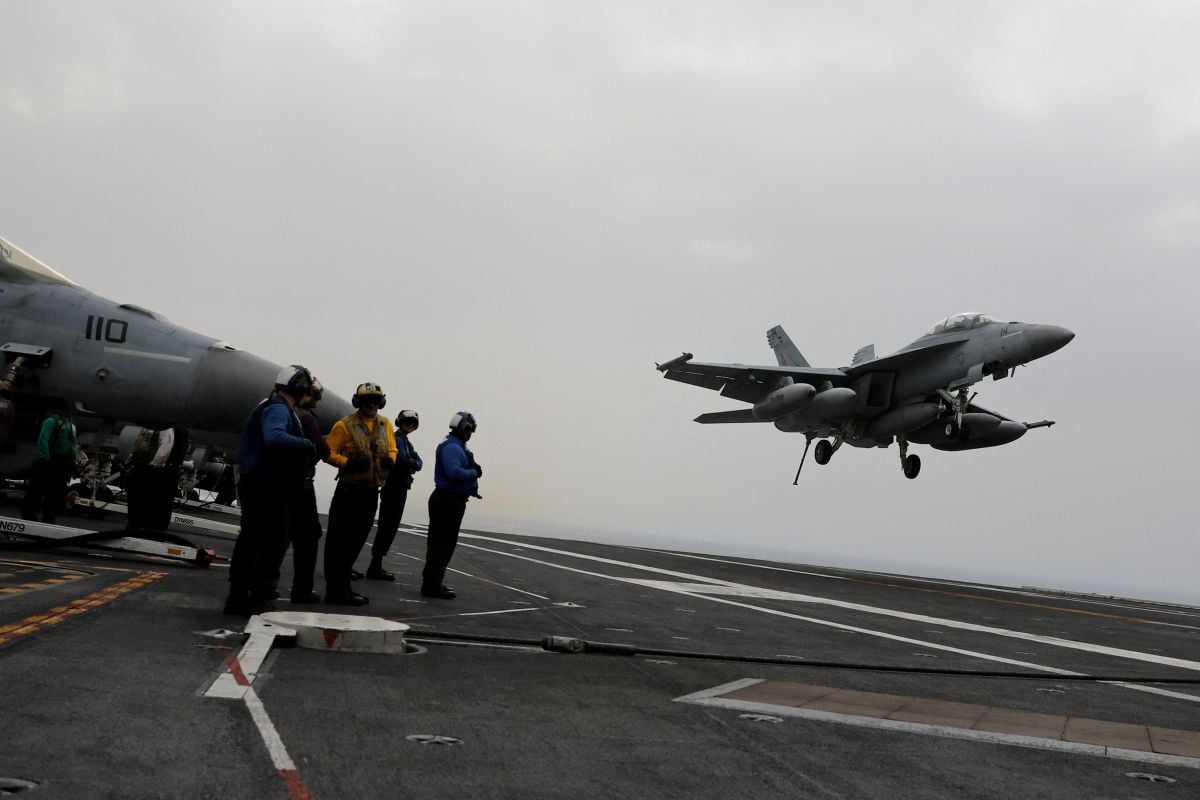
An F/A-18 fighter jet lands on the aircraft carrier USS Harry S. Truman in the eastern Mediterranean, May 4, 2018. (Credit: Alkis Konstantinidis/Reuters)






The United States is preparing to significantly expand its military presence in the Middle East, sending up to 10,000 additional troops alongside the recent deployment of a third aircraft carrier to the region, according to The Wall Street Journal (WSJ).
The USS Makin Island Amphibious Ready Group, consisting of three amphibious ships carrying about 2,000 Marines from the 13th Marine Expeditionary Unit, left Naval Base San Diego on Monday. It followed the aircraft carrier USS Theodore Roosevelt, which set sail for the Middle East the day before.
The ships are expected to be positioned around Iran by the end of November, aligning with President Donald Trump’s threats to resume airstrikes after the U.S. midterm elections.
The deployments, totaling nearly 10,000 additional troops, would bring the number of U.S. service members in the region to more than 60,000. The forces will be deployed across three aircraft carriers, including the Theodore Roosevelt. The Pentagon has extended the deployments of the two carriers already in the region — the USS George H.W. Bush and USS George Washington — as well as other units, the newspaper reported.
The buildup also includes additional air assets, notably F-35 fighter jets, and air defense systems used by elements of the 82nd Airborne Division, which remains deployed in the region. The division can carry out missions ranging from intercepting aerial threats to parachuting into hostile territory to secure airfields and ground areas.
According to Pentagon sources cited by the WSJ, the massive buildup is intended to give Trump a wider range of "options on the table" regarding Iran, regardless of the outcome of talks with Tehran. Diplomatic efforts are underway to revive negotiations between the two countries, which have stalled since the signing of a memorandum of understanding in June.
The deployment also follows Trump’s announcement that he had rejected Iran’s latest offer, which proposed reopening the Strait of Hormuz and restarting nuclear talks in exchange for lifting the U.S. blockade of Iranian ports. Tehran conveyed the offer to Washington last week through Qatar, on the sidelines of the United Nations General Assembly in New York.
In an interview with Time magazine, Trump reiterated that he could resume hostilities against Iran after the midterm elections in November if no agreement is reached by then.

