





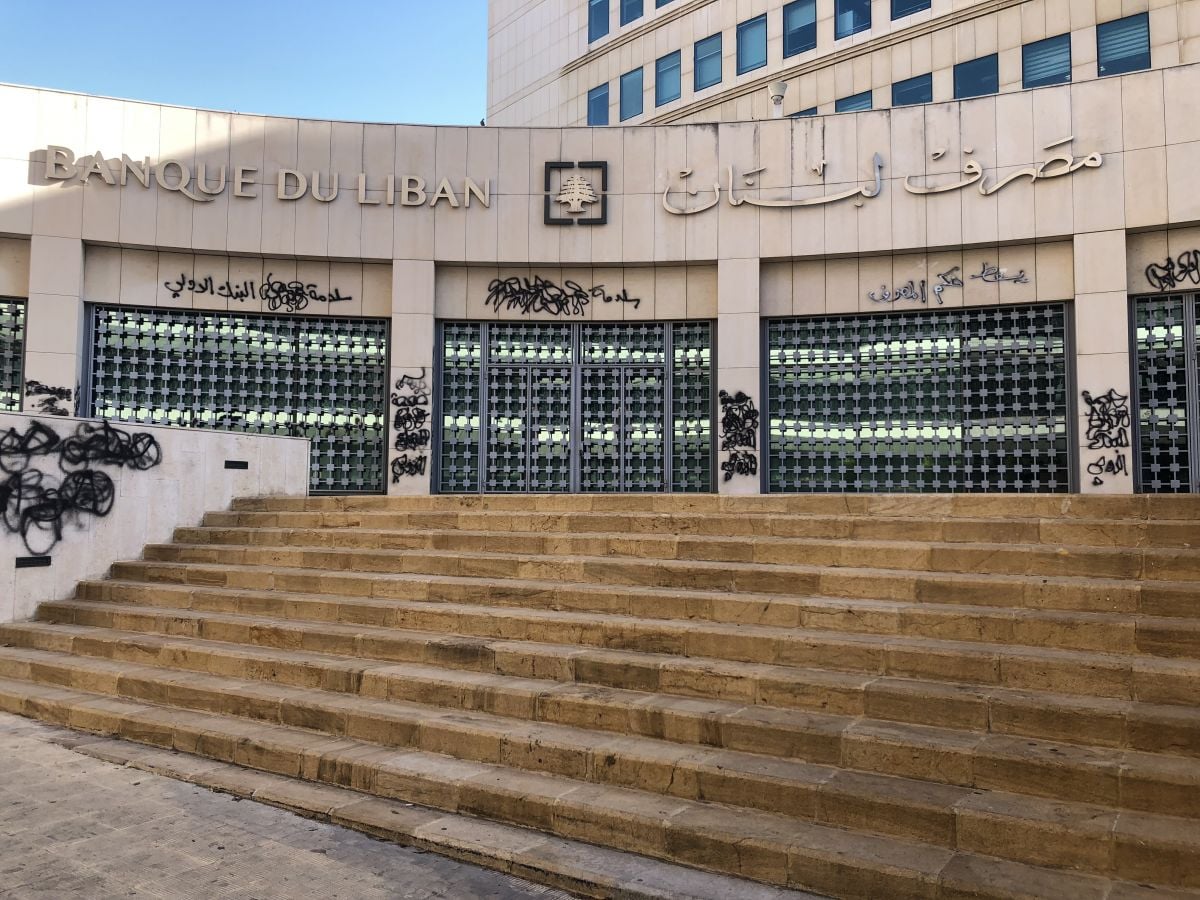
Headquarters of the Banque du Liban in Beirut. (Credit: PHB/L'Orient-Le Jour)






BEIRUT — Where did the more than $300 million mobilized since 2013 to finance start-ups under Circular No. 331 go? Banque du Liban (BDL) is now asking banks to disclose how the money was used, with an initial report due within 40 days.
In a new circular (No. 773), issued on Sept. 4, the central bank imposed stricter reporting requirements and formally ended new financing under the scheme, launched during Riad Salameh’s tenure.
The circular applies to banks and financial institutions that received central bank facilities to invest directly or indirectly in startups, incubators, accelerators, and venture-capital companies.
In a statement issued Monday, BDL said its review had identified “serious shortcomings” in how a large number of these investments were managed, monitored and supervised by banks, their appointed managers, and investment committees.
The decision comes as BDL is involved in at least one ongoing legal dispute concerning the alleged misuse or unauthorized transfer of funds and assets financed under the program, according to a source familiar with the matter.
Although BDL had no direct legal relationship with the start-ups, responsibility for overseeing the investments and assessing their viability rested primarily with the banks that invested their funds (either directly or through investment funds) in eligible companies.
Its immediate concern, however, is to determine where the money went, how it was used, who ultimately benefited, and how much can still be recovered.
“The aim is similar to that of BDL’s other monitoring measures aimed at tracing how its funds were spent, whether on subsidies, loans to the government or this initiative to finance start-ups,” said Nassib Ghobril, chief economist and head of research at Byblos Bank.
Within 40 days
The banks concerned must submit an initial report to BDL within 40 days of the decision’s issuance and provide updated reports within 15 days of the end of every quarter thereafter.
The information required includes the identity and legal structure of every company financed, its shareholders and founders, the value and date of the investment, its current valuation, initial investment value, provisions, profit distributions and their beneficiaries, financial statements, and performance indicators, among others.
Banks must also disclose the identities and qualifications of companies and executives managing the investments, along with all management, placement and performance fees, carried interest, board remuneration, legal fees, and amounts deducted from investment returns.
The circular also requires prior BDL approval for any decision that could affect the value or recovery of the investments, including changes involving capital, assets, investment strategy, management companies or legal structures.
For every investment previously made, banks will have to submit an exit strategy setting out the expected timetable, projected returns under different scenarios, potential obstacles, and the amounts expected to be repaid to BDL.
“The concern is that some banks may have distributed the funds without conducting sufficient due diligence,” the source said.
“About $300 million was invested. It’s certain that the full amount will not be recovered. But perhaps between $20 million and $50 million could be recovered if these measures prove effective,” the source added.
“Those who have nothing to hide should not be too concerned about this circular,” Ghobril said.
‘It was free money’
Beyond scrutinizing past investments, the new circular marks a clear break with the approach adopted under Salameh, who in 2013 made the banking system the principal provider of capital to Lebanese start-ups operating in the “knowledge economy.”
While the scheme has been credited with helping develop Lebanon’s digital ecosystem, it was also criticized for its lack of transparency and for encouraging banks to make high-risk investments. The 2019 financial crisis and the collapse of conventional banking activity ultimately brought the initiative to a halt.
“BDL has not provided any new financing under this circular since the crisis. The latest decision merely formalizes the suspension and specifies that no new funding rounds will be financed,” a source explained.
In its statement, BDL said that financing venture capital activities and commercial investments “does not fall within the traditional functions of a central bank” and raises fundamental questions about the program’s compatibility with the principles governing the institution.
“It was really free money,” the source said, referring to the fact that the financing was interest-free and did not operate like a conventional commercial loan at the level of the venture capital funds.
Although the financing was subject to certain conditions relating to returns, Circular No. 331 did not impose a conventional repayment obligation on venture capital funds when investments failed. This model reflected the inherently risky nature of start-up financing. Venture capital funds generally expect several companies in their portfolios to fail and rely on a small number of successful investments to offset those losses.
“Past practices cannot under any circumstances justify failure to comply with the current requirements,” BDL said.
Banks that fail to meet the new requirements may face administrative sanctions without prior warning, as well as possible civil or criminal proceedings.

 7 p.m. recap: Iran warns Egypt, Israeli soldiers vote in south Lebanon, Haret Hreik responds to Kataeb