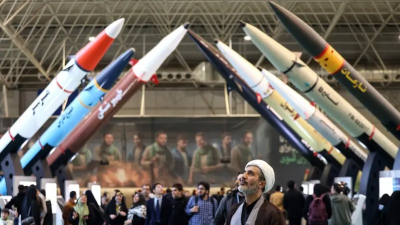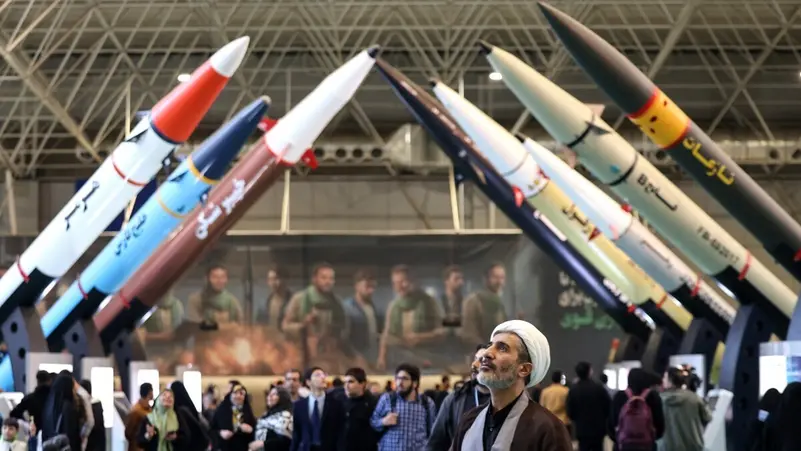
Iranians visit an exhibition displaying missiles and drones, on Nov. 12, 2025, in Tehran. (Photo: AFP)






Russia secretly helped Iran develop advanced supersonic cruise missiles as part of one of the most significant known transfers of strategic military technology from Moscow to Tehran, the Financial Times (FT) revealed in an investigation published Wednesday.
The program, known as C430L, continued during the U.S.-Israeli war against Iran and involved some of Russia's most experienced missile specialists, according to the investigation. Leaked Russian correspondence and travel documents, along with an analysis of military patents, helped reveal the program, the FT said. The cooperation was aimed at helping Iran develop a new class of weapons capable of threatening U.S. aircraft carriers and other warships in the Middle East.
"The main objective of C430L is to help Iran develop a ramjet propulsion system, an engine allowing a cruise missile to fly at several times the speed of sound. Missile experts and military specialists indicated that this technology was most likely intended for anti-ship and land-attack cruise missiles," the British daily wrote. "Such a program would require political approval from the highest Russian authorities," said an Iranian missile expert interviewed by the FT.
The C430L "is part of the strengthening of strategic military ties between Russia and Iran. Tehran provided Moscow with Shahed attack drones, which played a significant role in Russia's war in Ukraine, and helped Moscow establish their production on Russian soil," the report continues.
The report also explained that "supersonic cruise missiles combine speed and the ability to fly at low altitude, thereby reducing the amount of time sophisticated air and missile defense systems have to detect and intercept them."
'Strategy coordinated at the highest level'
While Iran has developed increasingly sophisticated ballistic missiles in recent years, mastering a supersonic cruise missile remains a major technological gap in its arsenal, FT reported, which would explain the recourse to Russian technology. "Tehran's efforts to close this gap — through national military engineering, illegal acquisitions abroad, and attempts to reverse-engineer foreign systems — fit into a strategy coordinated at the highest level for decades," the investigation added.
Ukrainian and Western officials have accused Russia in recent months of providing military support to Iran during its war against the United States and Israel, notably by supplying satellite imagery, assistance with drones, and weapons components. The C430L program represents a deeper form of cooperation, with Moscow helping Tehran acquire the know-how necessary to develop its own advanced strategic weapons system, FT added.
The investigation also reveals that the supersonic missile assistance program was set up by Rosoboronexport, the Russian state arms export agency, which coordinated the project with NPO Mashinostroyenia. The United States imposed sanctions on NPO Mashinostroyenia in 2014, the daily recalls. Leaked travel documents reviewed by the Financial Times show that Russian arms export officials and several senior engineers from NPO Mashinostroyenia traveled to Iran several times before the official signing of the C430L contract with the Iranian Ministry of Defense and Armed Forces Logistics in November 2023.