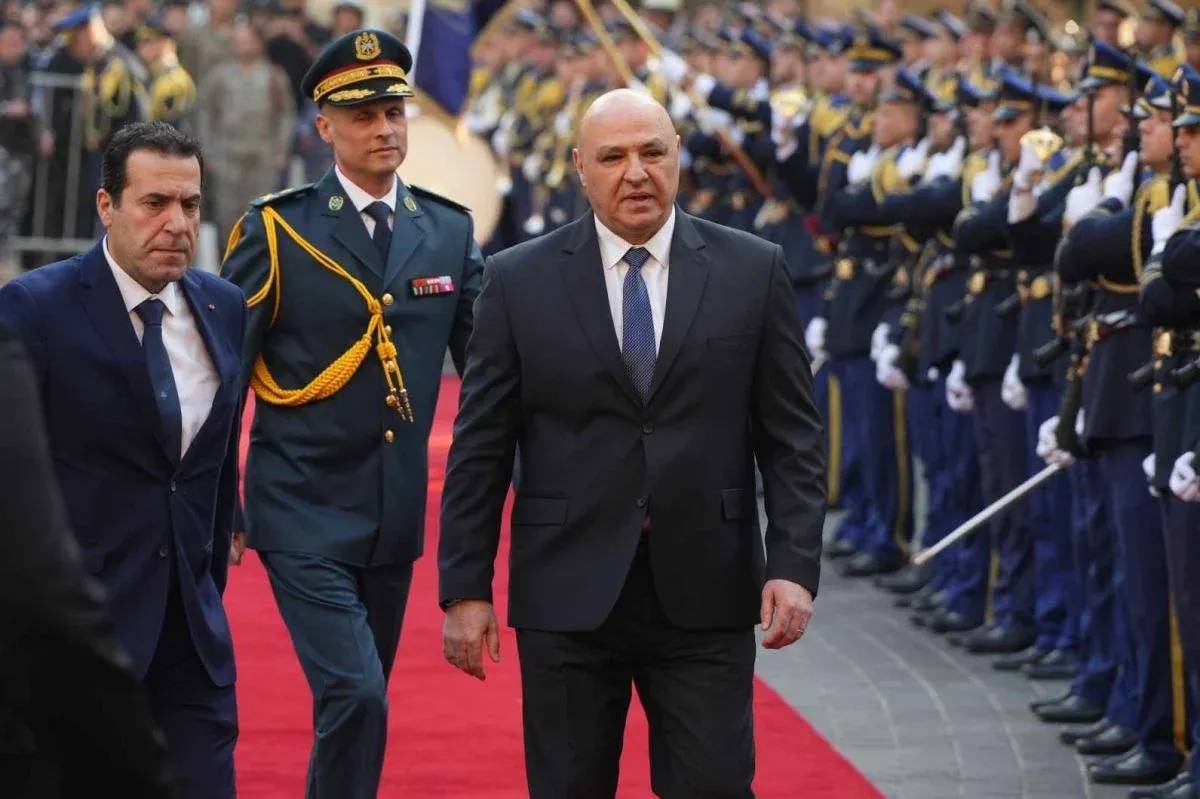
President Joseph Aoun, upon his arrival at Parliament on Jan. 9, 2025. (Credit: Mohammad Yassine/L'Orient Today)






BEIRUT — President Joseph Aoun reaffirmed Sunday, on the occasion of the 48th commemoration of the disappearance of Imam Moussa Sadr, who went missing in Libya on Aug. 31, 1978, that southern Lebanon should not be a “card” in negotiations and that “only the arms of the state are capable of protecting it.”
In a statement published on the eve of the anniversary of the Shiite dignitary’s disappearance, the president recalled that Moussa Sadr had already been calling at the time for the state to “fully assume its responsibilities in protecting the South and its inhabitants,” believing that “the only weapons that protect the territory are the legitimate arms of the state” and that the security of this region represents “a collective national responsibility that cannot be reduced to one camp at the expense of the others,” implicitly referring to Hezbollah.
Monopoly on weapons and the extension of state authority
“Imam Sadr was not just a man of religion..., he was a nation builder and a man of national unity. He believed in a united and unified Lebanon, and rejected confessionalism and sectarianism as tools of division,” wrote Aoun. “From the South, which he loved and chose as his platform, the imam delivered some of his most impactful speeches to defend the dignity of its people and its land. He refused to allow the South to remain a forgotten region or a bargaining chip, and called upon the state to fully assume its responsibilities in protecting the South,” he emphasized.
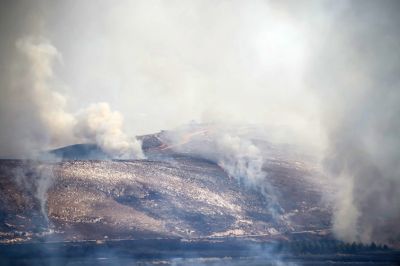
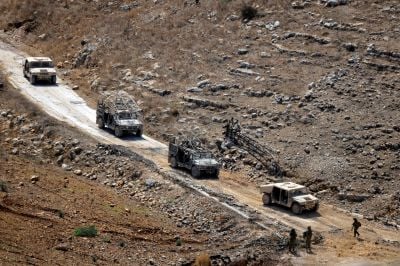
In a context of renewed tension between Israel and Hezbollah in southern Lebanon, especially around the strategic Ali Taher hill near Nabatieh, the president also renewed his “full commitment to the state’s monopoly on arms and the extension of the army’s authority over the entire national territory.”
According to him, these principles should help build the state to which Moussa Sadr aspired: a state that “protects its citizens and does not leave the South to face danger alone,” while this region, partly occupied by Israel, continues to endure “Israeli aggressions and violations of the truce” despite yet another cease-fire announced on June 20. Aoun stated his intention to pursue the goal of “a strong and just state” and “a South protected by its army, its security forces.”
Regarding the disappearance of Moussa Sadr and his two companions, Sheikh Mohammad Yacoub and journalist Abbas Badreddine in 1978, the president assured that Lebanon would continue to demand “the whole truth” about their fate and to pursue the matter “bilaterally and internationally, by all available diplomatic and legal means.”
To this end, Lebanon has resumed diplomatic relations with Libya, whose government sent an official delegation to Beirut at the end of 2025 for the first time in decades. This visit was followed by the release, in October 2025 (on a bail of $900,000), of Hannibal Gadhafi, whose father, former dictator Muammar Gadhafi, is accused of involvement in the affair.
For his part, Prime Minister Nawaf Salam paid tribute to Moussa Sadr in a message on X, stating that Sadr “carried the cause of southern Lebanon from one capital to another." “A stance expressed with striking clarity when he declared: ‘Only South Lebanon has paid the price’, rejecting the reality that the people of the South bear the burden of confrontation and war, whilst decisions are taken elsewhere,” he wrote.
“The South will not be left to fend for itself, and its people will not once again pay the price for the conflicts and decisions of others. We are committed to ensuring that the people of the South remain on their land, that displaced persons return to their homes and villages in safety and dignity, and that the South is no longer the theater of wars not decided by the Lebanese people and their state. We are committed to ensuring that the State – whose presence in the South the Imam had called for – is effectively on the ground: with its army, its institutions, its services and its development programs; protecting its territory and its people, and holding sole authority to decide on war and peace,” the Prime Minister continued.
“It is our responsibility to work towards ending the Israeli occupation and putting a stop to its aggression, to rebuild what has been destroyed, to ensure the return of the people of the South to their villages, and to extend the State’s sovereignty over its entire territory. Today, this is our responsibility and our commitment,” concluded Nawaf Salam.
'The party must not be stronger than the state'
Maronite Patriarch Bechara Rai said Sunday that “the party must not be stronger than the state,” while warning against any transformation of the issue of the state’s monopoly on arms into a “confrontation between Lebanese.”
In his homily, the patriarch directly addressed this issue, which he said “concerns the very existence of the state, the oneness of its authority,” while stressing that it should not become a subject of “confrontation between Lebanese, nor a slogan used by one camp against another, nor a means to inflame the street and sectarian divisions.” He thus called for dealing with this issue “with wisdom and national responsibility,” stressing that “the state is not built on the defeat of a partner, but by bringing together all partners under its authority.”
He also called for bringing the ongoing negotiations with Israel out of their “waiting phase” so that they lead to “results that preserve Lebanon’s rights, end aggressions, lead to the withdrawal from its territory, and restore security and stability.”
Regarding southern Lebanon, Bechara Rai finally stressed that this region “cannot continue to be a land of waiting and suffering.” “Its residents want to return to their villages and homes, the land calls for its children, and the devastated regions await reconstruction and a return to life,” he said. And he added: “No settlement has value if the inhabitants do not feel safe on their land and if Lebanon does not regain its sovereignty over the entirety of its territory.”