






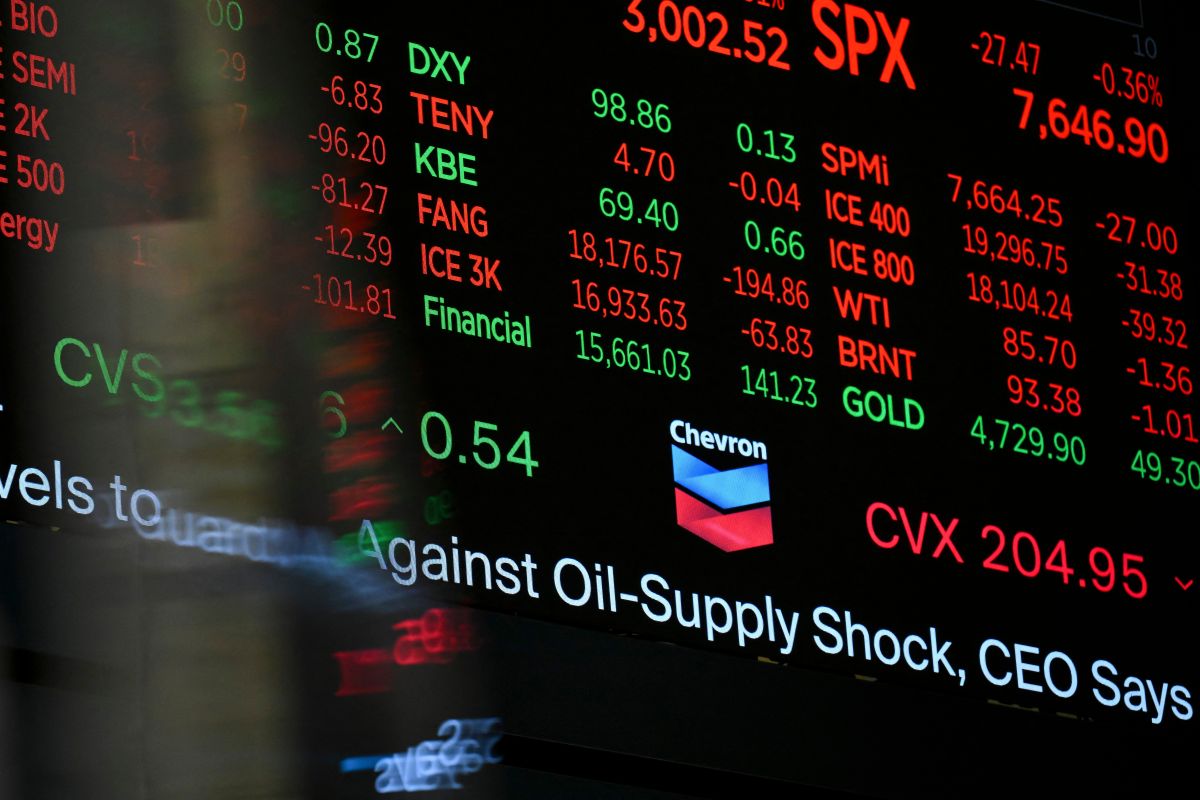
A Chevron signage is displayed on a digital screen at the New York Stock Exchange (NYSE) during morning trading on August 24, 2026 in New York City. The US and Iran are approaching the six-month mark since military operations began on February 28, 2026, with the two nations remaining entrenched in a strategic stalemate. US President Donald Trump has intensified pressure through an aggressive economic isolation campaign, while a 60-day ceasefire and diplomatic window expired without producing a lasting agreement. The conflict’s most significant impact on the US economy is the rise in energy costs, which is contributing to higher inflation. (Photo by ANGELA WEISS / AFP)






President Donald Trump said Thursday that the United States is not talking with Iran as Washington focuses on increasing economic pressure on Tehran, while vowing to penalize countries that do business with the Islamic Republic.
“We don’t want to speak to them. We’re not looking to meet or anything,” Trump told reporters in the Oval Office.
Earlier, White House Press Secretary Karoline Leavitt said the U.S. economic campaign would continue until Iran agrees to negotiate “in a meaningful way.”
U.S. Treasury Secretary Scott Bessent warned countries on Monday to cut financial ties with Iran or face secondary sanctions, though the Treasury Department stopped short of imposing penalties.
Asked whether he would sanction Chinese banks doing business with Iran, Trump said: “Who said I’m not? You don’t know if I’m doing it ... I don’t have to announce everything, do I?”
Qatar’s prime minister visited Tehran on Thursday in a bid to revive diplomacy after Washington and Tehran traded accusations over the U.S. campaign, which an Iranian official described as “all-out economic war.”

