








Whether directly or indirectly, the Lebanese Army is currently at the heart of all the debates as well as internal and external speculation. This starts with the role it is supposed to play in southern Lebanon, notably within the framework of the "pilot zones" and at Ali Taher, and continues with its importance in protecting civil peace, its role at the border with Syria, all the way to its unofficial position regarding the general amnesty law. As the army does not speak out directly, assumptions about its capabilities and true intentions multiply. And despite criticism even directed at it, it continues to accomplish its assigned missions as best it can.
Within this context, a source close to the institution specifies that the criticisms directed at the army — regarding both its internal role and its attitude toward Israel — are understandable. Lebanon being divided, each faction expects the army to act according to its own wishes, but the army, for its part, must take all the data into account and act accordingly. "In each soldier," this source says, "there is a bit of every confession, of every community. Some only see one side, but you have to look at the whole. That is, moreover, why the army is a reflection of Lebanon and is dedicated to it." According to precise information, despite the country's precarious situation and the risks of escalation, the army has recorded no departures or resignations. That is, in fact, what allows the troops to hold firm, despite the lack of means.
In this respect, and on the eve of a preparatory meeting for the conference in support of the army and security forces, organized by France next month, the source close to the institution remains skeptical. Especially since this conference has already been announced several times, without materializing. For this source, the best solution would be for Lebanon to increase the budget allocated to the army so it is no longer at the mercy of foreign aid. But that is an impossible request to satisfy, especially at this time, when public funds are limited.
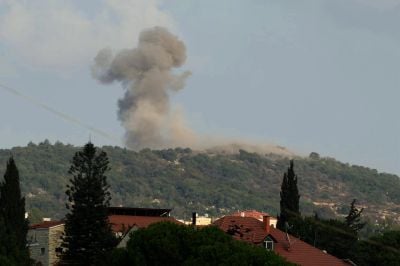
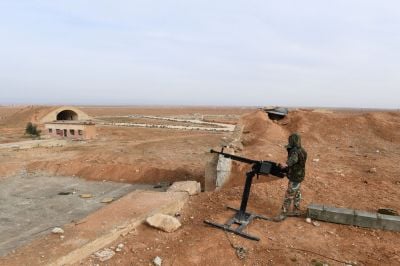
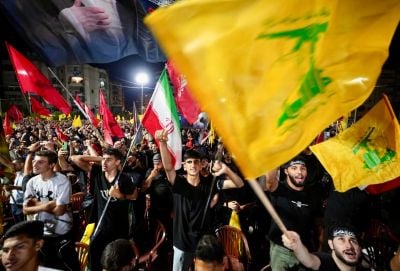
But, despite this situation, the troops remain ready to act. According to a source who closely monitors developments on the ground, the army had practically managed to completely destroy Hezbollah installations in the area south of the Litani. After the conclusion of the Nov. 27, 2024 agreement, it began dismantling these installations in accordance with the plan it had submitted to the Cabinet, even though the Israelis themselves violated the provisions of the agreement every single day. "What the army accomplished in the 15 months preceding the new outbreak of violence, which cost it many martyrs, would have taken the Israelis years," the source stressed. At one point, Hamas elements launched missiles and the army arrested them — or at least three out of four — and handed them over to the authorities. On March 2, 2026, when Hezbollah launched the six missiles, the army also reacted, asking the "mechanism" monitoring committee for a few hours to arrest the perpetrators, as had been the case with the Hamas fighters. But the Israelis wanted nothing of the sort, and less than an hour later, they launched their major offensive. The "mechanism" then asked the army to evacuate its positions to a depth of 15 kilometers from the border, but it did not comply with this request and remained at Shebaa, Wazzani, and other positions beyond the yellow line. The army's entire strategy was to show that the Lebanese state respects its commitments.
According to the aforementioned sources, the Israelis want to eliminate anything they consider a threat, but the problem is that everything seems threatening to them. Thus, within the negotiations that took place in Washington and then in Rome, the main source of Israeli discontent was the military delegation, which was in permanent contact with the cell at the presidential palace. The main message of this delegation was to respect the principles in the plan submitted to the Cabinet, while avoiding the traps the Israelis tried to set for the Lebanese, knowing that their main intention was to provoke internal conflict, particularly between the army and Hezbollah.
The army, in any case, affirms it operates under the ceiling of political decisions, but, according to the source close to the institution, the situation is currently difficult and complex, as many factors come into play, especially confusion at the regional level. For example, contrary to what has been said in the media, there has, so far, been no serious proposal regarding Ali Taher. Moreover, the army prefers comprehensive solutions over the step-by-step tactic, because, according to the above source, it is necessary to know the overall plan and next steps before taking the first step.
Nevertheless, despite the confusing context, Lebanon is continuing the process initiated in Washington, because it wants to give negotiations a chance. But the Israelis could at any time decide to intensify their attacks, especially since, according to the aforementioned source, they came to the negotiations reluctantly. In this context, the army can hardly act, while the Israelis continue to systematically destroy localities. But the red line, for the army, remains internal peace. That is even its priority, while waiting for the regional and international landscape to become clearer.
As for the amnesty law, from a military point of view, it is meant to solve a problem, not create a new one. To address the issues of people not yet judged and prison overcrowding, it would have been preferable to expedite judicial procedures and build new prisons, rather than have recourse to an amnesty law, according to this source. And this position is not unique to the army, but is held by all who advocate for the rule of law. In the meantime, the troops say they continue their mission inside the country, in the South, and at the border with Syria, denying all rumors about friction with the Syrian army.
This article was translated from L'Orient-Le Jour.
 2 p.m. recap: Flydubai investigation points to 'terrorist act'; calls grow for Hassan Diab’s extradition to France