





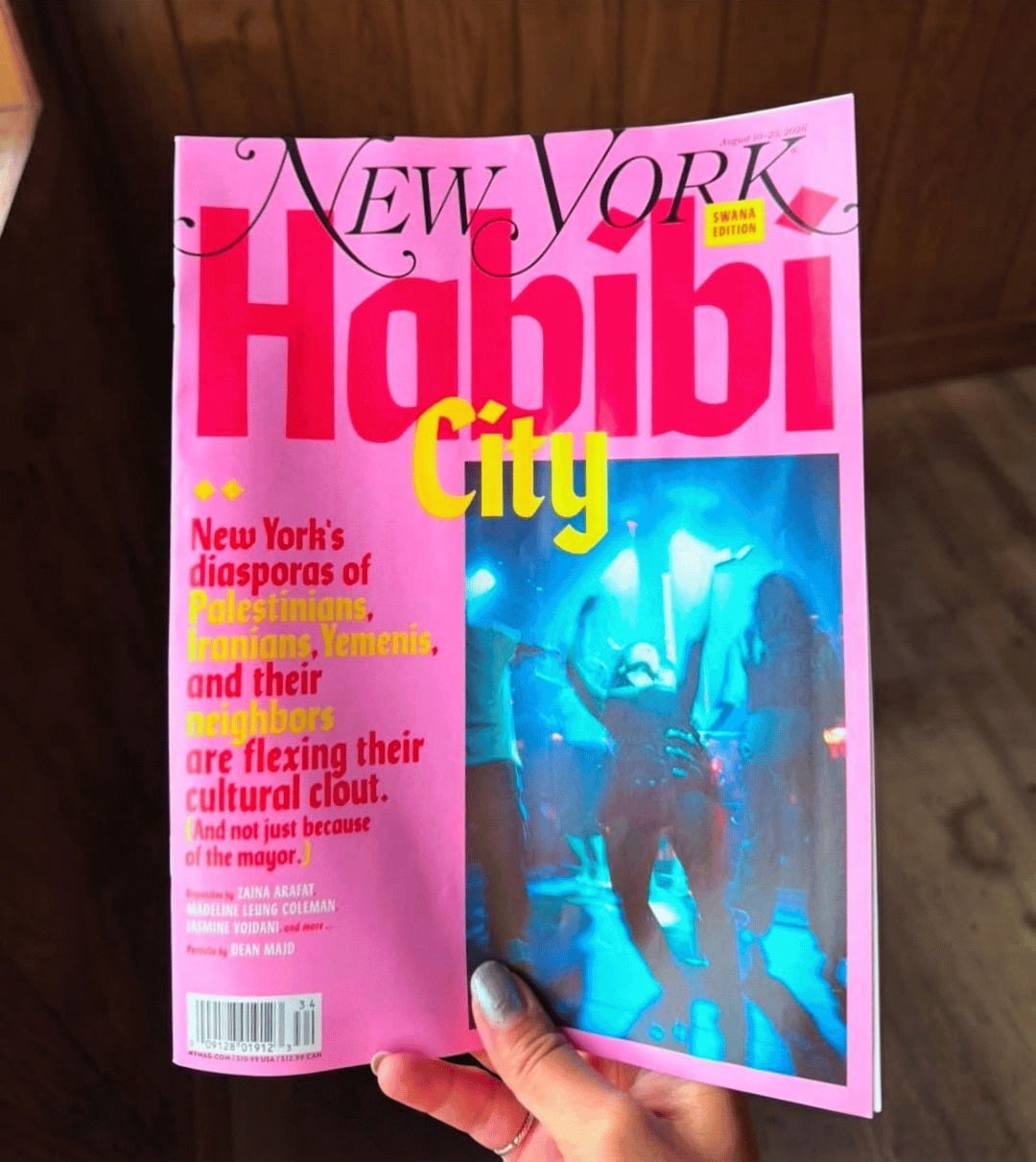
The cover of "Habibi City," the special issue of "New York Magazine" dedicated to the vibrancy of New York's Arab communities. (Credit: Photo courtesy of Anisah Abdullah (@anisgail))






“Can they cut it in the Big Apple?” That was the question posed on May 26, 1975, when New York Magazine published an issue devoted to the Arab communities that had established themselves in the city. Playing on words, the headline asked whether they could integrate and make it in the metropolis. Fifty years later, the publication of the “Habibi City” issue on Aug. 10, 2026, inevitably feels like a wink, an answer — and a victory. But why has it sparked such debate and set social media ablaze?A media conquestFor many, the event is both unprecedented and historic. It represents not only a tour de force in the American media landscape but also symbolizes the emergence of a new era — a dynamic sensed by the community and which it finally embodied.It is also a turning point in representation, as Iranian designer Kimia Zakerin puts it:...
“Can they cut it in the Big Apple?” That was the question posed on May 26, 1975, when New York Magazine published an issue devoted to the Arab communities that had established themselves in the city. Playing on words, the headline asked whether they could integrate and make it in the metropolis. Fifty years later, the publication of the “Habibi City” issue on Aug. 10, 2026, inevitably feels like a wink, an answer — and a victory. But why has it sparked such debate and set social media ablaze?A media conquestFor many, the event is both unprecedented and historic. It represents not only a tour de force in the American media landscape but also symbolizes the emergence of a new era — a dynamic sensed by the community and which it finally embodied.It is also a turning point in representation, as Iranian designer Kimia Zakerin puts...

 Evening recap: Netanyahu announces West Bank offensive; 7 killed in Jordan church shooting; tents burned in south Lebanon
 US strike on Iran this weekend? ‘Absolutely,’ says Barrack; ‘I have no idea,’ says Trump