






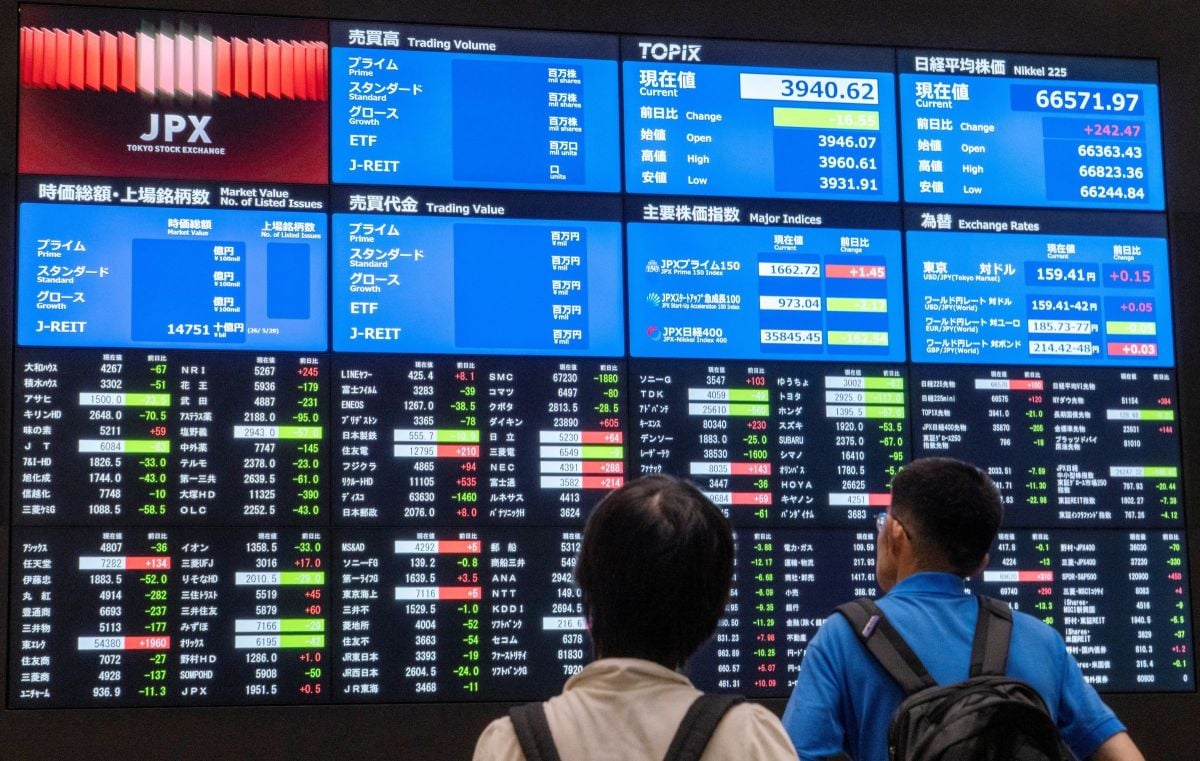
Visitors look at electronic display boards showing stock prices and economic indicators at the Tokyo Stock Exchange in Tokyo on June 1, 2026. (Credit: Kazuhiro Nogi/AFP)






Oil prices rose and stock markets mostly fell Tuesday as hopes that the United States and Iran would soon reach a deal to reopen the Strait of Hormuz faded, fanning inflation fears.
Crude has surged over the past week with the two sides appearing no closer to a deal on the crucial waterway despite upbeat comments from the White House earlier in the month.
"Brent crude has put on $10 in less than a week, which is a significant move," said Dan Coatsworth, head of markets at AJ Bell.
"It's troubling but not enough to cause panic. Instead, it's knocked the wind out of investors' sails and left European markets drifting sideways," he added.
Paris stocks fell in midday trading, while London and Frankfurt were flat.
Asian equities ended mixed following a tepid day on Wall Street, with Tokyo closed for a holiday.
In the latest blow, Donald Trump said Monday that he would seek conflict compensation from Iran as part of any peace negotiations, citing attacks and killings stretching back decades allegedly backed or perpetrated by Tehran.
The announcement was a direct response to Tehran's demand for US reparations as a precondition to any resolution of the war.
The latest back-and-forth risks putting a quick agreement further out of reach, and both main crude contracts had already jumped around five percent on Monday.
They rose around two percent on Tuesday, with Brent briefly topping $90 a barrel.
The prospect of oil prices remaining elevated for the time being has revived concerns over inflation and boosted the chances of higher interest rates.
While a surprise loss of more than 20,000 jobs in the US economy last month eased fears of a Federal Reserve hike, a spike in price pressures could force the bank's hand.
Attention now turns to the release of US consumer price data on Wednesday, which could play a key role in guiding the Fed on its next move.
"The Fed problem is becoming more awkward," said Patrick Munnelly at the Tickmill Group.
"Labour-market cooling can justify patience, but energy-driven inflation can undermine that patience if it lifts headline CPI, gasoline prices and household inflation expectations," he said.
