






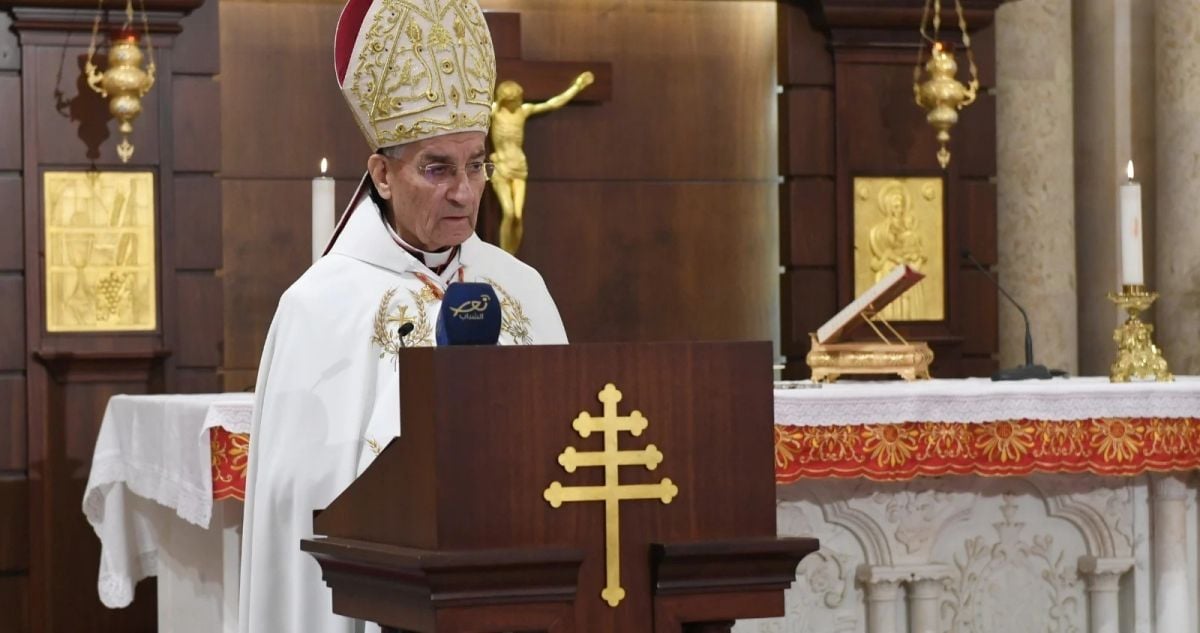
Maronite Patriarch Beshara al-Rai. (Credit: NNA)






BEIRUT — Maronite Patriarch Bechara Rai called on Lebanon to remain steadfast in its demands for sovereignty and expressed hope that ongoing negotiations would lead to a just and lasting peace, during his Sunday homily.
“We pray that the negotiations and ongoing efforts will bear fruit in the form of a just and lasting peace that preserves Lebanon, ends the attacks, leads to a withdrawal from our land, allows displaced people to return to their villages and launches reconstruction efforts,” Rai said.
He also renewed his support for the Lebanese Army, describing it as “the institution that unites the nation." “The state alone” should have authority over the law and decisions of war and peace, Rai insisted.
“We demand genuine reform, not slogans; an independent judiciary, transparent administration and accountability that excludes no one,” Rai said, calling for the full truth to be revealed in the Beirut port blast investigation.
Rai also welcomed a stay of execution issued by the State Council in response to a challenge filed by a member of Parliament. He said the decision reaffirmed the ownership of the common lands of the former Mount Lebanon Mutasarrifate by their rightful owners, including residents, villages, towns and municipalities that have inherited and used the lands for centuries.
He described the ruling as “a step in the right direction” toward reassuring people and strengthening their attachment to their land.
Rai's comments come as Lebanon has made its participation in the next round of direct negotiations with Israel, expected in early September, conditional on Israel accepting a set of demands, according to a source close to the Lebanese delegation who spoke to L'Orient Today.
Beirut is maintaining its call for the establishment of new “pilot zones,” with Khiam and Bint Jbeil among the locations it has proposed, as well as a full cease-fire and an end to Israeli military demolitions and earthworks. The source said Lebanon does not want further talks to become an end in themselves and is seeking tangible progress on the ground before agreeing to continue the process.
Separately, Greek Orthodox Metropolitan of Beirut and its dependencies Elias Audi said in his Friday Sermon, that the world does not need political parties and associations that boast about defending Christians’ rights, but rather officials and leaders who do not make excessive promises and work quietly for the common good.
Audi’s comments come amid renewed concerns among some Christian groups over their representation in Lebanon’s public institutions. A report published by Labora, an organization affiliated with Bkirki, in late July criticized what it described as the limited presence of Christians in recent government appointments, prompting calls from some Christian political figures to address what they see as growing marginalization.
