






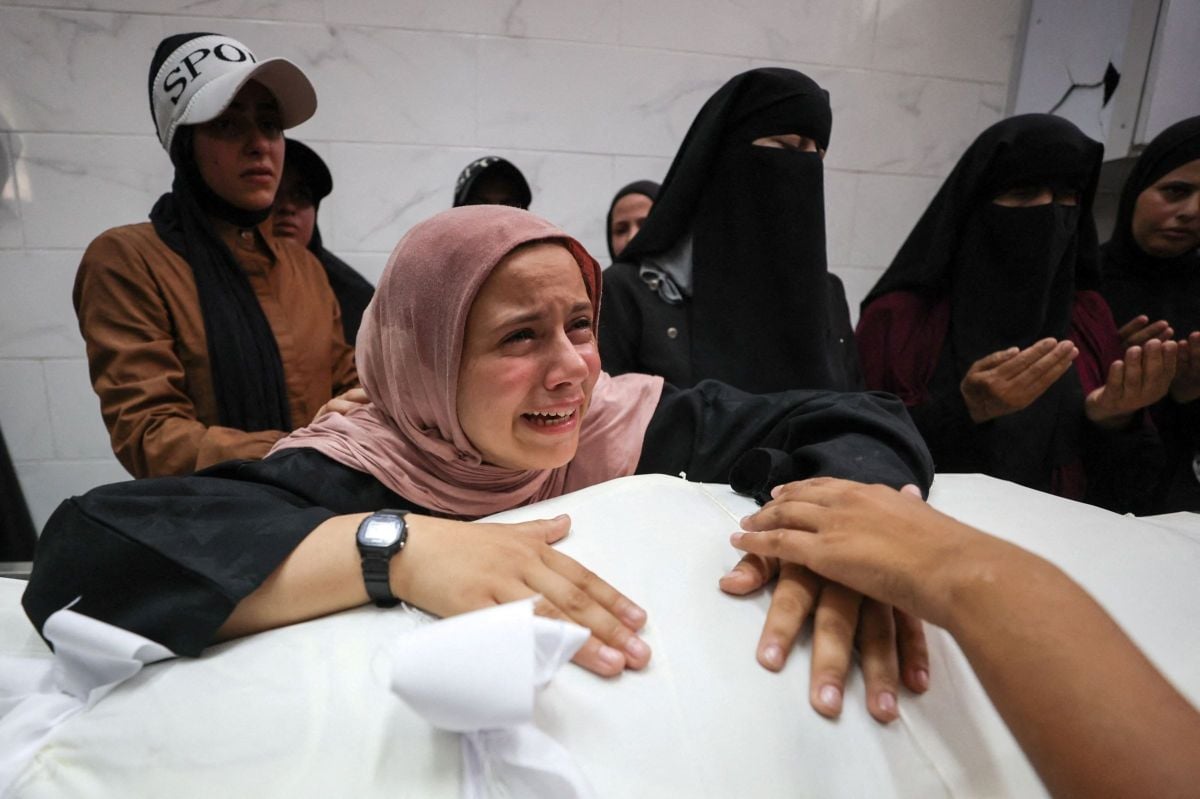
Mourners participate in the funeral of Palestinian Imran Abu Jarad, who was killed in an Israeli strike on a tent at a camp sheltering displaced people, at Al Shifa Hospital in Gaza City, July 7, 2026. (Credirt: Dawoud Abu Alkas/Reuters)






BEIRUT — UNICEF said Thursday that at least 300 children have reportedly been killed in Gaza during the 300 days since a cease-fire was announced in October 2025, warning that children continue to face violence, hunger and deteriorating living conditions.
"This amounts to an average of one child every day, despite an agreement for the suspension of military operations and the full entry of humanitarian aid and relief almost 10 months ago," the U.N. children’s fund said.
"A cease-fire that leaves an average of one child dead each and every day is failing children," said UNICEF Regional Director for the Middle East and North Africa Edouard Beigbeder. "With hundreds more children injured, many severely, children in Gaza are still waiting for the end of the violence they were promised."
Children face malnutrition, disease and unsafe conditions
UNICEF said families are now concentrated in roughly a third of the Gaza Strip, living in unsafe conditions among destroyed buildings, rubble and accumulated waste.
Across the territory, children continue to face acute malnutrition, disease, unsafe water and damaged sanitation systems, according to the agency.
"Announcements made in recent days set out a roadmap for the next phase of the cease-fire, including steps towards ending hostilities and scaling up humanitarian relief," Beigbeder said. "This offers new hope and a chance to finally stop children being killed."
"For children in Gaza, the test is simple," he added. "Does the killing stop? Does aid reach them at scale? Do hospitals reopen and water flow? Will children return to school safely in September? Children have heard promises before. This time, agreements must translate into action."
UNICEF calls for protection of children
UNICEF called on all parties to comply with their obligations under international humanitarian and human rights law, including protecting children and ensuring access to essential services.
The agency urged that children be able to access healthcare, education, safe water and food, while calling for "safe, rapid and unimpeded humanitarian access to children in need."
