


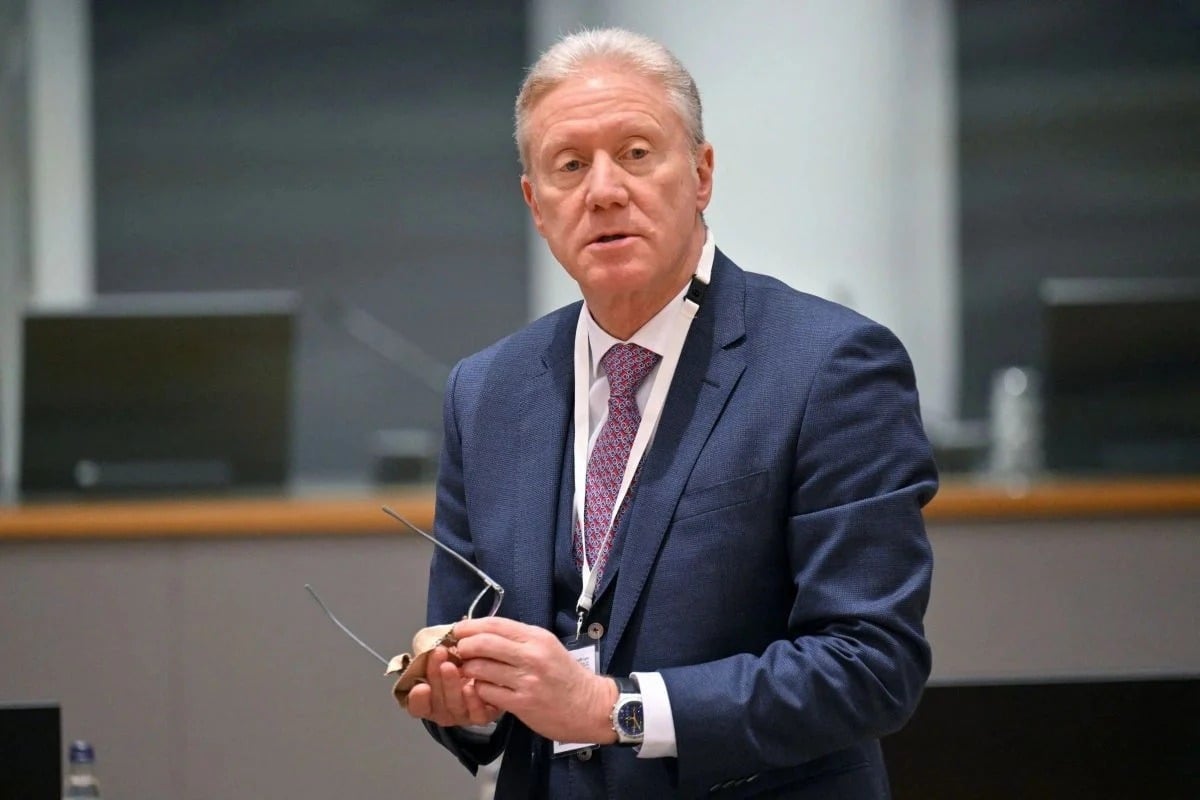
Foreign Minister Joe Rajji. (Credit: AFP archive photo)






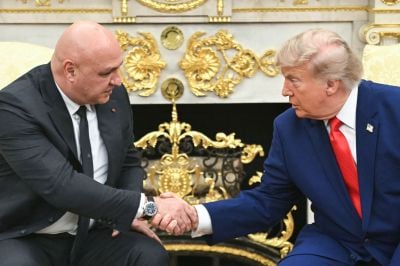
BEIRUT — In an interview with the French weekly Le Journal du Dimanche (JDD), Foreign Minister Joe Rajji said that "the recent visit of President Joseph Aoun to Washington, during which he met with U.S. President Donald Trump, helped to unlock the issue of pilot zones" in southern Lebanon, where the army has already begun to deploy.
The foreign minister added that "the challenge now is to sustain this step and extend the army's control over the entire south of Lebanon, a region that will eventually have to be rid of all weapons except those held by legal forces, as in the rest of Lebanese territory."
Following the resumption of war between Hezbollah and Israel on March 2, the United States encouraged and organized the first direct negotiations between Lebanon and Israel in decades. These talks ended on June 26 with the signing of a framework agreement that provides for the Israeli withdrawal from southern Lebanon, conditional on the disarmament of Hezbollah, starting with "pilot zones."
The agreement began to be implemented last Monday, with the deployment of Lebanese Army units in two of these areas in the central sector of southern Lebanon, in the villages of Srifa and Froun, where Israeli forces were not present, as well as in Zawtar Gharbieh, north of the Litani River, from which Israeli troops have withdrawn.
Rajji recalled that "each of the provisions of the framework agreement forms a basis on which future negotiations will be built." He specified that "the Lebanese government decided a year and a half ago to disarm Hezbollah and to consider all of its military operations illegal, whereas previously its weapons and military activities were tolerated." He assured that he was "determined to fully restore state authority" and stressed that "the problem is not the Shiite community, but the party itself," adding that "Hezbollah is Lebanese in name, but Iranian in essence."
'France has a role to play'
Rajji also rejected "the idea of distinguishing between the military and political wings of Hezbollah," believing that "the absolute priority is disarmament, while the question of transforming into an exclusively political party is a choice that belongs to them."
According to him, "the vast majority of Lebanese, including a growing portion within the Shiite community, wants the state to regain its monopoly on legitimate force, even if many do not dare to say so publicly for fear for their safety." He also assured that "the country has, for the first time, a [...] sovereignist government, while Hezbollah is now in the minority."
Hezbollah rejects both the government's decision to disarm it and the direct negotiations with Israel and the resulting framework agreement. Meanwhile, the Israeli army is proceeding with the destruction of many border villages in territories it has occupied since the resumption of the war, without intervention from the Lebanese state. In a speech given during a funeral ceremony in Ghobeiri honoring Hezbollah fighters, MP Hassan Fadlallah said that "the Israeli enemy seeks to annihilate any form of life" and accused the Lebanese authorities of remaining inactive.
Amal Movement MP Kassem Hashem, an ally of Hezbollah, said the Zawtar Gharbieh experience “must not serve as a blank check for extending the occupation,” arguing that the pilot zones have not led to any significant Israeli withdrawal.
Saying that Lebanon-Israel negotiations have failed to meet expectations, he called for “a unified national position” to defend Lebanon’s sovereignty. Following a meeting with farmers from Marjayoun and Arkoub, he also called for urgent measures to allow them to access their lands and harvest wheat.
Rajji also called on the international community to "continue its support for the government's approach," adding that "France has a role to play in Lebanon." He said that Paris "has tried in good faith to advance the process, even if its position has not always been correctly understood by the Lebanese." He finally considered that "Washington is the actor best able to influence Israel, which explains why Lebanon welcomed its mediation."

