


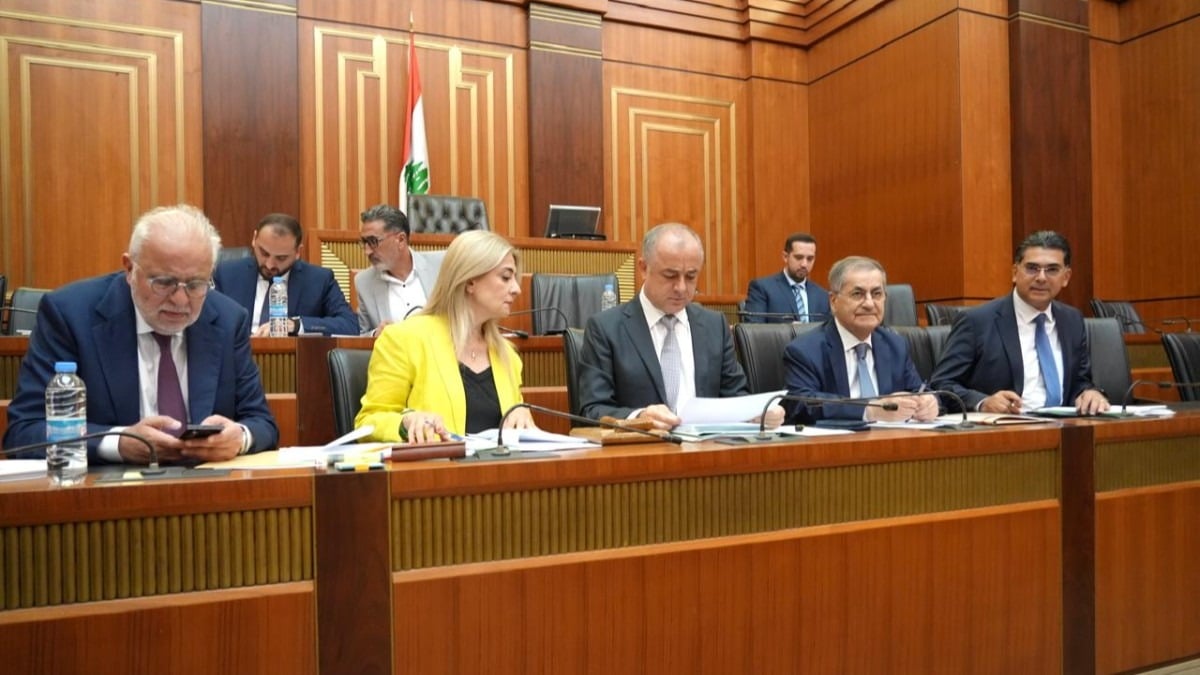
Joint parliamentary committees meet at Parliament in Beirut's Place de l'Étoile on July 9, 2026. Pictured, from left, are Justice Minister Adel Nassar, Deputy Speaker Elias Bou Saab, MP Michel Moussa and Information Minister Paul Morcos.






The joint parliamentary committees, meeting Thursday at Parliament, approved the abolition of the death penalty in Lebanon, clearing the way for the country's 128 MPs to vote on the bill in a plenary session. The Parliament Bureau, which sets the schedule and agenda for plenary sessions alongside Parliament Speaker Nabih Berri, is expected to meet Monday.
The death penalty remains in effect in Lebanon, although no executions have been carried out since the early 2000s. The European Union imposed a moratorium on executions in Lebanon, and the Lebanese state has complied with it. Since then, death sentences handed down by the courts have been commuted to life imprisonment.
Until the law is adopted, Lebanese courts can still impose the death penalty for certain crimes, including aggravated murder, some terrorist offenses resulting in death, treason, espionage, crimes against state security and certain military offenses committed during wartime. In total, 41 legal provisions across the Penal Code, the Military Justice Code and several special laws still allow courts to impose death sentences.
In February, the government issued a favorable opinion on abolishing the death penalty. The proposed law, which would replace it with life imprisonment under what are described as "very strict" detention conditions, was introduced by seven MPs: Halima Kaakour, Faisal Sayegh, Georges Okais, Paula Yacoubian, Elias Hankash, Oussama Saad and Michel Moussa.
At the 9th International Congress Against the Death Penalty in Paris last week, Justice Minister Adel Nassar announced that Lebanon was on the verge of approving abolition, an initiative that was praised internationally.
