






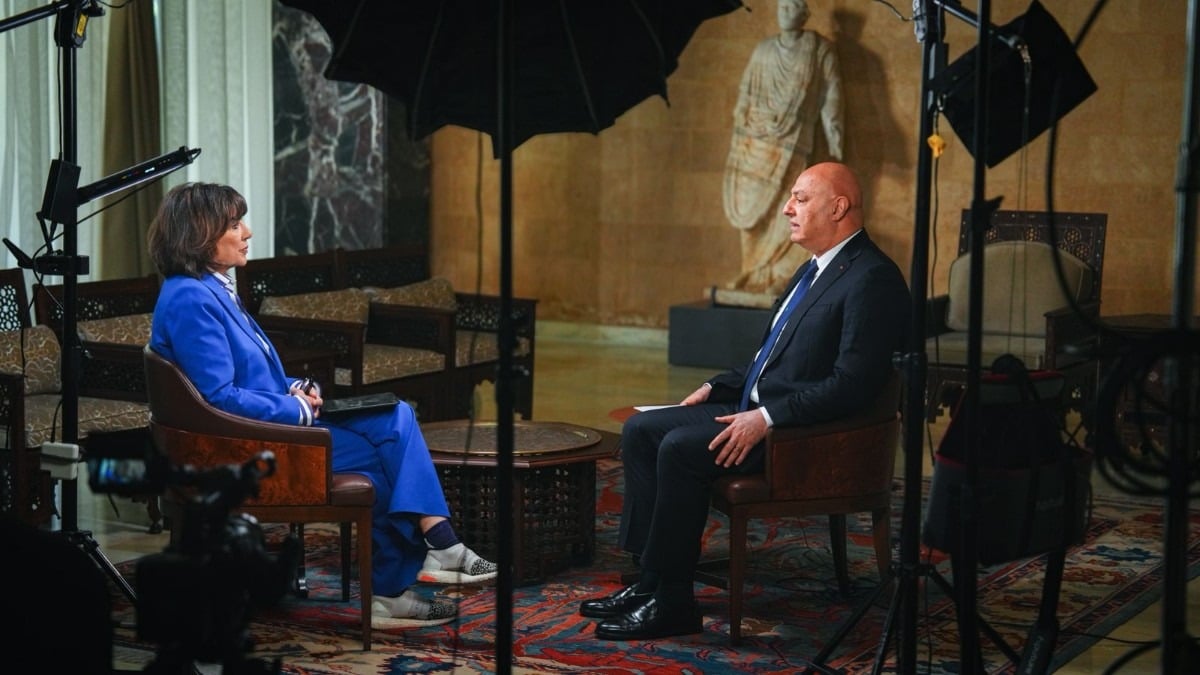
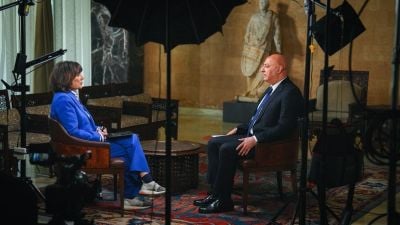
President Joseph Aoun during his interview with CNN journalist Christiane Amanpour at the Baabda Presidential Palace, on June 5, 2026. (Photo: NNA)






In the second part of the interview conducted Friday by CNN and published Monday evening, President Joseph Aoun clarified that the ongoing discussions with Israel are focused on a non-aggression pact, emphasizing that "it is necessary to put a definitive end to the state of hostility between Lebanon and Israel."
The president stressed that the current objective of the direct negotiations between Beirut and Tel Aviv, under U.S. mediation, is to reach "a non-aggression pact, a security agreement or another formula," considering that "the necessity is to put a definitive end to the state of hostility between Lebanon and Israel." According to him, this approach could serve as "a prelude to a just and comprehensive peace," affirming that he has "no choice but negotiation." Aoun added that every means available should continue to be sought to "end the conflict," calling such an outcome "in the interest" of both Hezbollah and Israel.
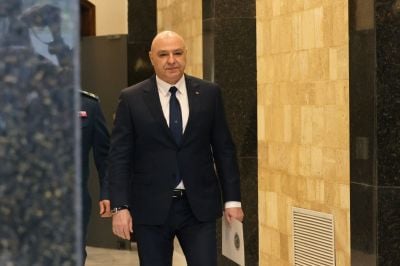
Regarding a possible peace agreement, the president assured that "Lebanon is committed to and a stakeholder in" the 2002 Arab Peace Initiative, which ties Arab countries' normalization with Israel to the establishment of a Palestinian state within the 1967 borders. This position, traditional for Lebanese diplomacy, is also more broadly a wish of Saudi Arabia, patron of the Sunni community in Lebanon. "You cannot go directly from the starting point to the end point. Several steps must be taken, and the transitional step is to end the state of hostility between Lebanon and Israel," he said, adding that "it is up to Israel to show its willingness to end the war." He also affirmed that "it is not possible, at this time, to meet with Israeli Prime Minister Benjamin Netanyahu."
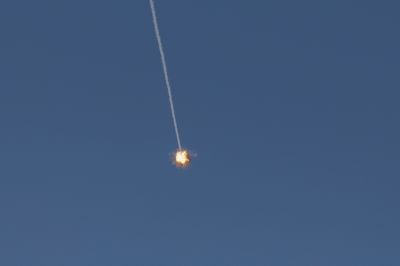
Aoun further noted that Hezbollah was "born in reaction to the Israeli invasion of 1982" and that "the war should have ended in 2000, when weapons fulfilled their role in helping to liberate the country." He nevertheless considered that after that date, the party committed "major strategic errors." After opening the support front for Gaza in October 2023, Hezbollah again drew Lebanon into the regional war on March 2 by launching missiles at Israel to avenge the death of Iran's Supreme Leader Ali Khamenei, killed at the start of the Israeli-U.S. offensive on Iran. Since March 2, Israeli attacks in Lebanon have killed more than 3,600 people, according to the most recent authorities' tally Monday.
On the issue of Hezbollah's disarmament, the head of state explained that his strategy is based above all on "eliminating the root causes of the existence of these weapons," through ending the conflict with Israel, strengthening state institutions, the security forces, the Lebanese Army and other public institutions. He also argued for a reasoned dialogue with Hezbollah, by presenting it "different options and assuring it that the state is ready to protect the country and all its citizens." Aoun stressed that "Hezbollah's supporters are Lebanese and have the right to live in dignity, but under the protection of the state." He warned that if the pro-Iranian movement refused to hand over its weapons or negotiate with the government, "it should answer for its actions to its popular base, which would eventually distance itself from it."
Regarding fears of an internal military confrontation with Hezbollah, Aoun explained that military doctrine has a concept of "preparing the battlefield," which does not necessarily mean deploying tanks or artillery but consists of creating conditions conducive to a solution by attacking the root causes of the existence of the weapons. He explained that this strategy relies on numerous efforts, with military operations representing, in his view, only "10%" of the entire process while the "remaining 90%" relates to social, political, and economic dimensions.
He recalled that after the collapse of the Lebanese Army in 1975, the year the Civil War began, state institutions disintegrated and Christian and Muslim militias emerged, pushing citizens to turn to them for security, food, and essential services. "Today, the time has come for the government to take the place of these militias," he stated, calling in this context to "strengthen state institutions, whether security and military apparatus or other public institutions." He warned that without this approach, "the consequences would be catastrophic and the objectives would not be achieved."
'Costly wars of attrition'
Asked about his assessment of the strength of Iran and Hezbollah after the war, Aoun considered that "their strength cannot be measured solely by their military capabilities, but also by their presence." "Even if only one person remained, that would still matter to them," he said. The president emphasized that history "shows that conventional armies engaged in asymmetric wars have not succeeded in achieving their objectives," as these conflicts often turn into "costly wars of attrition." "The question is not limited to material capabilities; it also concerns existence, doctrine and will, which confer a 'sacred' character to their actions," he added. Aoun further observed that "Iranians are known for weaving carpets, an activity that requires a lot of time," suggesting that this characteristic "is reflected in their diplomacy and their strategy."
Aoun also recalled that, in accordance with the Constitution, the conduct of negotiations falls under the prerogative of the president. He stressed, however, that he leads them "in close consultation with Prime Minister Nawaf Salam and Parliament Speaker Nabih Berri," affirming that the three leaders work "in perfect harmony" and are "united in the goal of ending the war." Their coordination extends "to the smallest details" of the ongoing matters, he assured.
Berri strives to convince Hezbollah to hand over its weapons
Aoun believes that Berri, also head of the Amal movement and a political ally of Hezbollah, is "a statesman" who wants to end the war by "peaceful means." He stressed that, as the only representative of the Shiite community to hold the presidency of Parliament, Berri has "an important task to accomplish" and that it is essential to understand the sensitivity of this issue. According to Aoun, the president "can play a fundamental role, which he is indeed doing," by striving to convince Hezbollah to hand over its weapons "in the interest of the Shiites and the country."
After his particularly scathing remarks toward Iran in the first part of the interview, the former commander-in-chief of the Lebanese Army also assured that Lebanon wanted to have with Tehran "good relations based on mutual respect and non-interference." "Do not forget that Lebanon is a sovereign state with a sovereign government. If you want to talk with us, you are welcome, but without interference," he insisted.
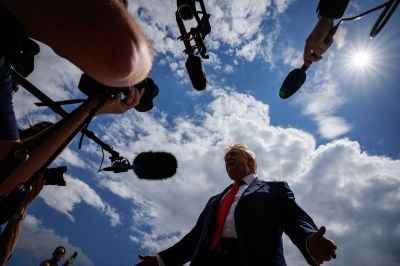
Aoun further estimated that his U.S. counterpart Donald Trump was "committed" to seeking an outcome to the conflict and said he was counting on him to "achieve a breakthrough," recalling that the "arduous" negotiations held on June 3 led to a cease-fire in exchange for Hezbollah's withdrawal south of the Litani.
Reaffirming that he is working towards obtaining a cease-fire with Israel, Aoun revealed that the concept of "pilot zones" was raised at the meeting of the cease-fire monitoring committee in Naqoura last December. This concept consists of progressively returning certain areas to the authority of the Lebanese Army, which would assume control and security responsibilities on an experimental basis before the process is extended to other sectors, alongside the start of their reconstruction, he explained. Aoun finally indicated he had personally proposed starting with the Beaufort Castle region — occupied by Israeli forces for more than a week — due to its "historic importance and proximity to Nabatieh, one of the main majority-Shiite regions of the country."

 8 p.m. recap: Israel again threatens Beirut’s south suburbs; 2 ships hit near Hormuz; Riyadh football matches canceled